Unit Plan 1 (Grade 5 Art): Artistic Identity & Goal Setting
Grade 5 art unit exploring artistic identity through brainstorming, sketching, and personal symbolism while students create artwork and set meaningful art goals.

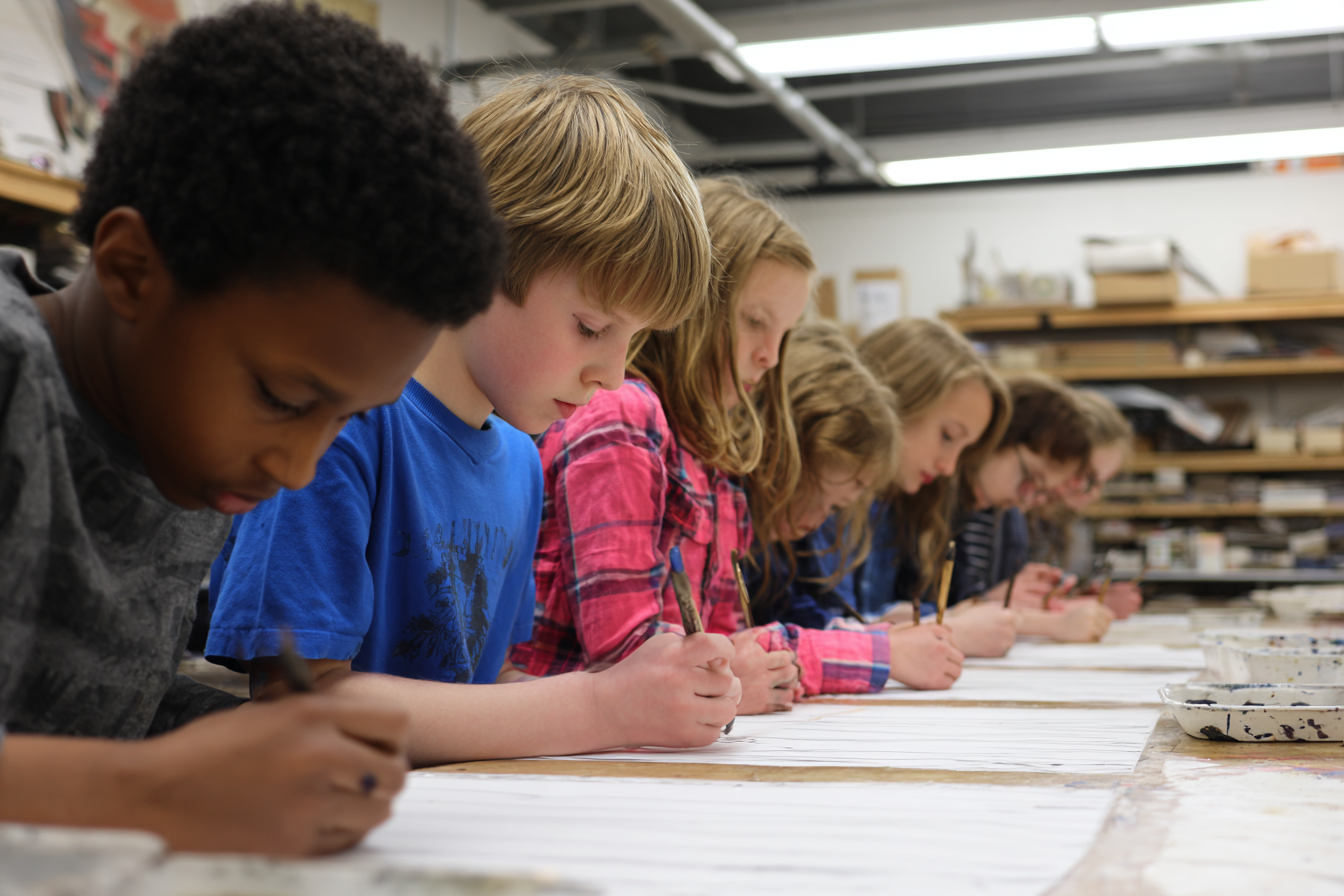
Focus: Explore personal interests and experiences to develop an artistic identity and set art goals for the year. Students brainstorm themes that matter to them, generate visual ideas through sketching, and create artwork that reflects who they are—then set clear, student-friendly goals for how they want to grow in art.
Grade Level: 5
Subject Area: Art (Visual Arts • Creating • Connecting)
Total Unit Duration: 1–3 weeks, 50–60 minutes per session
I. Introduction
Students begin the year by thinking of themselves as artists with unique identities. They reflect on their interests, cultures, experiences, and favorite subjects or activities, then brainstorm how those could show up in visual art. Through list-making, mind maps, and thumbnail sketches, they generate ideas for an “Artistic Identity Tile” (or similar small artwork) that uses symbols, color, and imagery to represent who they are. Alongside the artwork, students create a goal-setting page for Grade 5 Art that identifies personal strengths, challenges, and 2–3 specific goals for the year.
Essential Questions
- Who am I as an artist, and how do my interests and experiences influence the art I make?
- How can I use brainstorming and sketching to generate strong visual ideas for artwork?
- How can I show aspects of my identity using symbols, color, and imagery instead of only words?
- What are realistic and meaningful art goals I can set for myself this year, and how will I work toward them?
II. Objectives and Standards
Learning Objectives — Students will be able to:
- Brainstorm at least three personal interests, experiences, or themes that they could use as inspiration for artwork.
- Create thumbnail sketches that explore different ways to visually represent those interests or experiences (e.g., symbols, scenes, abstract designs).
- Design and begin an “Artistic Identity” artwork that clearly connects to at least one personal experience or interest and uses basic choices of color, line, and imagery to communicate meaning.
- Explain how their personal interests or experiences influenced their art idea, either in a short artist statement or in discussion.
- Set 2–3 specific art goals for the year (e.g., skills, habits, creativity) and record them on a “My Grade 5 Art Goals” page.
- (Optional Sessions) Refine their identity artwork with more detail and color, reflect on progress toward goals, and revise or add goals as needed.
Standards Alignment — 5th Grade (NCAS-Aligned)
- VA:Cn10.5a — Create artwork inspired by personal experiences or interests and explain those influences.
- Example: Students design artwork reflecting family traditions.
- VA:Cr1.5a — Generate artistic ideas by exploring themes, personal interests, or assigned prompts through brainstorming and sketching.
- Example: Students sketch multiple ideas for a landscape that communicates a specific mood.
Success Criteria — Student Language
- I can list interests, experiences, or themes that matter to me and could inspire my art.
- I can create several small sketches that show different ideas for an artwork about me.
- I can make an artwork that uses symbols, images, and colors to show something about my identity.
- I can explain how my art connects to my life, interests, or experiences.
- I can name specific art goals for 5th grade and describe one way I will work toward each goal.
III. Materials and Resources
Tasks & Tools (teacher acquires/curates)
- Inspiration visuals:
- Reproductions or slides of artworks that show identity, self-portrait, or personal story (e.g., symbolic self-portraits, cultural artworks, abstract identity pieces).
- Photos or student samples of “identity tiles,” personal logo designs, or goal posters.
- Student materials:
- Drawing paper (sketch and final work sizes—e.g., 8.5"×11" for final, smaller for sketches).
- Pencils, erasers, colored pencils, markers, optional oil pastels or crayons.
- Optional: mirrors (if including facial features), printed symbol charts for inspiration (sports icons, music icons, nature shapes, etc.).
- Graphic organizers:
- “About Me as an Artist” brainstorming sheet (interests, activities, favorites, values, cultural connections).
- Thumbnail sketch page (4–6 small boxes).
- “My Grade 5 Art Goals” sheet with prompts: Strengths, Challenges, Goals, Action Steps.
- Display materials:
- Chart paper or board for class anchor charts.
- Sticky notes for peer feedback and goal reminders.
Preparation
- Choose 3–5 age-appropriate identity-focused artworks and prepare questions to guide observation (e.g., “What do you notice that might tell us about this artist’s life?”).
- Create anchor charts:
- “Artistic Identity = Who I am + What I care about + How I show it in art.”
- “Ways to Show Identity” (symbols, favorite places/objects, color choices, patterns, words, abstract shapes).
- “Good Art Goals” (specific, realistic, about effort/skills).
- Prepare brainstorming, sketch, and goal-setting handouts; decide on size and medium for the identity artwork.
Common Misconceptions to Surface
- “Art about me has to look exactly like my face.” → Identity can be shown through symbols, colors, and scenes, not just realistic portraits.
- “If my idea is simple, it’s not good.” → Strong art can come from simple but meaningful ideas that are well developed.
- “Goals mean I’m bad at art.” → Goals are for growth, not a sign of failure; even professional artists set goals.
- “There is only one right way to draw something about my interests.” → There are many possible solutions; sketching helps explore options.
Key Terms (highlight in lessons) artistic identity, inspiration, symbol, theme, thumbnail sketch, composition, mood, goal, strength, challenge, artist statement
IV. Lesson Procedure
(Each session follows: Launch → Explore/Make → Discuss/Share → Reflect. Timing for a 50–60 minute class.)
Session 1 — Who Am I as an Artist? (Core Session — Addresses All Standards: VA:Cn10.5a, VA:Cr1.5a)
- Launch (8–10 min)
- Show 2–3 artworks that show identity or personal stories.
- Ask: “What clues do you see about the artist’s personality, interests, or culture?” Record student ideas on an anchor chart.
- Introduce the idea of artistic identity and explain that students will create an artwork + goals that describe them as artists this year.
- Explore/Make (30–35 min)
- Part A: Brainstorming (VA:Cr1.5a, VA:Cn10.5a)
- Hand out “About Me as an Artist” sheets. Students list:
- Interests/activities (sports, music, reading, gaming, nature, etc.).
- Important people, places, or traditions.
- Words that describe their personality or values (e.g., kind, curious, brave).
- Students circle or star 3–4 items they might want to show in art.
- Hand out “About Me as an Artist” sheets. Students list:
- Part B: Thumbnail Sketching (VA:Cr1.5a)
- Model on the board: create quick thumbnail sketches for an identity artwork (e.g., a tile divided into sections, a symbolic self-portrait, or a personal logo).
- Students fill in a thumbnail page with 4–6 small sketches, each exploring a different way to show identity (symbols, objects, scenes, colors).
- Encourage them to label sketches with 1–2 words explaining the idea (e.g., “soccer + family,” “music + sunset,” “favorite animal + pattern”).
- Part C: Choosing and Starting an Artwork (VA:Cn10.5a)
- Students choose one thumbnail to develop into their “Artistic Identity” artwork (e.g., a tile, poster, or self-symbol design).
- On final paper, they lightly sketch the main composition, beginning to block in shapes and important symbols.
- Part A: Brainstorming (VA:Cr1.5a, VA:Cn10.5a)
- Discuss/Share (5–7 min)
- Quick pair-share: students show a sketch or beginning artwork to a partner and finish the sentence, “This shows something about me because ___.”
- Invite 1–2 volunteers to share with the class; highlight how their ideas connect to personal experiences/interests.
- Reflect (3–5 min)
- Students start their “My Grade 5 Art Goals” sheet:
- Write 1 strength they already have in art and 1 challenge.
- Draft one art goal (teacher model examples: “I want to work more carefully with color,” “I want to try more than one idea before deciding”).
- Exit ticket: “One thing I want people to understand about me from my identity artwork is ___.”
- Students start their “My Grade 5 Art Goals” sheet:
Optional Session 2 — Developing Identity Artwork & Refining Goals (Extension — Deepen VA:Cn10.5a, VA:Cr1.5a)
- Launch (5–7 min)
- Brief review: “What does artistic identity mean? What did we start last time?”
- Warm-up: 2–3 minute mini-sketch in the margin of something new they might add to their artwork (a symbol, pattern, or color idea).
- Explore/Make (30–35 min)
- Students continue and refine their Artistic Identity artworks:
- Add more detail to symbols or scenes that connect to their personal interests/experiences.
- Begin adding color and thinking about how color choices show mood or personality (bright, calm, bold, etc.).
- Encourage students to check their brainstorm sheet to make sure at least one important interest/experience is clearly represented.
- Midway check-in:
- Teacher circulates and asks: “What part of your life are you showing in this area?” “How could you push your idea one step further?”
- Students update their “My Grade 5 Art Goals” sheet:
- Add 1–2 more specific goals, such as trying new media, cleaning up details, or taking more risks with composition.
- Students continue and refine their Artistic Identity artworks:
- Discuss/Share (8–10 min)
- Partners use a simple feedback routine:
- Tell: “One thing that clearly shows your identity is…”
- Ask: “What does this symbol/color mean to you?”
- Give: “You might make your idea even clearer by…”
- Emphasize focusing feedback on clarity of personal meaning and connection to interests/experiences.
- Partners use a simple feedback routine:
- Reflect (3–5 min)
- Students choose one goal they will focus on next time and write a quick note on their artwork or goal sheet:
- “Next time, I will work on ___ so that my art better shows ___ about me.”
- Students choose one goal they will focus on next time and write a quick note on their artwork or goal sheet:
Optional Session 3 — Artist Statements, Sharing, and Goal Check-In (Extension — Solidify VA:Cn10.5a, VA:Cr1.5a)
- Launch (5–7 min)
- Show a short example of an artist statement (teacher-created or student sample) that explains what the artist made and why.
- Ask: “Why is it important for artists to be able to explain their choices?”
- Explore/Make (25–30 min)
- Students complete final touches on their Artistic Identity artworks:
- Finish color and important details.
- Clean up lines, backgrounds, and edges.
- Students write a short artist statement (3–5 sentences) that:
- Names their artwork (title).
- Describes at least one personal interest or experience shown.
- Explains how symbols, images, or colors connect to their identity (VA:Cn10.5a).
- Mentions something they tried during brainstorming/sketching that helped them get to their final idea (VA:Cr1.5a).
- Students revisit their “My Grade 5 Art Goals” sheet and:
- Check off anything they already started working on.
- Add 1 sentence about how this project helped with one goal, or how they might adjust a goal.
- Students complete final touches on their Artistic Identity artworks:
- Discuss/Share (10–12 min)
- Mini gallery walk:
- Display finished or in-progress works on tables/walls with artist statements.
- Students leave one positive comment or question on a sticky note for 2–3 peers (e.g., “I like how you used ___ to show ___,” or “What does this symbol mean to you?”).
- Brief whole-class reflection: “What did you notice about the different ways we showed identity?”
- Mini gallery walk:
- Reflect (3–5 min)
- Final reflection prompt in sketchbook or on goal sheet:
- “Before this project, I thought of myself as an artist who ___. Now I see myself as an artist who ___. One goal I’m excited to work on this year is ___ because ___.”
- Final reflection prompt in sketchbook or on goal sheet:
V. Differentiation and Accommodations
Advanced Learners
- Encourage students to combine multiple aspects of identity (culture, hobbies, personality, future dreams) in a more complex composition.
- Invite them to incorporate abstract design or visual metaphors (e.g., storms, pathways, growth symbols) instead of only literal images.
- Ask them to set an additional process-focused goal (e.g., “I will create at least three thumbnails for every major project this year.”).
Targeted Support
- Offer a smaller set of choices for identity artworks (e.g., choose between “identity tile,” “symbolic self-portrait,” or “personal logo”).
- Provide visual symbol banks and sentence frames, such as:
- “This symbol represents me because ___.”
- “One thing I want people to know about me is ___, so I drew ___.”
- Allow students to focus on fewer, larger symbols rather than many small details, to reduce overwhelm.
Multilingual Learners
- Allow brainstorming and notes in home language with key identity words translated into English as labels.
- Provide picture word banks for feelings, interests, and activities.
- Encourage students to include cultural symbols or words from their home language in their artworks if they choose.
- Support artist statements with sentence starters and allow oral rehearsal before writing.
IEP/504 & Accessibility
- Break tasks into clear steps with a visual checklist (e.g., 1) Brainstorm, 2) Sketch, 3) Choose idea, 4) Start final, 5) Add color, 6) Write artist statement).
- Provide pre-drawn formats (like a divided tile or simple portrait outline) for students who benefit from structure.
- Offer alternative ways to share identity (e.g., digital collage, simplified drawing, photo + drawing combo) as needed.
- Allow dictated artist statements or use speech-to-text tools for students with writing challenges.
VI. Assessment and Evaluation
Formative Checks (each session)
- Session 1 — “About Me as an Artist” sheets and thumbnails show students can generate multiple ideas connected to personal interests/experiences.
- Optional Session 2 — Works in progress show development from sketches to more intentional compositions and color choices; goal sheets include at least one clear, specific art goal.
- Optional Session 3 — Artist statements explain at least one personal influence on the artwork and connect visual choices to identity; goals are revisited or refined.
Summative — Artistic Identity Artwork, Sketches & Goal Sheet (0–2 per criterion, total 10)
- Connection to Personal Experiences/Interests (VA:Cn10.5a)
- 2: Artwork clearly reflects at least one personal experience, interest, or aspect of identity; connection is explained in the artist statement or discussion.
- 1: Artwork has some personal connection but it is vague or only partly explained.
- 0: Little or no evidence that the artwork relates to personal experiences or interests.
- Idea Generation & Sketching (VA:Cr1.5a)
- 2: Includes multiple thumbnail sketches exploring different ideas; final artwork connects back to and improves on at least one sketch.
- 1: Limited sketches (1–2) or sketches are very similar; some evidence of planning.
- 0: No meaningful sketching or planning before the final artwork.
- Visual Communication & Composition
- 2: Composition is thoughtfully arranged; symbols, images, and colors work together to communicate identity clearly.
- 1: Composition is somewhat organized; some choices help communicate identity, but others are unclear or unfinished.
- 0: Composition is very unclear or incomplete; difficult to see the intended idea.
- Artist Statement / Explanation
- 2: Statement or verbal explanation clearly describes what the artwork shows and how it connects to the student’s identity and interests.
- 1: Explanation includes some personal information but connection to visual choices is limited or unclear.
- 0: No meaningful explanation of how the artwork relates to the student.
- Goal Setting & Reflection
- 2: Student identifies at least 2–3 specific art goals and reflects briefly on how this project connects to those goals or future growth.
- 1: Student lists 1–2 goals, but they are very general or not clearly connected to their art practice.
- 0: No goals recorded or goals show little understanding of personal growth in art.
Feedback Protocol (TAG)
- Tell one strength (e.g., “Your use of ___ really shows that you care about ___.”).
- Ask one question (e.g., “What does this symbol/color represent about you?”).
- Give one suggestion (e.g., “You could make your idea even clearer by adding ___ or changing ___.”).
VII. Reflection and Extension
Reflection Prompts
- What did you learn about yourself as an artist during this project?
- Which part of your identity was easiest to show in art? Which was harder, and why?
- How might your art goals help you grow over the rest of the year?
Extensions
- Goal Wall or Portfolio Cover: Turn smaller versions of the identity artwork into a goal wall display or use them as covers for students’ year-long art portfolios.
- Identity Series: Later in the year, revisit the same themes and create a second artwork (“Who I Am Now”) to compare growth in skills and identity.
- Cross-Curricular Link: Connect to writing by having students expand their artist statements into short personal narratives about one symbol or memory used in the artwork.
Standards Trace — When Each Standard Is Addressed
- VA:Cn10.5a — Session 1 (brainstorming personal experiences/interests; designing identity artwork), Optional Session 2 (deepening personal meaning in artworks), Optional Session 3 (artist statements explaining influences and choices).
- VA:Cr1.5a — Session 1 (brainstorming and thumbnail sketching based on personal interests/themes), Optional Session 2 (refining ideas from sketches into developed compositions), Optional Session 3 (reflecting on how brainstorming/sketching supported final ideas).