Board Game Labs for SEL & Critical Thinking
Boost SEL and critical thinking with Board Game Labs—structured classroom routines using games, reflection, and research-backed strategies to build empathy, cooperation, and executive skills.

I. Introduction
A lot of schools talk about social-emotional learning as if it happens separately from academic work. Students might have a morning meeting, a short reflection prompt, or a conflict-resolution lesson, but then the “real” school day begins and those skills are expected to appear automatically. In practice, they usually do not. Turn-taking, disagreement, frustration tolerance, flexible thinking, and perspective-taking need repeated practice in real social situations.
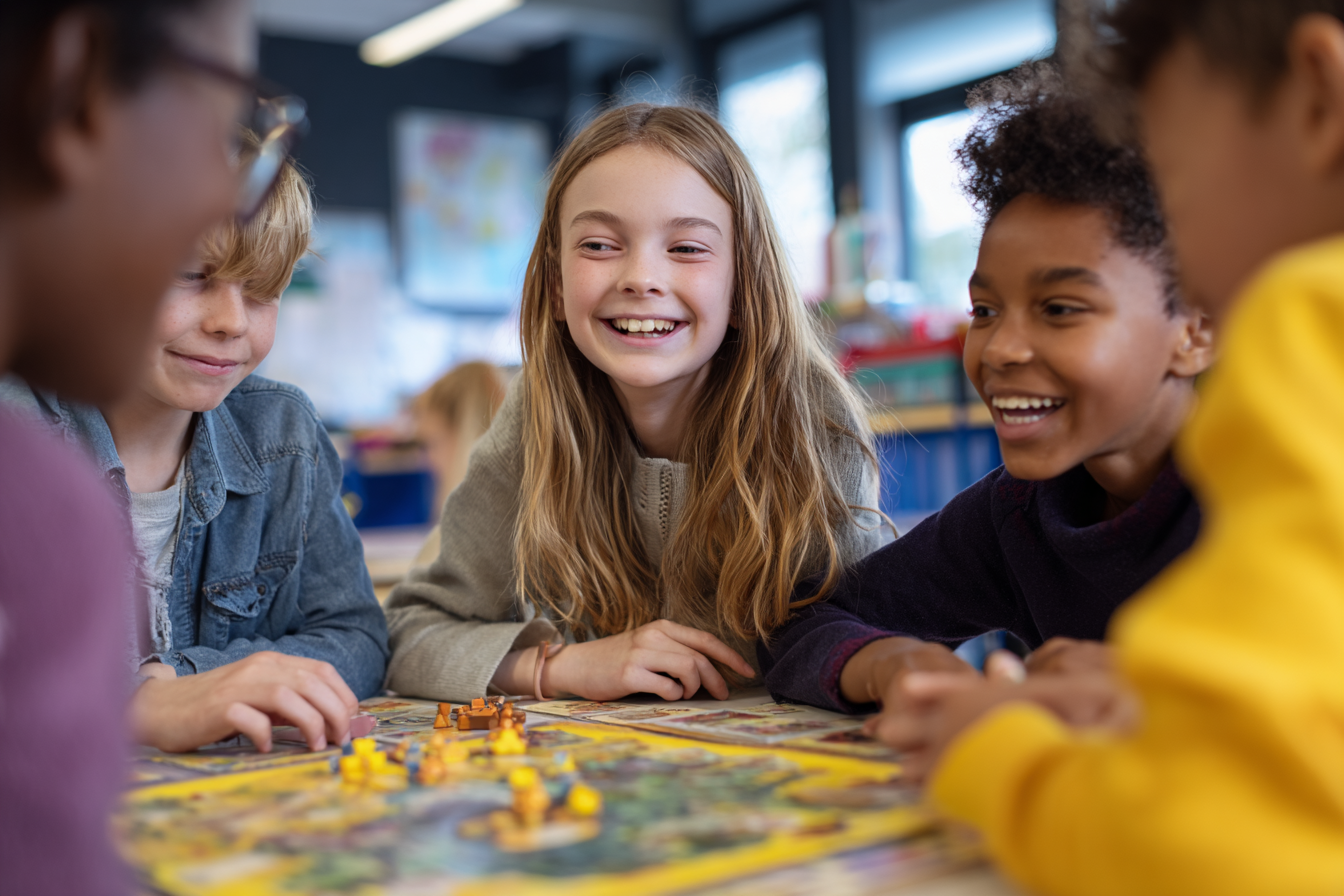
Board Game Labs offer a practical way to build that practice into the school week. In this model, teachers create a rotating library of cooperative and strategy board games and use them intentionally for SEL and critical thinking. Students do not just play. They pause, reflect, debrief, and connect what happened during the game to group work, academic perseverance, and classroom relationships. Research on board-game-based interventions suggests that game play can support areas such as classroom climate, empathy, emotional competence, cooperation, executive functioning, and some academic skills, although outcomes depend heavily on the structure of the activity and the quality of the debrief.
Want done-for-you lesson plans for less than $2? Click Here to explore.
This article explores how Board Game Labs can work in real classrooms without becoming “free time” or disconnected enrichment. You will find design principles, implementation ideas, research-based case studies, and a practical structure for helping students connect game behavior to stronger self-regulation and better collaboration in academic settings.
II. Why Board Games Work for SEL and Thinking Skills
Board games place students inside low-stakes social situations that still feel real. They have to wait, read other people, handle uncertainty, make decisions, explain plans, follow rules, and adjust when things do not go their way. That combination is one reason board games are useful for SEL work: they create visible moments where students can practice patience, fairness, emotional control, and flexible thinking instead of only talking about those skills in the abstract. The broader board-game research base describes opportunities for learning across social, cognitive, and language domains, while intervention studies point to benefits in areas such as emotional intelligence, empathy, and cooperation.
They also naturally support critical thinking. Strategy games ask students to predict outcomes, weigh tradeoffs, revise plans, and respond to other players’ choices. A recent cluster randomized controlled trial in primary schools found that classroom board-game play was associated with greater gains in updating and academic skills than regular classes, while a longitudinal study found that board-game play predicted later executive functioning measures in children. Those findings do not mean every game session automatically boosts cognition, but they do suggest that structured board-game play can be more than a reward or filler activity.
Perhaps most importantly, board games make student behavior observable. A teacher can actually see who interrupts, who withdraws after a setback, who dominates, who adapts, and who helps the group recover from tension. That makes Board Game Labs especially useful for reflection because students can point to specific moments rather than speak in generalities about how they “usually” work with others.
III. What a Board Game Lab Actually Is
A Board Game Lab is not just a shelf of games in the back of the room. It is a repeatable classroom routine in which selected games are paired with explicit SEL and thinking targets, guided observation, and structured reflection. The teacher chooses games because they create opportunities to practice specific habits such as turn-taking, collaboration, negotiation, planning, or emotional regulation. Students then debrief those experiences and connect them back to classroom learning.
That structure matters. A systematic review of board-game interventions concluded that board games have shown positive effects across several domains, but also noted that the evidence base includes different populations, purposes, and research designs. In other words, games are promising tools, but the educational value comes from how they are used, not from their mere presence.
In a strong Board Game Lab, the teacher is not a passive supervisor. The teacher is a facilitator who frames the skill focus, notices patterns, pauses for reflection when needed, and helps students transfer what happened during play into the rest of school life. That is what keeps the lab connected to SEL and academic habits rather than turning it into indoor recess with nicer language.
IV. What Students Build Through Board Game Labs
Board Game Labs can support a wide range of habits that matter both socially and academically.
- Turn-taking and impulse control Students practice waiting, monitoring the flow of play, and acting at the right moment instead of blurting or grabbing control.
- Frustration tolerance Games create safe moments to lose a turn, face a setback, or watch a plan fail and still keep going.
- Flexible thinking Strategy games require students to revise plans, respond to surprises, and consider multiple possible moves.
- Disagreement skills Students learn how to question a move, clarify a rule, or advocate for a strategy without escalating conflict.
- Perspective-taking and empathy Many games push students to read what others might be thinking or feeling, especially in cooperative formats.
- Planning and executive function Players often have to hold information in mind, sequence actions, and track changing conditions.
These benefits line up with published findings from studies on emotional competence board games, cooperative and competitive game play, classroom-climate interventions, and executive-function-related board game research. The evidence is not uniform for every skill in every context, but the pattern is strong enough to justify intentional classroom use when reflection is built in.
V. Choosing the Right Games for the Right Goals
Not every board game is equally useful for every SEL target. The best Board Game Labs start by matching the game to the skill.
For cooperation and collective problem-solving Choose cooperative games where players win or lose together. These tend to create more discussion about helping, shared planning, and managing group setbacks. Research on preschoolers found that children enjoyed cooperative board games more than competitive ones, and the authors noted practical reasons educators might prefer cooperative games for promoting a positive social climate.
For frustration tolerance and emotional regulation Choose games with setbacks, imperfect information, or delayed payoff, but keep the stakes manageable. Students need enough challenge to feel disappointment without becoming flooded.
For strategy and flexible thinking Choose games that reward planning, adaptation, and reading changing conditions. These are often strong for debriefs about revising ideas and not becoming rigid.
For discussion and respectful disagreement Choose games that require explanation, negotiation, or interpretation of options rather than silent play.
For younger students or SEL beginners Use shorter games with clearer turns and faster resets. Too much complexity can shift attention from social practice to rule confusion.
The game itself does not need to “teach SEL” in its theme. What matters more is whether it reliably produces the kinds of interactions you want to notice and discuss. That is one of the most useful takeaways from the broader board game literature.
VI. The Structure That Makes the Lab Work
A Board Game Lab is most effective when the routine is simple and predictable.
1. Name the target skill before play Start with one focus such as “How do we handle disagreement?” or “What does flexible thinking look like when our first plan fails?” Students should know what they are watching in themselves.
2. Keep the game window contained Most labs do not need a full class period of uninterrupted play. A shorter session with a strong debrief often teaches more than a long session with no reflection.
Check out our engaging printable posters. CLICK HERE to explore!
3. Observe visible behaviors Give students a few concrete look-fors: waiting your turn, asking before changing the plan, calming down after a setback, explaining your move, or helping a teammate re-enter the game.
4. Debrief immediately Reflection is where the learning becomes explicit. Without it, students may enjoy the game but miss the transferable lesson.
5. Connect back to academics Ask where the same behaviors show up in science labs, partner reading, writing conferences, projects, or math problem-solving.
This kind of guided structure fits what the bullying-intervention and classroom-climate studies suggest: outcomes improve when games are paired with discussion, processing, and intentional educational framing rather than simple exposure alone.
VII. Debrief Questions That Build Transfer
The debrief is the heart of the model. It is where students move from “We played a game” to “We learned something about how we think and work with others.”
Useful debrief questions include:
- What frustrated you during the game, and what did you do next?
- When did your plan change?
- How did your group handle disagreement?
- Who helped the group stay calm or focused?
- What made it easier or harder to wait your turn?
- Where do these same behaviors show up during class projects or discussions?
- What is one skill from today’s game you want to use during academic group work?
These questions help students identify patterns instead of only recounting what happened. They also reinforce that the goal is not simply to win the game. The goal is to learn how people think, react, recover, and collaborate under manageable pressure. That transfer-oriented framing is consistent with how board-game interventions have been used in empathy, emotional intelligence, and cooperation research.
VIII. Research-Based Case Studies
Case Study: Bullying Intervention Through a Collaborative Board Game Nieh and Wu studied Galaxy Rescuers, a collaborative board game used with 328 fifth graders in a group-randomized controlled trial in Taiwan. Students in the game-with-debriefing condition showed gains in bullying knowledge, empathy, and attitudes, and knowledge gains remained significant at follow-up. This study is especially useful for schools because it shows that a board game paired with intentional processing can support empathy-related and prosocial outcomes, not just enjoyment.
Case Study: Emotional Competence Games for School-Age Children Dell’Angela and colleagues tested three board games designed around emotional competences with 177 children ages 8 to 12. The games focused on emotion recognition, emotion differentiation, and cognitive reappraisal. The children rated these games as comparably positive and playable relative to off-the-shelf games, suggesting that SEL-oriented board games do not have to feel like disguised worksheets to be usable and engaging.
Case Study: Board Games, Classroom Climate, and Emotional Intelligence Rodríguez-Ferrer, Manzano-León, and García-Roca examined a six-session board-game intervention with 86 Moroccan students learning Spanish as a foreign language. The mixed-methods case study reported positive effects on classroom climate and emotional intelligence, with qualitative findings emphasizing enjoyment, engagement, and collaborative creativity. This is a strong reminder that board games can support belonging and emotional tone, not only isolated skill practice.
Case Study: Group Games and Cooperation Skills Sohrabi’s quasi-experimental study of Grade 5 students in Tehran found significant post-test gains in cooperation skills for the experimental group after 12 sessions of group games. While this study used group games more broadly rather than a modern board-game lab specifically, it is highly relevant because it supports the idea that repeated structured play can strengthen cooperative behavior when teachers mediate the experience intentionally.
Case Study: Board Games and Executive Function Development Vita-Barrull and colleagues conducted a cluster randomized controlled trial with 522 primary students and found that classroom board-game play was associated with greater improvement in updating and academic skills than regular classes. Gashaj and colleagues also found that board-game play predicted later executive functioning in young children. These studies matter for Board Game Labs because they suggest the benefits may extend beyond social interaction into planning, attention, and flexible thinking.
IX. A Simple Board Game Lab Flow
Teachers do not need an elaborate setup to begin. A clear routine is usually enough.
Launch the focus Introduce one SEL or critical-thinking target in plain language. Keep it narrow enough for students to notice.
Play in small groups Use a limited number of games and roles so students can settle into the structure quickly.
Pause if needed Short mid-game pauses can help students name what is happening before the moment passes.
Debrief as a class or in circles Ask students to identify behaviors, not just outcomes. “We changed strategies after the third round” is more useful than “We almost won.”
Bridge to schoolwork Close by asking where the same skill will matter next: literature circles, lab work, partner math, project planning, or transitions.
This kind of consistent cycle helps Board Game Labs feel like a serious part of classroom culture rather than an occasional novelty.
X. Common Pitfalls and How to Avoid Them
Board Game Labs can be powerful, but they are easy to weaken if the structure is loose.
- Pitfall: The game becomes the goal Fix: Name one or two SEL or thinking goals before play and revisit them after.
- Pitfall: Students only focus on winning Fix: Use cooperative games often, and grade or reflect on behaviors such as listening, flexibility, and recovery rather than outcome alone.
- Pitfall: The debrief is too vague Fix: Ask students to cite exact moments from the game.
- Pitfall: Games are too complex Fix: Start with shorter, clearer games so cognitive overload does not replace reflection.
- Pitfall: Skills stay inside the game Fix: Always connect behaviors back to class discussions, projects, labs, and group tasks.
The research base supports that caution. Studies showing positive outcomes generally involved repeated sessions, intentional intervention design, and explicit educational aims rather than unstructured exposure to play.
XI. FAQ
Do Board Game Labs only work in elementary school? No. The research base includes younger children, upper elementary students, and adolescent learners in classroom settings. The key difference is game choice, discussion depth, and how explicitly students connect game behavior to academic and social situations.
Do I need special SEL board games to do this well? Not necessarily. Some studies use games designed for emotional competence or bullying intervention, but many of the useful classroom lessons come from how teachers frame and debrief the experience. Commercial cooperative and strategy games can work well if they create the interactions you want students to practice.
Should I use cooperative games or competitive games? Both can be useful, but they create different conditions. Cooperative games often make it easier to focus on shared planning and supportive behavior, and one preschool study found that children enjoyed cooperative board games more than competitive ones. Competitive games can still be useful, especially for frustration tolerance and sportsmanship, but they usually require tighter facilitation.
How often should a Board Game Lab happen? It does not need to be daily to matter. A recurring lab every week or every other week can be enough if the goals are consistent and the debriefs are strong. Repetition matters more than frequency spikes. That pattern is consistent with the intervention studies that used multiple sessions over time rather than one-off events.
Can this still support academics? Yes. Board Game Labs can strengthen executive-function-related skills, discussion habits, and collaboration routines that matter during academics. Some research also points to gains in academic skills and updating when board games are used in classroom interventions.
What if students argue during the game? That is often where the best learning happens, as long as the environment stays safe. The goal is not to eliminate tension completely. The goal is to help students notice it, manage it, and respond more productively the next time.
XII. Conclusion
Board Game Labs give students a place to practice the social and cognitive habits schools say they value but do not always teach explicitly. When students play, pause, reflect, and connect game behavior back to academic life, they get repeated rehearsal in turn-taking, disagreement, emotional regulation, planning, and flexibility. The games make those moments visible. The debrief turns them into learning.
The strength of this model is that it is both simple and adaptable. A teacher does not need a full SEL curriculum rewrite to start. A few well-chosen games, one clear skill target, and a strong reflection routine can begin shifting classroom culture. Over time, Board Game Labs can help students see that how they handle a setback in a game is not separate from how they handle a hard problem, a group disagreement, or a frustrating revision task. It is the same work, practiced in a form they can feel.
Want to save time on lesson planning this week? CLICK HERE to explore our library of 1000s of lesson plans for less than $2!
Transform your classroom into an inspiring, vibrant learning space with our beautifully designed printable posters! Perfect for engaging your students and enhancing your teaching environment, our poster bundles cover everything from historical philosophers to animals. CLICK HERE to explore our exclusive collections on Teachers Pay Teachers and give your students the motivational boost they need!
Sources
Dell’Angela, L., Zaharia, A., Lobel, A., Vico Begara, O., Sander, D., & Samson, A. C. (2020). Board games on emotional competences for school-age children. Games for Health Journal, 9(3), 187–196. https://doi.org/10.1089/g4h.2019.0050 Accurate link: https://journals.sagepub.com/doi/10.1089/g4h.2019.0050
Gashaj, V., Dapp, L. C., Trninic, D., & Roebers, C. M. (2021). The effect of video games, exergames and board games on executive functions in kindergarten and 2nd grade: An explorative longitudinal study. Trends in Neuroscience and Education, 25, 100162. https://doi.org/10.1016/j.tine.2021.100162 Accurate link: https://www.sciencedirect.com/science/article/pii/S2211949321000144
Nieh, H.-P., & Wu, W.-C. (2018). Effects of a collaborative board game on bullying intervention: A group-randomized controlled trial. Journal of School Health, 88(10), 725–733. https://doi.org/10.1111/josh.12675 Accurate link: https://onlinelibrary.wiley.com/doi/abs/10.1111/josh.12675
Noda, S., Shirotsuki, K., & Nakao, M. (2019). The effectiveness of intervention with board games: A systematic review. BioPsychoSocial Medicine, 13, 22. https://doi.org/10.1186/s13030-019-0164-1 Accurate link: https://link.springer.com/article/10.1186/s13030-019-0164-1
Rodríguez-Ferrer, J. M., Manzano-León, A., & García-Roca, A. (2024). Enhancing classroom climate and emotional intelligence through board games: A mixed-methods case study with Moroccan students of Spanish as a foreign language. Thinking Skills and Creativity, 54, 101668. https://doi.org/10.1016/j.tsc.2024.101668 Accurate link: https://www.sciencedirect.com/science/article/abs/pii/S1871187124002062
Vita-Barrull, N., Estrada-Plana, V., March-Llanes, J., Sotoca-Orgaz, P., Guzmán, N., Ayesa, R., & Moya-Higueras, J. (2024). Do you play in class? Board games to promote cognitive and educational development in primary school: A cluster randomized controlled trial. Learning and Instruction, 94, 101946. https://doi.org/10.1016/j.learninstruc.2024.101946 Accurate link: https://www.sciencedirect.com/science/article/pii/S0959475224000732