Parent Tips: Calming Big Feelings Before They Boil Over
Coach regulation with shared calm-corner routines, break signals, and simple tools so kids manage big feelings, return with dignity, and keep learning together.

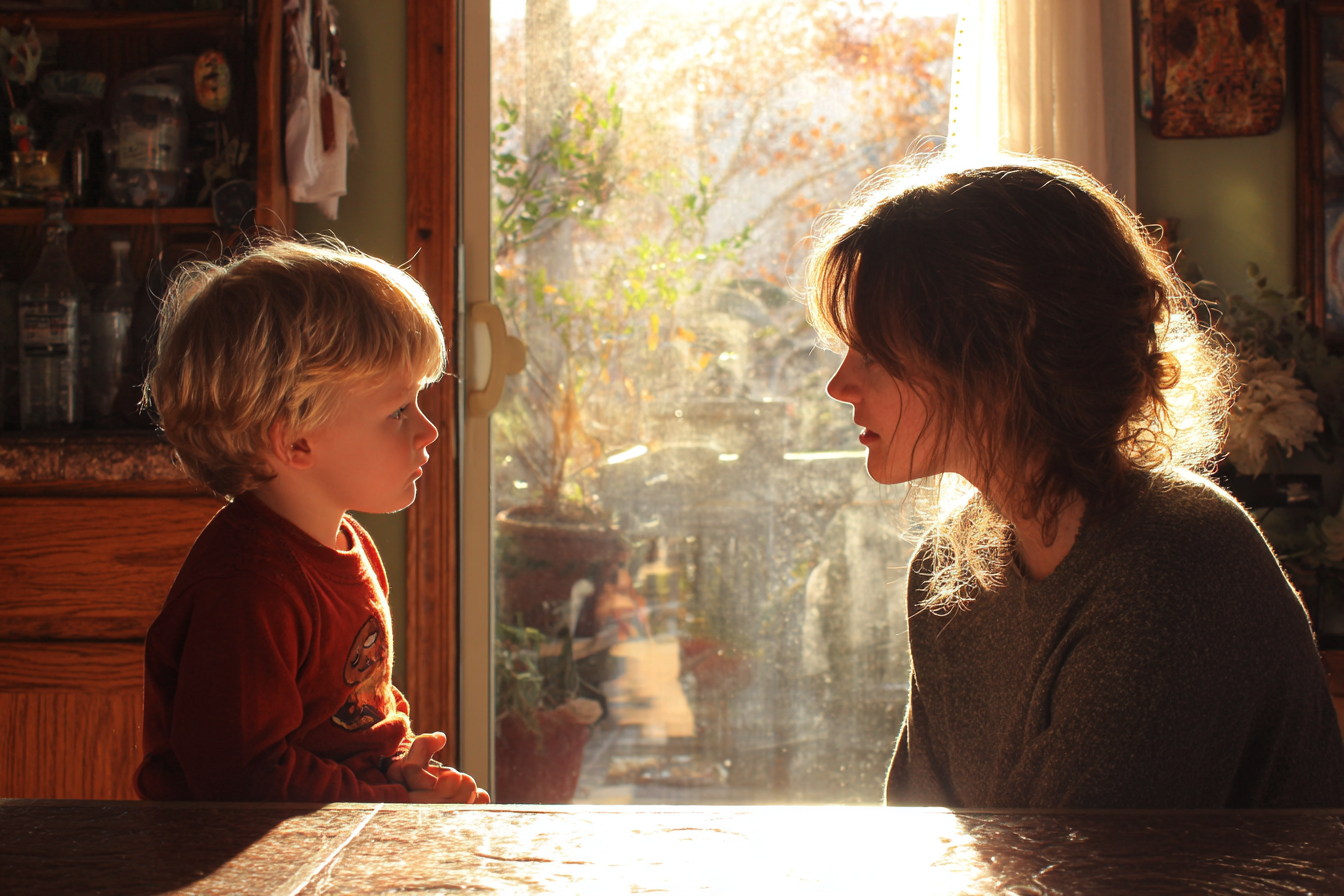
When big feelings hit—tantrums, shouting, storming out—it can feel like a switch flips and the whole day tilts. Those moments are exhausting for kids and adults alike. The goal isn’t to “shut it down,” it’s to coach regulation: noticing rising emotions, using a reliable tool to cool the temperature, and returning with dignity. When school and home use the same tools, signals, and language, children learn that emotions aren’t dangerous—they’re manageable.
Want done-for-you lesson plans for less than $2? Click Here to explore.
This post gives you a shared, ready-to-run plan. You’ll build a classroom calm corner (and a matching home spot), co-teach three practical breathing/grounding strategies, agree on a discreet break signal, and use teacher-approved validation language that holds firm limits. You’ll also get a recovery routine for reentry after an incident, copy-and-paste email scripts, a simple two-week snapshot, troubleshooting tips, and quick case studies to show how the plan works in real life.
Why Big Feelings Hijack Behavior (and why regulation is teachable)
Escalations usually come from a mix of overwhelm (work too hard, pace too fast), sensory load (noise, crowds, transitions), lagging skills (impulse control, flexible thinking), and basic needs (hunger, fatigue). In the heat of the moment, a child’s nervous system is screaming, “Protect!”—which can look like yelling, slamming, or running. Discipline alone can’t teach a body to calm; predictable regulation tools can.
Shared routines work because they:
- Give a neutral pathway (“use the signal → take a break → regulate → return”).
- Keep adults consistent across settings (same spot, same strategies, same words).
- Prioritize skill practice over lectures.
- Protect relationships through validation + limits (“your feeling is valid; the boundary stays”).
The Team Plan at a Glance
- Set up a calm corner at school and a matching home spot.
- Co-teach three core strategies: one breath, one body, one mind tool.
- Agree on a discreet break signal (card, hand sign, or desk flip).
- Use validation + limit scripts (same words, both places).
- Run a recovery routine (regulate → repair → return).
- Share a daily note and track two weeks of basics.
- Review data and tweak together.
Everything you need is below.
Build the Calm Corner (school) + Matching Home Spot
Purpose: A predictable, non-punitive place to regulate, not a place to “serve time.” Location matters: visible to adults, out of peer spotlight.
What to include (keep both spots alike):
- Visual menu of 3–5 strategies (pictures + simple words).
- Timer (1–3 minutes for brief resets; up to 5 for bigger waves).
- Sensory tools (quiet fidget, textured strip, stress ball, weighted lap pad if available).
- Grounding supports (visual “5–4–3–2–1” card; number track; calm image).
- Feeling scale (color or number: 1–5) to name the state and choose a tool.
- Return card (“ready to rejoin”) kids hand to the adult.
Rules posted (six lines max):
- Ask or signal for a break.
- Choose a tool from the menu.
- Use timer.
- When calmer, complete “ready” check (thumb or card).
- Rejoin with an adult cue.
- Try again.
Tip: Introduce the spot when everyone is calm. Practice visiting it for 30 seconds and coming back with a smile—like a drill, not a detour.
Co-Teach Three Core Strategies (one breath, one body, one mind)
Keep it simple; practice for 60–90 seconds daily for two weeks so the tools are ready when emotions spike.
1) Box Breath (Breath Strategy)
- How: Inhale 4, hold 4, exhale 4, hold 4. Trace a square with a finger.
- Kid script: “Draw a box with your breath.”
- When: Before tests, transitions, or when voice volume rises.
2) Press and Release (Body Strategy)
- How: Press palms together under the desk for 5 seconds, release 5; repeat 3x.
- Kid script: “Squeeze calm into your muscles, let the tight go.”
- When: Fidgety, clenched fists, or urge to slam/throw.
3) 5–4–3–2–1 (Mind Strategy)
- How: Name 5 things you see, 4 feel, 3 hear, 2 smell, 1 taste (or 1 thing you’re grateful for).
- Kid script: “Find five things your eyes can see.”
- When: Racing thoughts, panic, spiraling worries.
Practice plan: One strategy per day after lunch for 60 seconds (school), and once after dinner (home). Use the same visual cards in both places.
Agree on a Discreet Break Signal
Choose a signal that’s subtle, fast, and easy to teach to substitutes and caregivers.
Options (pick one):
- Break card: small card placed on the corner of the desk = “I need 2 minutes.”
- Hand sign: two fingers against chest = “break.”
- Desk flip: a two-sided tent card (green “learning,” blue “break”).
- Wristband tap: child touches band twice; adult nods toward calm corner.
How to run it:
- Student signals, adult nods and points to calm corner (no lecture).
- Timer on immediately (2 minutes).
- At time, adult prompts the recovery routine (below).
Guardrails: Not during safety instruction; not to avoid all work. If a task is red-level hard, chunk it and model first step after the break.
Validation + Limits: Words That Work (and match at home & school)
Validate feelings; hold the boundary. Keep it short and steady.
In the rise (early signs):
- “Looks like your feelings are getting big. Break or box breath?”
- “You can be mad and still be respectful. Let’s pick a tool.”
At the peak (tantrum/outburst starting):
- “You’re safe. I’m here. Use your break signal; we’ll solve the problem after you’re calmer.”
- “I won’t argue. We’ll talk when your voice is calm.”
As they regulate:
- “There it is—your breath slowed. Ready for step one together?”
- “Thanks for choosing the calm corner instead of shouting.”
Holding limits (kind + firm):
- “You’re allowed to feel upset. Hitting/shouting is not okay. Break now; then we’ll fix what happened.”
- “You don’t have to like the rule; you do need to follow it.”
Repair language (after):
- “What happened, what you needed, what you’ll try next time—one sentence each.”
- “You can show repair by words or actions. Which do you choose?”
The Recovery Routine: Regulate → Repair → Return
Turn reentry into a predictable ritual so kids don’t dread coming back.
1) Regulate (1–3 minutes)
- Timer + one strategy from the menu.
- When heart/voice are calmer, student shows a ready card or thumb.
2) Repair (1 minute)
- Quick script (student fills the blanks):
- “I felt __.”
- “I needed __.”
- “Next time I’ll try __ (tool/words).”
- If there was impact (e.g., interrupting the class), add a repair action: tidy area, apologize, or help reset materials.
3) Return (30 seconds)
- Adult models the first small step of the task.
- Student continues for 2–3 minutes; adult gives private praise.
- Mark a ✔ on the daily note for “re-entry within 3 minutes.”
Why it works: Kids learn that breaks are bridges back to learning, not exits. The first-step prompt prevents the post-break stall.
Daily Home–School Note (keep it motivating)
What to tally (fast):
- Used break signal before boiling over (0/1).
- Completed recovery routine (0/1).
- Respectful return within 3 minutes (0/1).
Teacher circles a win + next step. At home, trade points → privileges (music choice, 10 extra reading minutes, pick Friday game). Never take away already earned privileges; protect the effort–reward link.
Email Scripts (launch, tweak, share wins)
Launch plan Subject: Shared regulation toolkit for [Child]—aligning school & home
Hi [Teacher Name], Could we align on a simple regulation plan for [Child]? • Calm corner + matching home spot with the same tool menu. • Break signal (your preference: card/hand sign/desk flip). • Three strategies we’ll co-teach (box breath, press & release, 5–4–3–2–1). • Recovery routine (regulate → repair → return) and a daily note (points → home privilege). I can draft the visuals and a one-page guide. A 10-minute huddle would help us finalize. Thanks for partnering! —[Your Name]
Mid-week tweak Subject: Tiny tweak—timer + first-step reentry
Thanks for trying the plan—[Child] used the break signal twice. Could we set a 2-minute timer in the calm corner and add a modeled first step on return? We’ll mirror that at home. —[Your Name]
End-of-week share Subject: Week 1 snapshot—signals up, outbursts down
Our log shows break signals went from 1 to 6 this week; outbursts dropped from 5 to 2. Most spikes are right after recess. We’ll practice press & release before that transition—could class do a 30-second box breath then, too? —[Your Name]
Two-Week Snapshot (simple data, smart tweaks)
Track daily (1 minute):
- break signals used before escalation.
- outbursts (tantrum/shouting/storm-out).
- successful reentries within 3 minutes.
- When/where spikes happen; what tool worked fastest.
Friday reflection (2–3 minutes):
- Bright spots? (time of day, tool)
- Tricky spots? (transition, subject, noise)
- One tweak (timer length, move the spot, cue earlier).
Share one sentence Monday: “Press & release before transitions cut escalations in half—we’ll keep it.”
Troubleshooting Guide
- Refuses the calm corner. Offer two choices (“chair or floor cushion?”), or start the break beside you with the same tool, then transition into the spot once breathing slows.
- Uses breaks to avoid all work. Keep breaks brief + frequent (2 minutes). On return, model first step and provide a small scaffold (word bank, worked example).
- Peers give attention. Move the spot slightly out of view, use private praise, and teach the class a neutral norm: “Everyone has different tools.”
Enjoy science fiction? Check out my space books HERE on Amazon!
- Silent shutdown (no outburst, just head down). Treat it like big feelings: signal a break, start with 5–4–3–2–1, and offer a toe-dip first step on return.
- Home is louder/busier. Add noise buffer (headphones/instrumental) and a portable calm kit (small box with the same visuals and fidget).
- Safety concerns (running/throwing). Prioritize space and supervision; keep language minimal (“Safe hands. Break now.”). Debrief after, not during.
- It worked, then stopped. Kids habituate—swap tools or change order. Keep the routine; refresh the menu.
Case Studies (quick wins)
1) First Grade — “Blue Card, Big Breath” Before: Eli screamed and threw pencils when handwriting began. Plan: blue break card, box breath at the calm corner, first-step return (adult traces the first letter). After two weeks, Eli signaled 7 times; outbursts dropped to 1, and he completed handwriting with a smile twice that week.
2) Fourth Grade — “Press & Release Before Recess Return” Before: Jada stormed out after recess three days a week. Team added a 1-minute class press & release at the door + 5–4–3–2–1 option in the calm corner. Daily note traded points for choosing Friday’s art station at home. Within two weeks, storm-outs fell from 6 to 1; Jada started asking, “Can I press first?”
3) Seventh Grade — “Desk Flip, Dignified Return” Before: Malik shouted during group debates and left the room. Team used a desk flip card (green/blue), 2-minute timer, and a repair script (“I felt ___; I needed ___; next time I’ll ___”). Teacher modeled the first step back (summarize peer’s point). Outbursts dropped by half; peers noted, “He comes back faster and debates better.”
Routines That Make It Stick
- Morning Mantra (10 seconds): “Notice → signal → tool → return.”
- Pre-Transition Pulse (30–60 seconds): Box breath or press & release before known hot spots (recess return, last period).
- After-School Debrief (2 minutes): “Which tool helped? When did you catch it early?”
- Evening Practice (60 seconds): One quick drill of a strategy at the home spot.
- Friday Repair & Gratitude (5 minutes): If a rupture happened, do the 3-line repair; end the week with a gratitude note to a teacher or family member.
Small, predictable reps build big self-control.
Conclusion
Big feelings aren’t the enemy—they’re signals. With a shared calm corner/home spot, three well-practiced regulation tools, a discreet break signal, and a recovery routine that honors dignity, kids learn to ride the wave and come back ready to learn. Aligned validation language and a short daily note keep adults consistent and kids motivated. Track two weeks, tweak one variable at a time, and celebrate every “caught-it-early” moment.
Start today with one move: send the launch email, post the three strategy cards, or practice a 60-second box breath after dinner. Keep the tools the same across school and home, praise the choice to regulate, and let the routine do the heavy lifting. Calmer days are closer than you think.
Want to save time on lesson planning this week? CLICK HERE to explore our library of 1000s of lesson plans for less than $2!
Transform your classroom into an inspiring, vibrant learning space with our beautifully designed printable posters! Perfect for engaging your students and enhancing your teaching environment, our poster bundles cover everything from historical philosophers to animals. CLICK HERE to explore our exclusive collections on Teachers Pay Teachers and give your students the motivational boost they need!