Lesson Plan (Grades K-2): Mini-Masterchef Measurement - A Comprehensive K–2 Math & Life Skills Unit
Hands-on K–2 math unit teaching measurement and fractions through safe cooking activities, helping students measure, compare volumes, follow recipes, and build teamwork.

I. Introduction
Lesson Title: Mini-Masterchef Measurement
Grade Level: Kindergarten–2nd Grade
Subject Area: Early Mathematics (Measurement & Fractions) & Life Skills
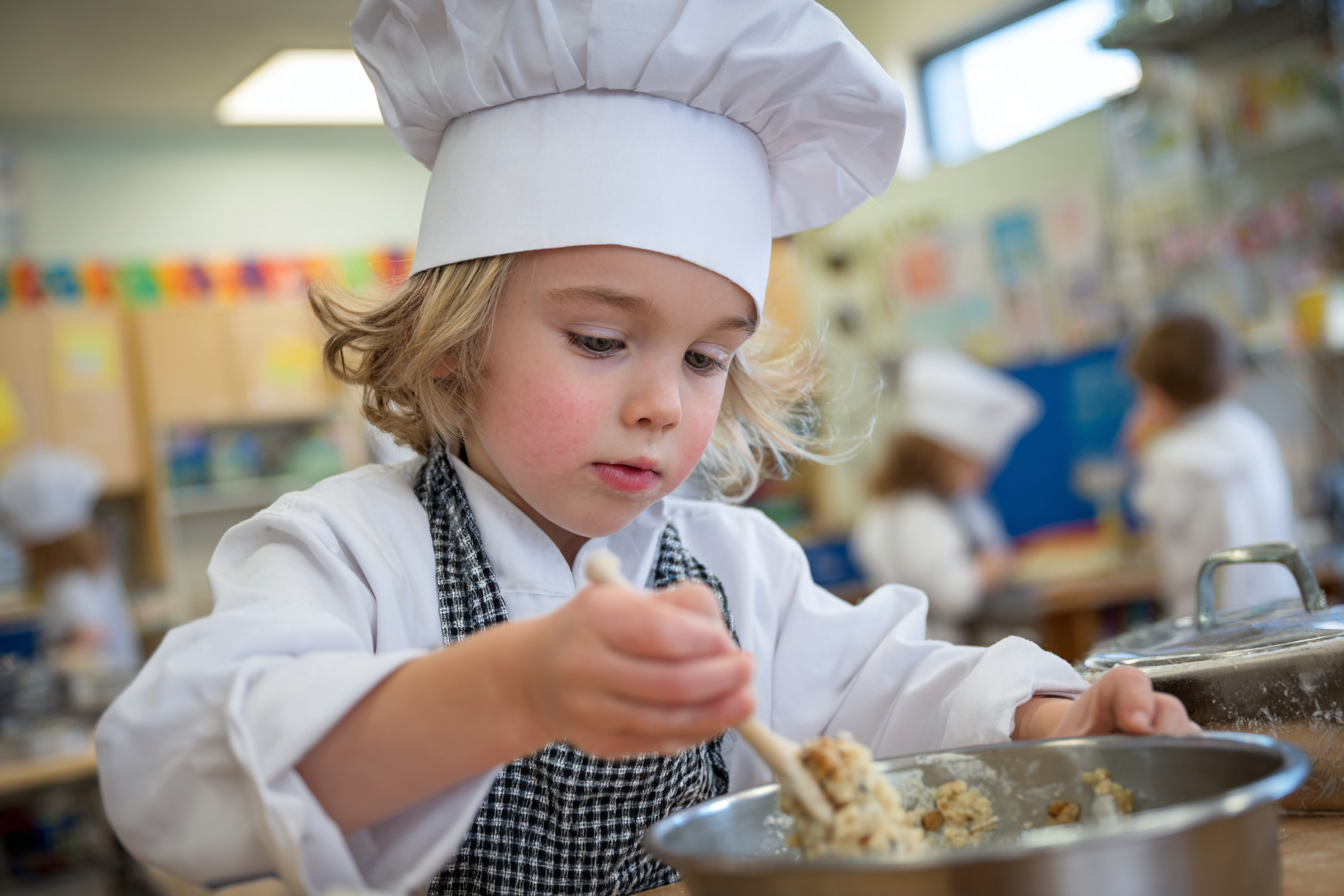
Overview Welcome to Mini-Masterchef Measurement, a multi-session, hands-on unit designed to fuse foundational math concepts—particularly volume measurement and fractions—with real-world life skills in a safe, kitchen-style learning center. Over five sessions, K–2 students will:
- Identify and manipulate standard measuring tools (1-cup, ½-cup, ¼-cup, and tablespoon measures).
- Measure dry ingredients accurately by filling, leveling, and transferring between containers.
- Compare volumes using language of “more,” “less,” and “equal,” reinforcing one-to-one correspondence.
- Understand simple fractions in context (½, ¼, whole) and how fractional parts combine to form a whole.
- Follow sequential, multi-step recipe cards safely, applying listening and comprehension skills.
- Collaborate in small teams—rotating roles of “Head Chef,” “Sous Chef,” and “Quality Inspector”—building social skills and responsible decision-making.
- Reflect on the measurement process through discussion, journaling, and data charting, connecting math to cooking and everyday life.
By the conclusion, students will have prepared a tasty no-bake snack—Math Muffins (oat-cups) or Fractional Trail Mix—while developing number sense, fine-motor coordination, cooperative teamwork, and comfort with practical mathematics.
II. Objectives and Standards
Learning Objectives Students will be able to:
- Name and use measuring tools (1-cup, ½-cup, ¼-cup, tablespoon) correctly.
- Measure ingredients to the brim and level off accurately.
- Compare volumes (“Which holds more: ½-cup or ¼-cup?”) using comparative math language.
- Describe fractional relationships: “Two ¼-cups equal ½-cup,” “Four ¼-cups equal one cup.”
- Follow a sequential recipe by reading or listening to step-by-step instructions.
- Work cooperatively in assigned roles, demonstrating responsibility and respect.
- Reflect on measurement and fraction concepts through journaling and class discussion.
Standards Alignment
- CCSS.MATH.CONTENT.1.MD.A.1: Order three objects by length; extend to ordering volumes.
- CCSS.MATH.CONTENT.2.MD.A.4: Describe and measure volumes by counting unit cubes and understanding equivalent measures (½, ¼, whole).
- CCSS.MATH.CONTENT.K.CC.B.4: Count objects to answer “how many?” up to 20.
- CCSS.MATH.CONTENT.1.OA.A.1: Use addition within 20 to solve story problems (adapted in recipe context).
- NGSS K-ESS3-1: Use a model to represent relationships between needs of different plants/animals and their environments (link to healthy eating choices).
- SEL – Responsible Decision-Making & Relationship Skills: Students make safe choices, share tasks, and show respect in group cooking contexts.