Unit Plan 6 (Grade 1 Art): Paint & Brush Practice
First grade artists experiment with brush strokes, learning how pressure, speed, and brush type create different marks while developing paint control and intentional technique.

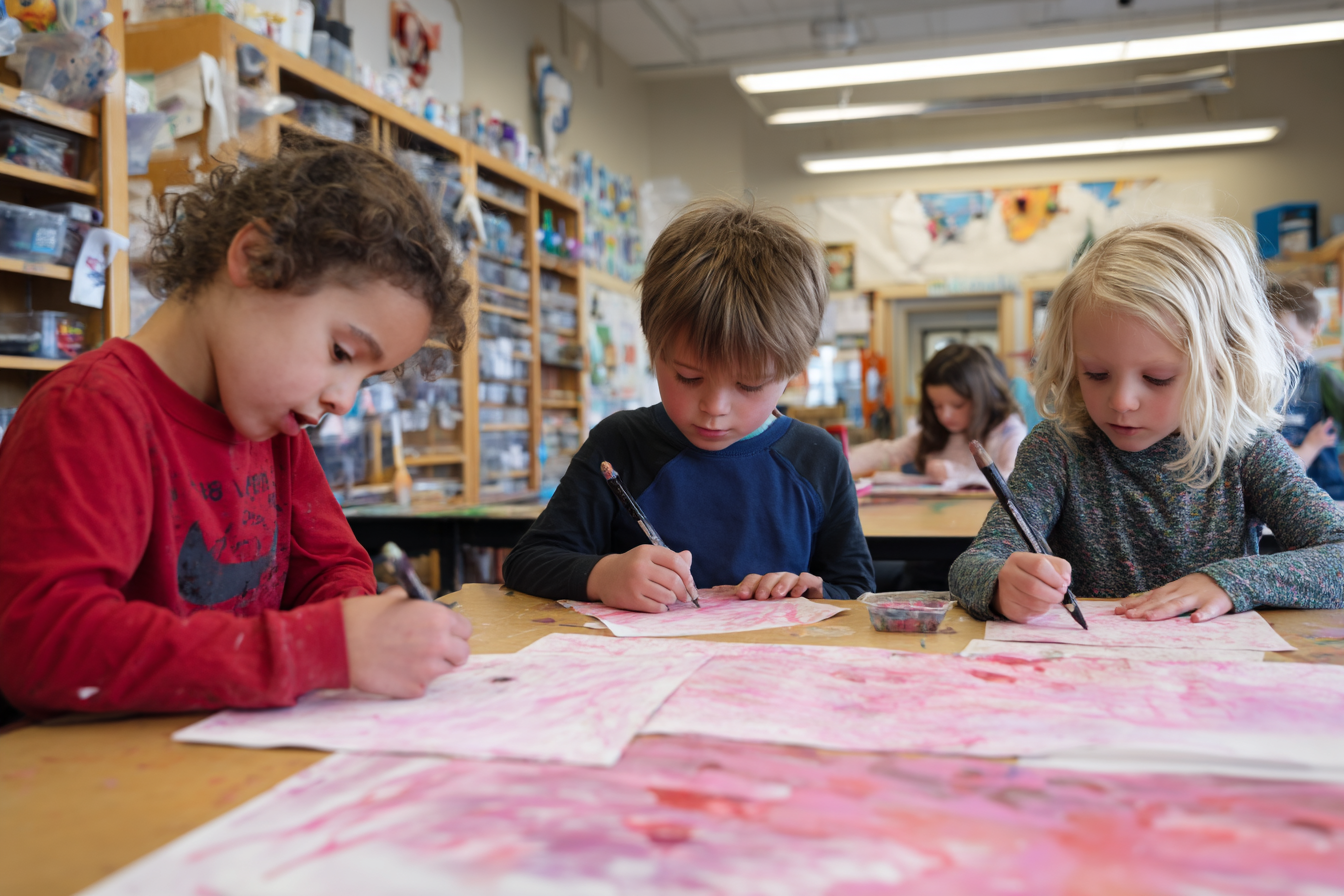
Focus: Experiment with different paintbrush strokes and develop control when using paint, learning how pressure, speed, and brush type change the marks artists can make.
Grade Level: 1
Subject Area: Art (Visual Arts • Creating)
Total Unit Duration: 1–3 weeks, 45–60 minutes per session
I. Introduction
In this unit, first graders become “brush explorers” as they experiment with paint and different kinds of brush strokes. They learn how changing the way they hold the brush, how hard they press, and how much paint or water they use can create thick, thin, smooth, dotted, and textured marks. Students practice on special “brush practice” pages before using their favorite strokes in a simple painting. By the end, they can name a few different strokes, show more control with their brush, and explain how they used their favorite strokes on purpose in their artwork.
Essential Questions
- How do different brush strokes look and feel?
- How does changing my pressure, speed, or brush tip change the marks I make?
- Why is it important to have control when I use paint and brushes?
- How can I use my favorite brush strokes on purpose in a finished painting?
II. Objectives and Standards
Learning Objectives — Students will be able to:
- Experiment with different types of brush strokes (thick, thin, long, short, dotted, dry, watery).
- Show increasing control with paintbrushes by adjusting pressure, speed, and amount of paint or water.
- Create a “Brush Practice” page that shows a variety of different strokes.
- Use at least two favorite brush strokes intentionally in a simple painting (e.g., garden, sky, lines in motion).
- Use simple language to explain which strokes they used and how they controlled their brush.
Standards Alignment — 1st Grade (NCAS-Aligned)
- VA:Cr2.1b — Explore and experiment with different materials and tools to develop control.
- Example: Students practice using paintbrushes with different strokes.
Success Criteria — Student Language
- I can try different brush strokes (thick, thin, long, short, dotted, etc.).
- I can change how I hold and move my brush to control the paint.
- I can make a Brush Practice page that shows many different strokes.
- I can use my favorite strokes on purpose in a painting.
- I can tell a partner which strokes I used and how I controlled my brush.