Unit Plan 36 (Grade 1 Art): Year-End Reflection & Celebration
Grade 1 Art: Students reflect on artistic growth, share favorite projects, use simple criteria like neatness and color, and connect artwork to personal experiences.

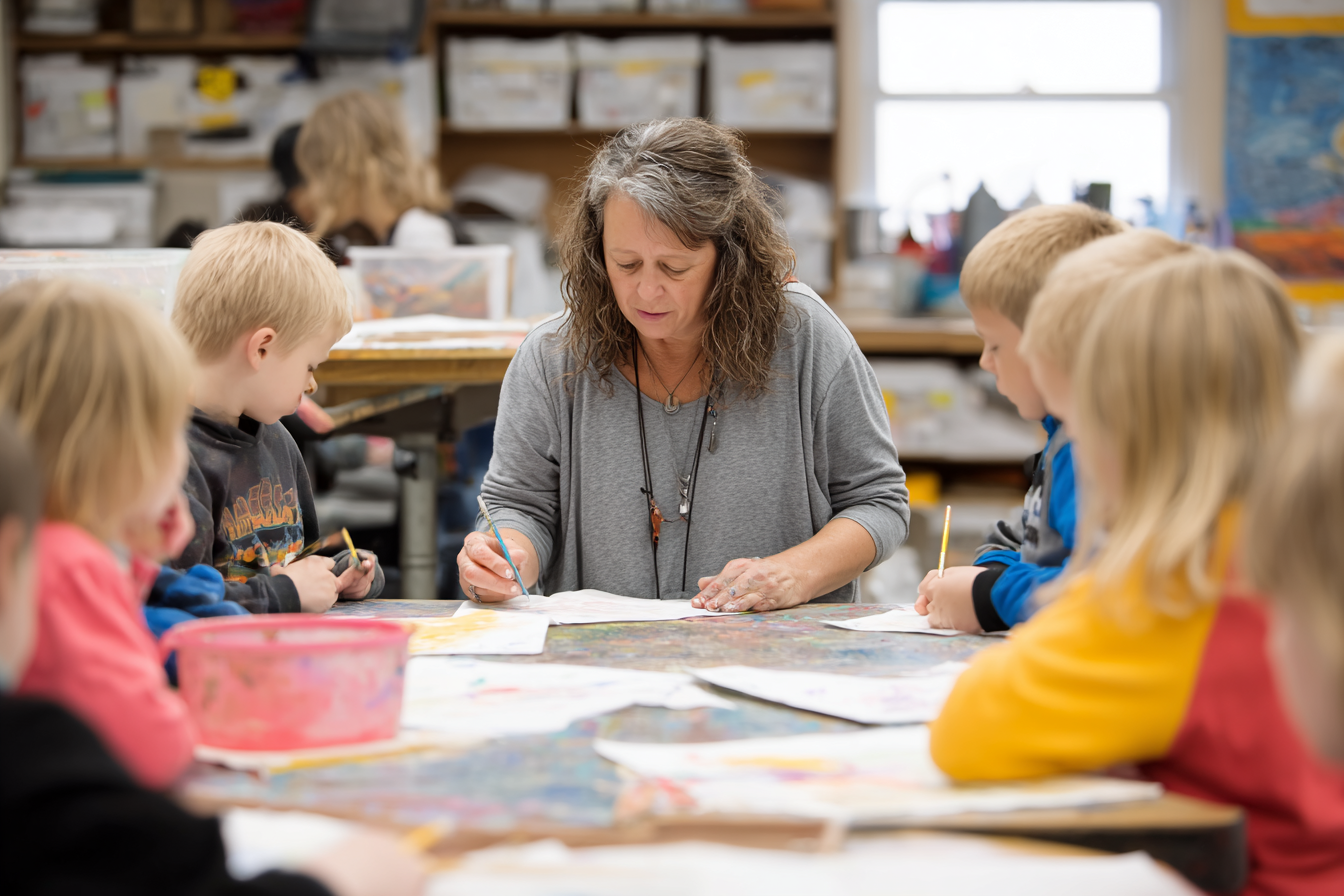
Focus: Reflect on artistic growth across the year, share favorite projects, and connect artwork to personal experiences using simple criteria.
Grade Level: 1
Subject Area: Art (Visual Arts • Connecting • Responding)
Total Unit Duration: 1–3 weeks, 45–60 minutes per session
I. Introduction
In this unit, first graders celebrate their year in art by looking back at their favorite projects and noticing how they have grown as artists. Students revisit different artworks, talk about neatness, color, and clear pictures, and remember the stories or experiences behind them. They select favorite pieces, explain why those pieces matter, and create a small “My Year in Art” reflection page or drawing. By the end, students can name at least one way they improved, one project they loved, and how that artwork connects to their own life.
Essential Questions
- How has my artwork changed and improved this year?
- Which art projects are my favorites, and why?
- How does my artwork show people, places, or moments from my life?
- How can I use simple criteria like neatness and use of color to talk about my art and my classmates’ art?
- How can we celebrate our art learning together?
II. Objectives and Standards
Learning Objectives — Students will be able to:
- Look through a selection of their own artworks and identify favorite projects.
- Use simple criteria (neatness, use of color, clear picture) to talk about their own and classmates’ art.
- Describe how at least one favorite artwork connects to a personal experience or memory.
- Create a small “My Year in Art” reflection drawing/page that shows something they loved making this year.
- Share in a celebration circle, naming one growth point and one favorite project from the year.
Standards Alignment — 1st Grade (NCAS-Aligned)
- VA:Cn10.1a — Create artwork inspired by personal experiences and explain those connections.
- Example: Students draw a family event and describe it.
- VA:Re9.1a — Use simple criteria such as neatness and use of color to talk about artwork.
- Example: Students say what they like about a classmate’s artwork.
Success Criteria — Student Language
- I can pick at least one favorite artwork from this year.
- I can talk about neatness, color, and clear pictures when I look at art.
- I can explain how one favorite artwork is about something in my life.
- I can make a “My Year in Art” picture that shows something I loved making.
- I can say one way I grew as an artist this year.
III. Materials and Resources
Tasks & Tools (teacher acquires/curates)
- Student artwork collections/portfolios from throughout the year (or photos).
- “Favorite Projects” chart with picture icons of different project types (animals, celebrations, landscapes, stories, abstract, etc.).
- Simple criteria chart with icons:
- Neatness (smooth, careful coloring).
- Use of color (more than one color, thoughtful choices).
- Clear picture (easy to tell what it shows).
- “My Favorite Artwork” reflection sheet:
- “This is my favorite because ___.”
- “It is about ___ in my life.”
- Space for a small sketch or symbol of the artwork.
- “My Year in Art” mini-poster or half-sheet:
- Title: “My Year in Art – Grade 1.”
- Space for a drawing of a favorite project or memory.
- Sentence stems: “I got better at ___.” “Next year I want to ___.”
- Stickers or small stars to mark favorite pieces.
- Anchor chart: “Ways I Got Better at Art”
- More details.
- Neater coloring.
- Adding backgrounds.
- Using more colors.
- Drawing clearer stories.
- Anchor chart: “Art Celebration Rules”
- Listen to friends.
- Clap or smile to celebrate.
- Use kind words.
Preparation
- Gather and organize each student’s artwork into a folder or portfolio (early and recent pieces).
- Post criteria and growth charts where students can see them.
- Prepare and copy reflection sheets and “My Year in Art” pages.
- Decide how you will set up a simple Year-End Art Celebration (circle, gallery walk, or both).
Common Misconceptions to Surface
- “Only the best-looking picture can be my favorite.” → Favorites can be special because of the story or memory, not just looks.
- “My art didn’t change much.” → Even small changes (more color, extra details, adding backgrounds) show growth.
- “Talking about art is not real art.” → Reflecting and sharing are important parts of being an artist.
- “I should only talk about my own art.” → Noticing what we like in classmates’ art helps everyone celebrate together.
Key Terms (highlight in lessons) reflection, favorite, growth, neatness, color, clear picture, memory, celebration
IV. Lesson Procedure
(Each session follows: Launch → Explore/Make → Discuss/Share → Reflect. Timing for a 45–60 minute class.)
Session 1 — Favorite Projects & Simple Criteria (Core Session — Addresses Standards: VA:Re9.1a, VA:Cn10.1a)
Launch (8–10 min)
- Show 2–3 sample artworks from the year (teacher or former student examples).
- Ask:
- “Which one might be your favorite and why?”
- “Which one looks the neatest or uses color in an interesting way?”
- Point to the criteria chart (neatness, use of color, clear picture) and connect to VA:Re9.1a.
- Explain that students will look at their own artwork, choose favorites, and use these simple criteria to talk about what they like.
Explore/Make (30–35 min)
- Part A: Portfolio Review & Favorite Picks (VA:Re9.1a)
- Give each student their portfolio/folder.
- Students spread out their work and look through it quietly.
- They choose 2–3 favorite pieces and mark them with a sticker or star.
- Teacher prompts:
- “Which ones make you feel proud?”
- “Which ones show neat coloring or strong colors?”
- “Which ones tell a clear story?”
- Part B: Talking About Favorites Using Criteria
- Students pair up and show one favorite to a partner.
- Use sentence starters:
- “I like this one because the colors are ___.”
- “I worked hard to make it neat here.”
- “You can tell what is happening because ___.”
- Partners respond with one kind comment using criteria:
- “I like your color here because ___.”
Discuss/Share (5–7 min)
- Ask a few volunteers to show one favorite piece and say:
- “This is one of my favorite projects because ___.”
- Connect their reasons back to neatness, color, and clear picture.
Reflect (3–5 min)
- Quick prompt (spoken):
- “Today I used neatness, use of color, and clear picture to talk about my favorite artworks.”
Optional Session 2 — My Favorite Artwork & My Life
Launch (5–7 min)
- Review that art can show things from our own lives (families, places, celebrations, routines).
- Explain that students will pick one favorite artwork and think about how it connects to their life or memories.
Explore/Make (25–30 min)
- Step 1: Choose One Favorite (VA:Cn10.1a)
- Students choose one favorite artwork from those they marked in Session 1.
- Step 2: Favorite Artwork Reflection Sheet (VA:Cn10.1a + VA:Re9.1a)
- Students complete “My Favorite Artwork” sheet with support:
- Draw a small picture or symbol of the artwork.
- Finish the sentence: “This is my favorite because ___.”
- Finish the sentence: “It is about ___ in my life.” (family, event, place, feeling).
- Teacher or helpers can scribe for students who need writing support.
- Students complete “My Favorite Artwork” sheet with support:
- Step 3: Partner Share
- Students share their reflection with a partner:
- “My favorite artwork is about ___, and I like it because ___.”
- Students share their reflection with a partner:
Discuss/Share (10–12 min)
- Invite a few students to share their favorite artwork and the life connection:
- “This picture is about my birthday party. I like it because I used lots of colors and it reminds me of my family.”
- Highlight both the personal experience and the criteria (color, neatness, clear picture).
Reflect (3–5 min)
- Prompt:
- “My favorite artwork is connected to my life because ___.”
Optional Session 3 — “My Year in Art” Celebration
Launch (5–7 min)
- Explain that today is a celebration of everyone’s art learning.
- Review the “Ways I Got Better at Art” chart and ask:
- “Which ways do you think you got better this year?”
- Talk briefly about Art Celebration Rules (listening, clapping, kind words).
Explore/Make (25–30 min)
- Step 1: “My Year in Art” Mini-Poster (VA:Cn10.1a, VA:Re9.1a)
- Give each student a “My Year in Art – Grade 1” page.
- Students draw one scene that shows a favorite art moment or project from the year (e.g., painting day, collage project, celebration art, story picture).
- They use color and neatness to show their best work.
- They complete sentence stems (teacher can scribe):
- “I got better at ___.”
- “Next year I want to ___ in art.”
- Step 2: Celebration Circle
- Students bring their mini-poster to a circle.
- Each student shares:
- One way they got better.
- One favorite project or art moment.
Discuss/Share (10–12 min)
- Ask:
- “What did you notice about how our art changed from the beginning of the year?”
- “What are we excited to try in art next year?”
- Celebrate with a class cheer or quiet clap for the year’s art growth.
Reflect (3–5 min)
- Whole-class prompt:
- “Now I know I am an artist who can grow, choose favorites, and share stories from my life through art.”
V. Differentiation and Accommodations
Advanced Learners
- Encourage them to name two or more ways they improved (e.g., details, backgrounds, people, color choices).
- Invite them to compare two favorite projects and explain different reasons they like each.
- Challenge them to add an extra sentence about what kind of art they want to explore in the next grade.
Targeted Support
- Pre-select a smaller set of artworks (3–4) for students who may be overwhelmed, and guide them in choosing favorites.
- Use visual supports on reflection sheets (smiley faces, stars, icons for family, school, celebration).
- Provide oral reflection: students tell the teacher their ideas while the teacher writes the sentences.
- Practice sentence starters as a group and let students repeat them:
- “This is my favorite because ___.”
- “It is about ___ in my life.”
Multilingual Learners
- Use a visual word bank for: favorite, family, home, school, party, happy, proud.
- Allow mixed-language reflections:
- “This is my favorito (favorite) because it shows mi familia.”
- Pair with supportive peers who can help restate ideas in English.
- Accept short labels and drawings as part of their reflections.
IEP/504 & Accessibility
- Provide larger paper and bold drawing tools for students with fine-motor or visual needs.
- Break tasks into small steps with picture cues (Step 1: pick favorite, Step 2: mark it, Step 3: draw “My Year in Art,” Step 4: share one sentence).
- Allow alternative ways to share in the celebration circle (whisper to teacher, recorded message, or pointing while adult reads their sentence).
- Offer extra time and breaks for students who may tire easily from reviewing multiple artworks.
VI. Assessment and Evaluation
Formative Checks (each session)
- Session 1 — Students select several favorite artworks and use simple criteria (neatness, color, clear picture) in partner discussions.
- Optional Session 2 — Favorite Artwork Reflection sheets show at least one reason for favorite and one personal life connection.
- Optional Session 3 — “My Year in Art” posters and circle sharing show awareness of growth and favorite projects.
Summative — “Year-End Reflection & Celebration” Task (0–2 per criterion, total 10)
- Identification of Favorites
- 2: Student clearly identifies at least one favorite artwork and can point to or show it.
- 1: Student selects a favorite but needs significant help or changes their mind repeatedly.
- 0: Student cannot identify any favorite artwork, even with support.
- Use of Simple Criteria (VA:Re9.1a)
- 2: Student uses at least one criterion (neatness, use of color, clear picture) when talking about their own or a classmate’s artwork.
- 1: Student mentions liking an artwork but does not use criteria clearly, even with prompting.
- 0: Student does not use criteria at all, even with support.
- Explanation of Personal Connection (VA:Cn10.1a)
- 2: Student explains how at least one favorite artwork or their “My Year in Art” drawing is about something in their life (family, event, place, feeling).
- 1: Student gives a vague connection (“It’s about me”) with little detail.
- 0: Student cannot explain any connection to their life, even with prompts.
- Evidence of Artistic Growth Awareness
- 2: Student can name at least one specific way they have grown as an artist (e.g., “I color neater now,” “I add backgrounds,” “I draw more details”).
- 1: Student gives a general statement (“I got better”) without specific detail.
- 0: Student cannot state any way they have grown, even with support.
- Participation in Celebration & Sharing
- 2: Student participates in the celebration circle or partner sharing by sharing at least one idea (favorite or growth) and listening respectfully to others.
- 1: Student participates minimally or needs reminders to listen and share.
- 0: Student does not participate meaningfully, even with encouragement and support.
Feedback Protocol (TAG)
- Tell one strength (e.g., “You did a great job explaining how your picture of the park is about a real day with your family.”).
- Ask one question (e.g., “Which project would you like to try again next year?”).
- Give one suggestion (e.g., “Next year, you might keep working on adding more background details to tell even bigger stories.”).
VII. Reflection and Extension
Reflection Prompts
- When you look at your first-grade art, what makes you feel proud?
- Which project will you always remember, and why?
- How does your artwork show who you are and what you care about in your life?
- What is one thing you are excited to learn or try in art next year?
Extensions
- Year-End Art Book: Create a simple class book with photos or small copies of favorite artworks and one sentence from each student about why they chose it.
- Family Art Celebration: Send home favorite-artwork reflections so families can talk together about the child’s growth in art.
- Letter to Future Art Teacher: Have students dictate or draw a short message to next year’s art teacher: “I am an artist who likes to ___ and wants to get better at ___.”
Standards Trace — When Each Standard Is Addressed
- VA:Cn10.1a — Session 1 (students begin connecting favorites to personal pride and interest), Optional Session 2 (students explain how favorite artworks relate to personal experiences and memories), Optional Session 3 (students create “My Year in Art” drawings inspired by favorite art moments from their own lives and describe these connections).
- VA:Re9.1a — Session 1 (students use simple criteria such as neatness, use of color, and clear picture to talk about their own and classmates’ favorite artworks), Optional Session 2 (students reference criteria while explaining why they like certain pieces), Optional Session 3 (students reflect on growth using simple criteria as part of “My Year in Art” discussion and celebration).