Unit Plan 1 (Grade 1 Music): Music Routines & Listening
Build Grade 1 music listening routines and discussion skills as students practice music-ready behavior, connect musical examples to feelings and classroom purposes, and share simple opinions using personal interests and experiences.

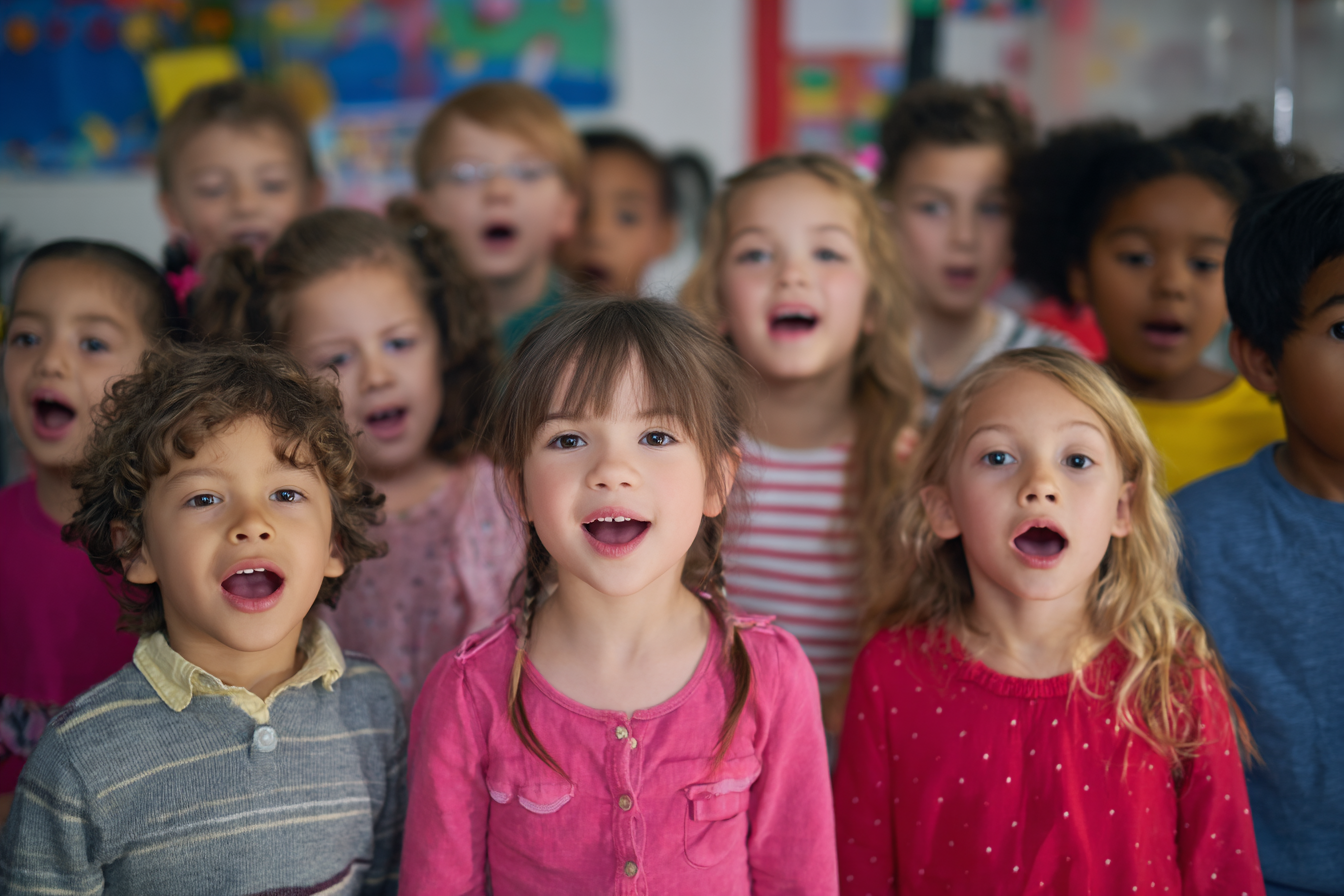
Focus: Build listening habits, classroom routines, and music discussion skills so students can connect music to their own interests and classroom purposes.
Grade Level: 1
Subject Area: Music (Responding • Performing • Classroom Routines)
Total Unit Duration: 4 sessions (2+ weeks), 20–30 minutes per session
I. Introduction
In this unit, first graders learn how we do music class and how to be thoughtful listeners. Students practice entering and exiting the room, using quiet signals, caring for instruments, and finding a music-ready body. They listen to short musical examples and talk about how the music makes them feel, what it reminds them of, and what it might be good for (moving, resting, lining up, reading). Students begin to notice how their own interests and experiences shape which music they like and why they might choose particular music for different classroom moments.
Essential Questions
- What does it look and sound like to be ready for music class?
- How do my interests and experiences help me choose music for different purposes?
- How can I listen carefully to music and then talk about what I notice and feel?
- How can we use music to help with classroom routines (moving, calming down, getting ready to learn)?
II. Objectives and Standards
Learning Objectives — Students will be able to:
- Follow basic music class routines (entering, sitting/standing, using quiet signals, caring for instruments).
- Demonstrate a listening body (still, focused, quiet) while hearing short musical examples.
- With limited guidance, identify how a piece of music might match a specific purpose (e.g., calm reading, moving, clean-up).
- Share a simple reason why they like a song or why they think it fits a certain classroom use.
- Participate in a short class discussion about music, using simple feeling words (happy, calm, excited) and purpose words (for dancing, for resting).
Standards Alignment — Grade 1 Music (NAfME-Aligned)
- MU:Re7.1.1a — With limited guidance, identify and demonstrate how personal interests and experiences influence musical selection for specific purposes.
- Example: Choosing calming music for quiet reading time.
- MU:Pr4.1.1a — With limited guidance, demonstrate and discuss personal interest in, knowledge about, and purpose of varied musical selections.
- Example: Explaining why a song is good for dancing or relaxing.
Success Criteria — Student Language
- I can show a music-ready body when we listen and move.
- I can say whether I like a piece of music and give a simple reason.
- I can say what a piece of music might be good for (moving, resting, lining up, reading).
- I can listen quietly while others share and then take a turn to share my own ideas.
III. Materials and Resources
Tasks & Tools (teacher acquires/curates)
- Recordings of short, varied musical examples:
- Energetic/upbeat piece for movement.
- Calm/slow piece for resting or quiet work.
- Playful or medium-tempo piece for transition or classroom routines.
- Visuals and supports:
- Music-ready body poster (feet still, hands in lap or at sides, eyes on teacher, quiet mouth).
- Listening map or simple pictures to track sections of a piece (e.g., icons for loud/soft, fast/slow).
- Emotion or purpose cards (happy, calm, excited; “for dancing,” “for reading,” “for lining up”).
- Routines and management:
- Clearly defined enter/exit routines for the music space.
- A quiet signal (instrument, hand sign, call-and-response).
- Optional: small percussion instruments for later sessions (used only after routines are set).
Preparation
- Select 3–5 short musical excerpts to use across the unit that clearly show different tempos and moods.
- Create and post the Music-Ready Body chart and Listening Rules (look, listen, still, think).
- Prepare simple sentence frames for sharing:
- “I like this music because __.”
- “This music is good for __ because __.”
- Decide on a few classroom moments where music could be used (line-up song, calm reading song, tidy-up song) and gather sample tracks.
Common Misconceptions to Surface
- “Listening time means I can talk quietly to my neighbor.” → Listening time means everyone is quiet, even our whispers.
- “If I don’t like a piece, I shouldn’t listen.” → We can still be good listeners and talk about music even if it’s not our favorite.
- “Fast music is always better than slow music.” → Some situations need calm or slow music; they are different, not better or worse.
- “There is only one right answer” for what music is good for. → Different people may choose different music for the same purpose because of their interests and experiences.
Key Terms (highlight in lessons) routine, music-ready body, listening, favorite, calm, excited, fast, slow, quiet, purpose
IV. Lesson Procedure
(Each session is designed for a 20–30 minute class period.)
Session 1 — Welcome to Music: Routines & Listening Ears (Re7.1.1a & Pr4.1.1a)
- Launch (4–6 min)
- Greet students at the door and guide them into the music space using the enter routine (walk in, find a spot, sit in music-ready body).
- Briefly introduce: “In music class we listen, move, and share ideas. Today we will practice how to be ready for music.”
- Explore, Part A: Music-Ready Body & Listening Rules (6–8 min)
- Show the Music-Ready Body poster and model:
- “Feet still, hands in lap, eyes watching, ears listening, mouth quiet.”
- Have students copy your music-ready body.
- Add 3 simple Listening Rules:
- Look at the teacher or listening picture.
- Keep hands and feet still.
- Let your ears and brain do the work.
- Show the Music-Ready Body poster and model:
- Explore, Part B: First Listening Activity (6–8 min)
- Play a short, calm piece of music. Ask students to show music-ready bodies.
- After listening, ask a few students:
- “How did this music make you feel—happy, calm, sleepy, excited?”
- “Where might this music be good to use? For rest time, for reading, for dancing?”
- Use emotion and purpose cards to help students point or choose if they are not ready to speak.
- Discuss (3–5 min)
- Ask: “What did you notice about our bodies during listening?” Emphasize when they were focused and quiet.
- Connect to standards: explain that their feelings and experiences help them decide what music is good for.
- Reflect (2–3 min)
- Quick check-out: students quietly show a thumbs up if they feel they can show a music-ready body again next time, or hold up one finger to show they still need practice.
Session 2 — Music for Different Purposes (Re7.1.1a & Pr4.1.1a)
- Launch (3–5 min)
- Review Music-Ready Body and Listening Rules with quick student modeling.
- Ask: “Last time we listened to calm music. Today we will listen to music that might be good for different things we do at school.”
- Explore, Part A: Contrasting Listening Examples (8–10 min)
- Play a fast, energetic piece of music. Have students keep music-ready bodies for the first part, then invite controlled movement (wiggle fingers, march in place) as appropriate.
- Ask:
- “How does this music feel—calm, excited, or something else?”
- “What might this music be good for? Dancing? Waking up? Lining up?”
- Then play a slow, gentle piece. Repeat the questions, guiding students to notice differences in tempo and feel.
- Explore, Part B: Matching Music to Classroom Moments (6–8 min)
- Show simple picture cards for classroom moments (reading time, lining up, cleaning up, brain break).
- For each card, play a short clip (or remind them of the earlier examples) and ask:
- “Would this music be good for this time? Why or why not?”
- Let students respond by raising hands, pointing to yes/no cards, or using short sentences:
- “Good for reading because it is quiet.”
- “Good for moving because it is fast.”
- Discuss (3–5 min)
- Ask: “Did everyone choose the same music for each classroom moment?”
- Highlight: “Sometimes we pick different music because of what we like or what we have done before—our experiences.”
- Reflect (2–3 min)
- Students complete a quick oral or gesture reflection:
- “Today I liked the __ music best because __.”
- Students complete a quick oral or gesture reflection:
Optional Session 3 — My Favorite Music Choices (Re7.1.1a & Pr4.1.1a)
- Launch (3–5 min)
- Review: “We have been thinking about which music we like and what it might be good for.”
- Tell students: “Today we will listen to some choices and think about our favorites and why.”
- Explore, Part A: Listening Choice Round (8–10 min)
- Play 2–3 short excerpts (e.g., playful, calm, bouncy).
- After each, ask students to quietly show:
- Thumbs up if they like it, sideways if it’s “okay,” down if they don’t like it much (emphasizing all opinions are okay, but we always stay respectful).
- Ask a few volunteers to share:
- “I like this music because __ (it is fast, it reminds me of a party, I heard it before, etc.).”
- Explore, Part B: Favorite & Purpose Match (6–8 min)
- Have students stand by a corner of the room or use a color card to show which piece was their favorite (Piece A, B, or C).
- In each group, briefly discuss:
- “What could we use this music for at school?” (brain break, lining up, putting supplies away, etc.)
- Groups share one idea with the class, with teacher helping to restate in complete sentences.
- Discuss (3–5 min)
- Ask:
- “Did everyone pick the same favorite? Why or why not?”
- Tie back to the standard:
- “You chose music because of what you like and what you have done before. That is your interest and experience helping you pick music.”
- Ask:
- Reflect (2–3 min)
- Students finish the sentence orally or with a drawing later:
- “My favorite classroom music today was __. I think it is good for __.”
- Students finish the sentence orally or with a drawing later:
Optional Session 4 — Class Listening Chart & Routine Music (Re7.1.1a & Pr4.1.1a)
- Launch (3–5 min)
- Ask: “What are some times in our day when music could help us?”
- List 3–4 moments on the board (e.g., coming in, clean-up, quiet reading, line-up).
- Explore, Part A: Building a Class Listening Chart (8–10 min)
- For each classroom moment, play one short music example (reusing favorites from earlier sessions).
- As a class, decide:
- “Is this a good song for this time? Yes or no?”
- If yes, write it on your Class Listening Chart (e.g., “Clean-Up Song: [description or title]”).
- Invite students to raise hands and explain why:
- “It’s good for cleaning up because it is bouncy and keeps us moving.”
- Explore, Part B: Practicing a Routine with Music (5–7 min)
- Choose one routine (like cleaning up or lining up).
- Practice the routine with the selected music playing:
- Emphasize quick, safe movement and listening for the start and stop of the music as a signal.
- Discuss (3–5 min)
- Ask: “How did the music help us with our routine?”
- Point out that students helped choose music that fits a purpose in the classroom.
- Reflect (2–3 min)
- Students share in a quick round:
- “Next time we hear our __ song, I will remember to __ (clean up, line up, get quiet, etc.).”
- Students share in a quick round:
V. Differentiation and Accommodations
Advanced Learners
- Encourage students to use more precise language (e.g., “The music is fast/slow, loud/soft, high/low”) when describing why they chose a piece.
- Invite them to suggest additional purposes for music beyond the classroom (e.g., sports, celebrations, holidays) and connect these to their own experiences.
- Have advanced students help lead a routine (e.g., starting the clean-up music, modeling music-ready body).
Targeted Support
- Use visual supports (pictures of routines, emotion faces, thumbs up/sideways/down cards) so students can respond without full sentences.
- Provide sentence frames:
- “I like this music because it is __.”
- “This music is good for __.”
- Keep listening excerpts very short (15–30 seconds) for students with shorter attention spans.
- Repeat key instructions and model routines multiple times with clear gestures.
Multilingual Learners
- Pair simple English words with pictures and gestures (happy/calm/excited, fast/slow, dance/read/line up).
- Allow students to share in their home language first with a partner, then choose 1–2 English words to share with the class.
- Use call-and-response phrases that are easy to repeat (e.g., “Music-ready?” / “Body!”).
IEP/504 & Accessibility
- Provide flexible seating (spot markers, chairs, floor cushions) for students who need clearer boundaries.
- For students with sensory sensitivities, allow sitting farther from speakers or using an agreed-upon quiet signal if music feels too loud.
- Break routines into smaller steps with visual cues (1: walk in, 2: find your spot, 3: music-ready body).
- Offer time for preview of listening examples or routines with support staff if needed.
VI. Assessment and Evaluation
Formative Checks (ongoing in all sessions)
- Do students follow enter/exit routines and show a music-ready body with fewer reminders over time?
- Can students name at least one purpose for a musical example (e.g., dancing, reading, lining up)?
- Do students share simple reasons why they like or do not prefer certain music, connecting to feelings or experiences?
- Are students able to maintain quiet listening and take turns in brief music discussions?
Summative — Music Routines & Listening Task (0–2 per criterion, total 10)
- Music Routines & Readiness
- 2: Consistently follows music routines (entering, music-ready body, quiet signal) with minimal reminders.
- 1: Follows routines with occasional reminders.
- 0: Often needs multiple reminders or does not follow routines.
- Identifying Purpose of Music (MU:Re7.1.1a)
- 2: With limited guidance, correctly identifies at least one suitable purpose for multiple musical examples (e.g., calm vs. active uses).
- 1: Identifies a purpose with prompts or inconsistently.
- 0: Does not identify or confuses musical purposes even with support.
- Personal Interest & Experience Connection (MU:Re7.1.1a)
- 2: States a clear preference (like/dislike) and connects it to a simple interest or experience (“It reminds me of…,” “I like it because…”).
- 1: States a preference but gives little or no explanation.
- 0: Cannot state a preference or changes answer without explanation.
- Discussion of Music Selection & Purpose (MU:Pr4.1.1a)
- 2: With limited guidance, can say why a song is good for a specific use (dancing, resting, lining up).
- 1: Gives a partial reason or needs prompting.
- 0: Does not connect music selection to purpose.
- Listening Behavior & Participation
- 2: Listens quietly, takes turns, and participates appropriately in music discussions and activities.
- 1: Generally participates with some reminders about listening behavior.
- 0: Listening behavior often disrupts activities or discussions.
Feedback Protocol (TAG) — Teacher to Student
- Tell one strength (e.g., “You showed a great music-ready body during the calm song.”).
- Ask one question (e.g., “When might this music help you at school?”).
- Give one suggestion (e.g., “Next time, try staying still for the whole song so your ears can do all the work.”).
VII. Reflection and Extension
Reflection Prompts
- When we listen to music in class, what helps you stay in a music-ready body?
- Which kind of music do you like best at school (fast, slow, loud, soft)? Why?
- How can the music we choose help us during different times in our day (reading, cleaning up, moving)?
- How did listening to different kinds of music help you learn more about yourself?
Extensions
- Class Routine Playlist: Work toward building a short “classroom playlist” over time (line-up song, clean-up song, calm-down song) using students’ input.
- Home Connection: Send a note home inviting families to share one favorite song they use at home and what it’s for (cleaning, bedtime, celebrations).
- Art & Music: Have students draw a picture of what they imagine or what they might be doing when listening to one of the classroom songs (e.g., reading under a tree, dancing at a party).
Standards Trace — When Each Standard Is Addressed
- MU:Re7.1.1a — Sessions 1–2 (identifying feelings and purposes for music), Optional Session 3 (choosing favorites and explaining why), Optional Session 4 (matching music to class routines and building the listening chart).
- MU:Pr4.1.1a — Sessions 2–4 (demonstrating and discussing personal interest and purpose of musical selections for different classroom uses).