Unit Plan 36 (Grade 1 PE): Celebration of Movement
Celebrate the end of Grade 1 PE with favorite game replays, active participation, and student reflection—building joy, movement confidence, and activity preferences.

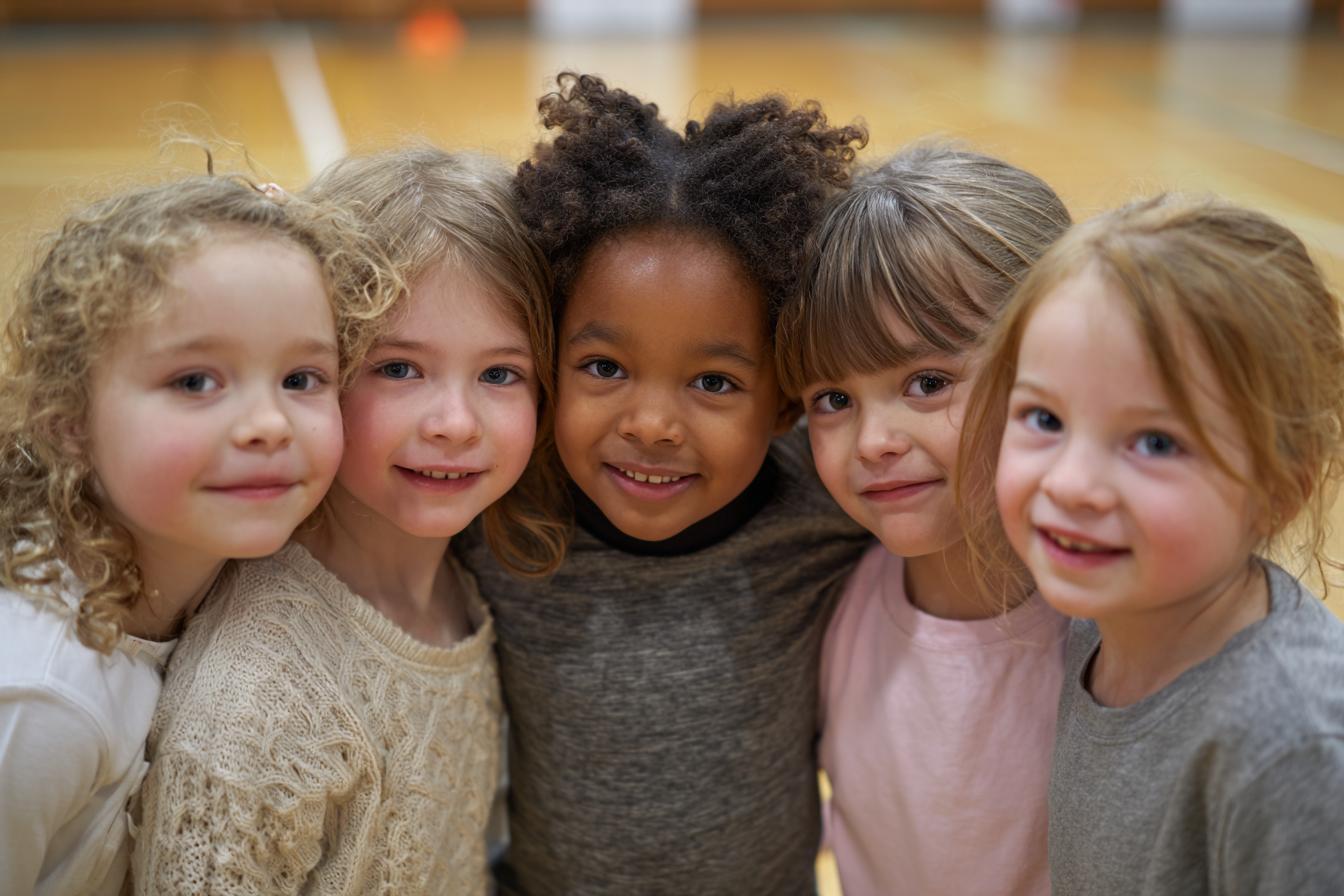
Focus: Help students celebrate their year of PE by staying actively involved in favorite games, showing joy in movement, and sharing which activities they liked most and why.
Grade Level: 1
Subject Area: Physical Education (Active Participation • Enjoyment of Movement • Activity Preference)
Total Unit Duration: 2 core sessions + 2 optional sessions (1–2 weeks), 20–30 minutes per session
I. Introduction
Students finish the year by revisiting favorite movement experiences and recognizing how much they have grown in PE. In Grade 1, this means not only replaying beloved games, but also noticing what kinds of activities feel exciting, fun, and meaningful. This unit uses a class-choice dance warm-up and then moves into student-voted replays of favorite games such as Sharks and Minnows, Castle Builders, Parachute, and other familiar class activities. The goal is to help students stay active, enjoy movement with classmates, and begin explaining which kinds of games they liked best and why.
Essential Questions
- Which PE games do I enjoy the most?
- Why do some movement activities feel especially fun to me?
- How can I stay active while replaying favorite games?
- How can I share what I liked most about PE this year?
II. Objectives and Standards
Learning Objectives — Students will be able to:
- Participate actively in favorite PE games and movement activities for much of class time.
- Show enjoyment and enthusiasm during class-choice and student-voted activity replays.
- Identify favorite physical activities and explain simple reasons for those preferences.
- Reflect on how movement games, equipment, teamwork, or music made PE enjoyable.
Standards Alignment — 1st Grade (SHAPE America-based custom)
- PE:S3.1a Participate actively in moderate-to-vigorous physical activities during class.
- Example: Students engage in running, jumping, and movement games for sustained periods.
- PE:S5.1a Show enjoyment and enthusiasm when participating in physical activities.
- Example: Students actively participate and express excitement during movement games.
- PE:S5.1b Identify physical activities they enjoy and explain why they like them.
- Example: A student shares that they enjoy tag because it allows them to run fast.
Success Criteria — Student Language
- I can stay active in my favorite PE games.
- I can show joy and energy during movement.
- I can tell which activities I liked best.
- I can say why a game or activity is one of my favorites.
III. Materials and Resources
Tasks & Tools (teacher acquires/curates)
- General Equipment
- Cones to mark boundaries, game zones, waiting areas, and transition paths.
- Floor spots or poly spots for home spots and voting or gathering areas.
- Whistle and/or visual stop signal.
- Picture cards or posters showing favorite, choice, vote, fun, active, why, and move.
- Warm-Up Equipment
- Speaker or music source for the class-choice dance warm-up.
- A short menu of familiar dance or movement songs used earlier in the year.
- Open space with enough room for all students to dance safely.
- Optional visual cue cards for clap, stomp, hop, jump, freeze, and dance.
- Game/Activity Equipment
- Equipment for 2–3 favorite replay games selected by the class. Possible options may include:
- Sharks and Minnows: cones for boundaries and safe zones.
- Castle Builders: cones and soft rolling balls.
- Parachute Games: parachute and open circle space.
- Scooter Highway: scooters, cones, and traffic markers.
- Mini-Soccer: soft soccer balls and cone goals.
- Target Toss or Bowling: beanbags, pins, buckets, or hoops.
- Simple voting cards, colored cones, or hand-raise chart for choosing replay games.
- Optional picture signs for each game choice so students can connect names to visual memories.
- Equipment for 2–3 favorite replay games selected by the class. Possible options may include:
- Reflection & Assessment Tools
- Teacher checklist for active participation, enjoyment, preference language, and safe participation.
- Quick reflection prompts, thumbs-up/sideways/down checks, or smiley-face cards.
- Optional class chart titled Our Favorite PE Games.
Preparation
- Select 4–5 familiar games from the year that students already know how to play.
- Prepare a quick, simple voting method that Grade 1 students can understand easily.
- Set up 2–3 replay game areas before class begins so transitions stay smooth and active time stays high.
- Review the core rules for each possible replay game before beginning the first vote.
- Keep the class-choice and reflection routines short so most of class stays focused on active game play.
Common Misconceptions to Surface
- “Favorite day means I do not have to follow rules.” → Favorite games still use PE routines and safe movement.
- “If my choice is not picked, I cannot enjoy class.” → Students can still have fun and discover new favorites in other games.
- “A favorite game is only the one that helps me win.” → Students may like games because they are fast, funny, musical, social, or use fun equipment.
- “Reflection only happens at the end.” → Students can think about what they enjoy during and after each activity.
Key Terms (highlight in lessons) favorite, choice, vote, fun, active, enjoy, why, game, movement, remember
IV. Lesson Procedure
(Each lesson follows: Launch → Warm-up → Game/Activity → Reflect. Timing for a 20–30 minute block.)
Session 1 — Favorite Game Voting and Replay
- Launch (3–4 min)
- Students begin on home spots facing the teacher.
- Teacher explains that today’s class is about replaying favorite movement games from the year.
- Briefly preview a few familiar game options with picture cards or short reminders.
- Review one important reminder: even on a favorite-game day, students still use safe movement and game rules.
- Warm-up (5–6 min) — Class-Choice Dance Warm-Up
- Equipment: Music source, open dance space, optional movement cue cards.
- Set-Up:
- Students spread out in safe dance space.
- Teacher presents 2–3 familiar dance warm-up choices or songs.
- Procedure:
- The class quickly votes on a favorite dance warm-up.
- Teacher leads a short dance sequence using familiar moves such as:
- clap and stomp,
- hop and freeze,
- jump and turn,
- gallop or side step,
- reach high and low.
- Keep the warm-up upbeat, active, and joyful so students begin class with energy.
- Rules:
- The warm-up is played by following the chosen dance moves safely in personal space.
- Students must keep enough room for arms and feet.
- Everyone participates in the chosen warm-up, even if it was not their first vote.
- Freeze means stop right away and listen.
- Game/Activity (10–12 min) — Students Vote on 2 Favorite Games to Replay
- Equipment: Equipment for the selected games, voting visuals, cones for zones.
- Set-Up:
- Present 3–4 familiar game options.
- Quickly vote and choose 2 games for the day.
- Set students in the first selected game area, then rotate or switch as time allows to the second.
- Procedure:
- Students replay two class-voted games such as Sharks and Minnows, Castle Builders, or Parachute.
- Teacher gives a short reminder of the rules before each game starts.
- Students stay active and engaged while the teacher reinforces enjoyment and participation with prompts such as:
- “What do you like about this game?”
- “Does this game help you move fast, work with others, or use cool equipment?”
- “Show me your active body.”
- Keep rounds short and energetic so both favorite games fit into the session.
- Rules:
- The game replay is played by following the rules of the selected activity exactly as practiced earlier in the year.
- Students must move safely, stay in the correct boundaries, and freeze on signal.
- Everyone tries both voted games with a positive attitude.
- Voting happens once, then the class commits to active participation in the selected games.
- Reflect (2–3 min)
- Prompt: “Which replay game did you enjoy most today, and why?”
Session 2 — Favorite Game Replays and Preference Reflection
- Launch (3–4 min)
- Review the games students replayed in Session 1.
- Ask students to think about what they liked best: fast running, music, equipment, teamwork, or another reason.
- Explain that today they will vote again and think even more about why some activities are favorites.
- Warm-up (5–6 min) — Class-Choice Dance Warm-Up with Favorites Mix
- Equipment: Music source, open space.
- Set-Up:
- Use the same safe dance setup as Session 1.
- Present a short menu of favorite dance warm-up moves or songs.
- Procedure:
- Students vote on a dance warm-up or choose favorite movement patterns from a class menu.
- Teacher leads the selected dance sequence, mixing in familiar movements such as:
- stomp-clap patterns,
- hop-freeze,
- slide and turn,
- jump and reach.
- This reinforces student voice and joyful movement right from the start.
- Rules:
- The warm-up is played by following the selected dance routine safely in personal space.
- Students must still use control and stop on cue.
- Everyone participates with effort and joy.
- Game/Activity (10–12 min) — Students Vote on 2–3 Favorite Games to Replay
- Equipment: Equipment for the selected favorites, voting visuals.
- Set-Up:
- Offer 3–5 familiar activity choices.
- Vote and select 2–3 favorites depending on time and setup.
- Arrange the games as quick replay rounds or short rotations.
- Procedure:
- Students replay 2–3 favorite activities, such as Sharks and Minnows, Castle Builders, Parachute, or other class favorites from the year.
- Teacher asks short preference questions during transitions, such as:
- “Do you like this one because it is fast?”
- “Do you like this one because the whole class plays together?”
- “Do you like the equipment in this game?”
- Students continue moving actively while beginning to connect their preferences to different features of the game.
- Rules:
- The game replay rotation is played by following the teacher’s chosen order and the rules of each activity.
- Students must transition safely between replay games.
- Everyone stays actively involved during each replay round.
- Students respect the class vote and participate fully in the chosen games.
- Reflect (2–3 min)
- Prompt: “What kind of PE activity do you like most, and why?”
Optional Session 3 — Favorite Game Trail
- Launch (3–4 min)
- Review that students can enjoy activities for different reasons.
- Explain that today they will move through a trail of favorite games and keep noticing what makes each one special.
- Warm-up (5–6 min) — Class-Choice Dance Warm-Up with Quick Vote
- Equipment: Music source, open dance space.
- Set-Up:
- Use the same dance area and a short menu of familiar songs or movement patterns.
- Procedure:
- Students quickly vote on a favorite dance warm-up.
- Teacher leads a short, energetic routine with familiar movements.
- Keep the warm-up short so active replay time stays high.
- Rules:
- The warm-up is played by following the chosen routine safely in personal space.
- Students must stop on signal and keep movement controlled.
- Everyone participates in the selected dance.
- Game/Activity (10–12 min) — Favorite Game Trail
- Equipment: Same favorite game setups used earlier in the unit.
- Set-Up:
- Arrange the replay games as a trail or loop around the space.
- Students move from one favorite game stop to the next on teacher signal.
- Procedure:
- Students play short rounds of each favorite game as part of a movement trail.
- Teacher continues encouraging students to think about what they enjoy and why.
- This format keeps the lesson feeling playful and active while reinforcing preference awareness.
- Rules:
- The trail is played by completing each game stop in order and moving safely to the next one.
- Students must follow the rules of each replay game and stay inside the correct boundaries.
- Everyone tries each game stop with effort and a positive attitude.
- Reflect (2–3 min)
- Prompt: “Which game stop would you most want to play again next year?”
Optional Session 4 — Favorite Games Remix
- Launch (3–4 min)
- Review that students have now replayed many favorite PE games and thought about why they enjoy them.
- Explain that today they will use those same favorite activities in one more active remix day.
- Warm-up (5–6 min) — Class-Choice Dance Warm-Up with Movement Remix
- Equipment: Music source, open space.
- Set-Up:
- Use the same dance warm-up layout as earlier sessions.
- Procedure:
- Students vote on favorite dance moves from earlier classes.
- Teacher combines them into a short “remix” warm-up, such as clap-stomp-hop-freeze and jump-turn-slide.
- This helps students feel ownership while staying active.
- Rules:
- The warm-up is played by following the remixed dance sequence safely.
- Students must keep safe space and stop on signal.
- Everyone joins the full sequence.
- Game/Activity (10–12 min) — Favorite Games Remix
- Equipment: Equipment for selected replay games.
- Set-Up:
- Choose 2–3 favorite games from earlier sessions.
- Run them as short replay rounds, or use a quick “teacher’s choice from student favorites” format.
- Procedure:
- Students replay favorite activities again, but the teacher may include one simple reflection or challenge cue during each round, such as:
- “Show your most active body.”
- “Tell a partner why this one is fun.”
- “Remember the rule that keeps this game safe.”
- This keeps the final optional session active and meaningful without turning it into a generic celebration-only lesson.
- Students replay favorite activities again, but the teacher may include one simple reflection or challenge cue during each round, such as:
- Rules:
- The remix is played by following the rules of each replay game and staying actively involved.
- Students must transition safely and respect the teacher’s selected order.
- Everyone participates in the chosen replay games and uses kind behavior.
- Reflect (2–3 min)
- Prompt: “What made PE activities fun for you this year?”
V. Differentiation and Accommodations
Advanced Learners
- Encourage students to explain activity preferences using more detail, such as liking a game because it includes speed, teamwork, music, or equipment.
- Allow student helpers to lead a familiar dance move or help review a known game rule after teacher approval.
- Invite comparison between two favorite activities.
Targeted Support
- Keep the game choices familiar and clearly structured.
- Use repeated cues such as favorite, why, active, and fun.
- Offer picture supports for naming activities and reasons.
- Keep students near the teacher or in structured groups for easier transitions.
Multilingual Learners
- Use picture cards for favorite games and reflection words such as fun, fast, team, music, and ball.
- Demonstrate each replay game briefly before it begins.
- Pair students near supportive classmates who model routines well.
- Accept pointing, gestures, or short phrases during reflection instead of full verbal explanation.
IEP/504 & Accessibility
- Modify activity intensity, number of rounds, or transition length as needed.
- Offer seated, supported, or lower-impact versions of selected favorite activities where appropriate.
- Keep activity zones, game visuals, and transition paths highly visible and predictable.
- Provide extra adult or peer support for voting, transitions, and reflection if needed.
VI. Assessment and Evaluation
Formative Checks (daily)
- Session 1 — Students begin replaying favorite games while naming which activities they enjoy and staying actively involved.
- Session 2 — Students improve explaining simple reasons for their preferences while participating in student-voted game replays.
- Optional Session 3 — Students reinforce activity preference awareness through a trail of favorite movement games.
- Optional Session 4 — Students demonstrate stronger understanding of why they enjoy PE activities while staying active in favorite-game remixes.
Summative — Celebration of Movement Checklist (0–2 per criterion, total 10)
- Active Participation (PE:S3.1a)
- 2: Participates actively in warm-up and replay games for most of class time.
- 1: Usually participates but may have some low-activity moments.
- 0: Frequently needs reminders to stay involved.
- Enjoyment and Enthusiasm (PE:S5.1a)
- 2: Clearly shows joy, excitement, and positive energy during activity replays.
- 1: Shows some enjoyment but may be hesitant or inconsistent.
- 0: Rarely shows enthusiasm during the activities.
- Identifying Preferred Activities (PE:S5.1b)
- 2: Clearly identifies favorite physical activities and gives a simple reason for the preference.
- 1: Identifies a favorite activity with limited explanation.
- 0: Rarely identifies a preferred activity or explains why.
- Following Game and Transition Routines
- 2: Consistently follows activity rules, transitions safely, and respects the class-choice process.
- 1: Usually follows routines but may need occasional reminders.
- 0: Frequently needs repeated reminders about rules or transitions.
- Confidence and Reflection
- 2: Participates confidently and reflects clearly on what made movement enjoyable this year.
- 1: Usually participates and reflects with some support.
- 0: Frequently needs repeated encouragement to engage or reflect.
Feedback Protocol (TAG)
- Tell one strength (e.g., “You stayed active in the replay games and did a great job sharing which activities felt the most fun for you.”).
- Ask one question (e.g., “What makes that game one of your favorites?”).
- Give one suggestion (e.g., “Next time, try noticing one more reason you enjoy a game, like the movement, the teamwork, or the equipment.”).
VII. Reflection and Extension
Reflection Prompts
- Which PE game or activity is your favorite now?
- Why do you like that activity?
- What kinds of movement do you enjoy most?
- What did you like most about PE this year?
Extensions
- Favorite Game Vote Chart: Create a class graph showing favorite PE activities from the year.
- Choice Warm-Up Return: Reuse the class-choice dance warm-up in future PE lessons.
- Preference Share Circle: Invite students to share one activity they hope to play again and one reason why.
Standards Trace — When Each Standard Is Addressed
- PE:S3.1a — Sessions 1–2, reinforced in Optional Sessions 3–4 (active participation during class-choice warm-ups and favorite game replays).
- PE:S5.1a — Sessions 1–2, reinforced in Optional Sessions 3–4 (showing enjoyment and enthusiasm during replayed movement games and dance warm-ups).
- PE:S5.1b — Sessions 1–2, reinforced in Optional Sessions 3–4 (identifying favorite activities and explaining simple reasons for those preferences).