Unit Plan 1 (Grade 1 PE): Welcome to PE & Locomotor Review
Introduce Grade 1 students to PE routines, locomotor skills, and safe movement through fun, structured activities that build confidence, space awareness, and active participation.

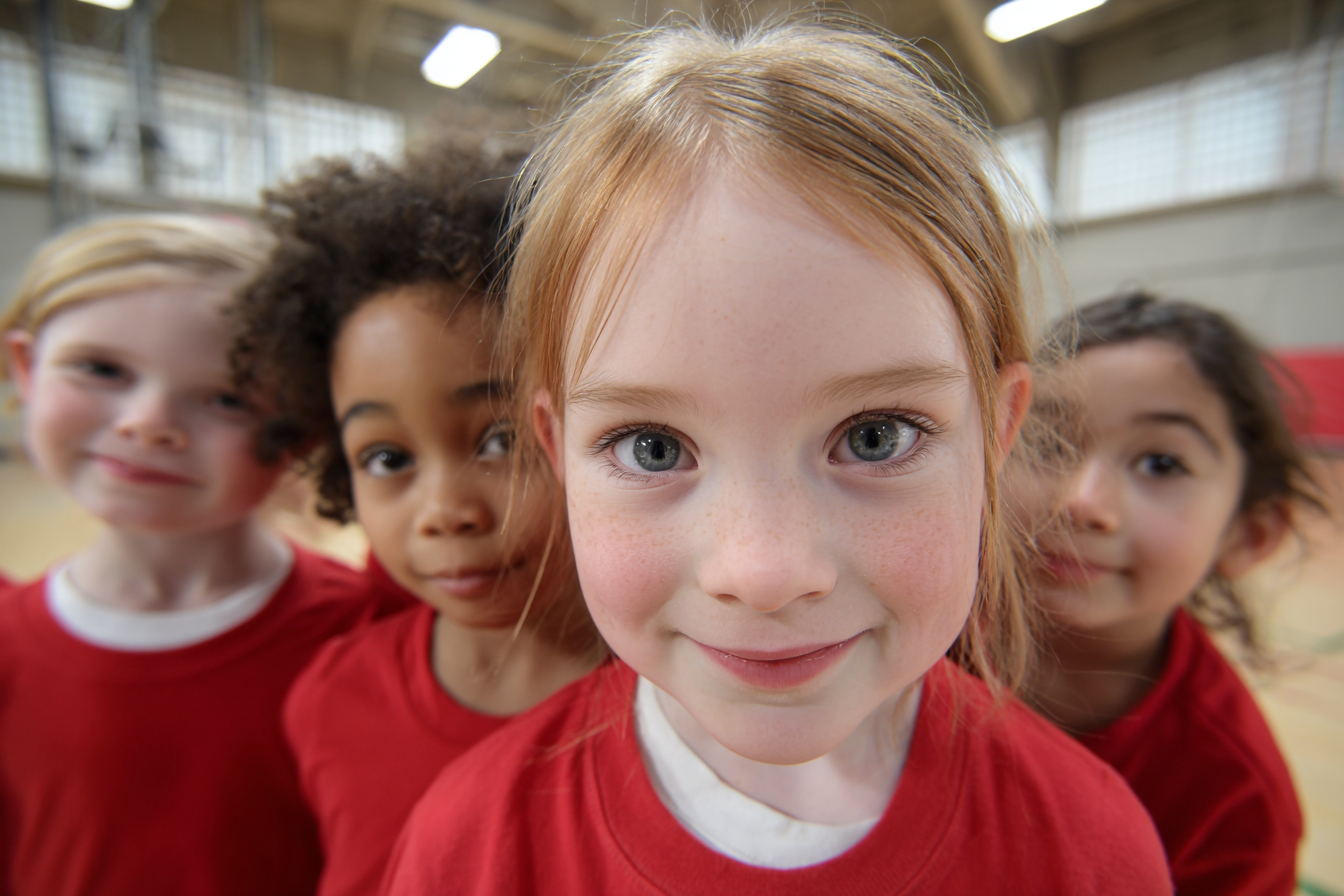
Focus: Help students learn PE routines, explore basic locomotor skills, and move safely in personal and general space through playful movement activities.
Grade Level: 1
Subject Area: Physical Education (Locomotor Skills • Space Awareness • Rules & Safety)
Total Unit Duration: 1 core session + 3 optional sessions (1–2 weeks), 20–30 minutes per session
I. Introduction
Students begin the year by learning that PE is a place to move, play, listen, and stay safe together. This unit introduces class routines, start-and-stop signals, boundaries, and movement expectations while helping students practice basic locomotor skills such as walking, jogging, hopping, galloping, sliding, leaping, and jumping. Through a playful Follow the Leader warm-up and a fun Locomotor Scavenger Hunt, students explore the gym or activity space while learning how to move with control and avoid collisions. The goal is to help students feel successful, excited, and confident about PE from the very beginning.
Essential Questions
- How do I move safely in PE when other students are moving too?
- What are the basic locomotor skills I can use in games and activities?
- How do rules, routines, and signals help us have fun and stay safe?
- How can I show excitement and good participation in PE?
II. Objectives and Standards
Learning Objectives — Students will be able to:
- Perform basic locomotor skills such as walking, jogging, hopping, galloping, sliding, leaping, and jumping with improving control.
- Demonstrate awareness of personal and general space while moving in an activity area.
- Follow basic PE rules, routines, and safety expectations during movement activities.
- Show enjoyment and enthusiasm while participating in PE games and skill practice.
Standards Alignment — 1st Grade (SHAPE America-based custom)
- PE:S1.1a Perform basic locomotor skills (run, hop, gallop, slide, leap, and jump) with improved control and coordination.
- Example: Students travel across the gym using different locomotor movements in response to teacher cues.
- PE:S2.1b Demonstrate awareness of personal and general space while moving.
- Example: Students avoid collisions while moving around classmates during locomotor games.
- PE:S4.1a Follow rules, routines, and safety guidelines during physical activities.
- Example: Students line up safely and follow directions during movement games.
- PE:S5.1a Show enjoyment and enthusiasm when participating in physical activities.
- Example: Students actively participate and express excitement during movement games.
Success Criteria — Student Language
- I can walk, jog, hop, gallop, slide, leap, and jump in PE.
- I can move without bumping into others.
- I can stop, listen, and follow PE rules and signals.
- I can show excitement and try my best in PE.
III. Materials and Resources
Tasks & Tools (teacher acquires/curates)
- General Equipment
- Cones to mark boundaries, travel areas, start lines, and waiting spots.
- Floor spots or poly spots in several colors for scavenger-hunt targets and home spots.
- Whistle and/or visual stop signal.
- Picture cards or posters showing walk, jog, hop, gallop, slide, jump, freeze, and safe space.
- Warm-Up Equipment
- Open movement space with clear boundaries.
- Optional music for playful movement transitions.
- Optional teacher movement cards for locomotor cueing during Follow the Leader.
- Game/Activity Equipment
- Colored floor spots, beanbags, cones, or picture markers hidden or spread around the gym for the Locomotor Scavenger Hunt.
- Optional themed visuals such as animals, shapes, colors, or letters to make the game more exciting for Grade 1 students.
- Optional hoops or safe “home bases” where students can return after finding a target.
- Reflection & Assessment Tools
- Teacher checklist for locomotor skills, safe movement, following routines, and enthusiasm.
- Quick reflection prompts, thumbs-up/sideways/down checks, or smiley-face cards.
- Optional chart with class signal reminders such as freeze, go, line up, and personal space.
Preparation
- Spread colored spots or simple scavenger-hunt markers around the gym so students can travel to them safely without crowding.
- Mark clear boundaries and identify where students should start, stop, and line up.
- Review and model the PE signals students will use, such as freeze, go, and line up.
- Prepare a fun locomotor sequence for the warm-up so students can practice several movement patterns in a playful way.
- Decide whether scavenger-hunt targets will be based on color, shape, animal pictures, or another kid-friendly theme.
Common Misconceptions to Surface
- “Fast moving is always the best moving.” → Good PE movement also means control and safe space.
- “If I see a spot first, I should rush to it no matter what.” → Students still need to look where they are going and avoid collisions.
- “PE rules stop the fun.” → PE rules help games stay safe and help everyone enjoy moving.
- “If I do not know a movement yet, I should stop.” → PE is a place to try new skills and keep practicing.
Key Terms (highlight in lessons) walk, jog, hop, gallop, slide, leap, jump, personal space, general space, freeze, safe, rules
IV. Lesson Procedure
(Each lesson follows: Launch → Warm-up → Game/Activity → Reflect. Timing for a 20–30 minute block.)
Session 1 — Core Session: Welcome to PE & Locomotor Scavenger Hunt Basics
- Launch (3–4 min)
- Students begin on home spots facing the teacher.
- Teacher introduces PE as a place to move, listen, have fun, and stay safe.
- Briefly teach 2–3 key routines:
- What freeze looks like.
- Where the boundaries are.
- How to move without bumping others.
- Teacher demonstrates one or two locomotor skills and invites students to get ready to move.
- Warm-up (5–6 min) — “Follow the Leader” with Walking, Jogging, and Skipping
- Equipment: Open movement space, optional music, optional locomotor cue cards.
- Set-Up:
- Spread students throughout the activity area with enough room to move safely.
- Teacher stands where all students can see the leader demonstration.
- Procedure:
- Teacher leads students through simple movement patterns such as:
- Walk around the space.
- Jog slowly.
- Skip with light arms.
- Add hop, gallop, or jump and freeze if time allows.
- Teacher changes the movement every few seconds so students stay engaged.
- Pause briefly to reinforce safe spacing and freezing on signal.
- Teacher leads students through simple movement patterns such as:
- Rules:
- The warm-up is played by following the teacher’s movement and staying in general space safely.
- Students must keep eyes up and avoid running into others.
- When the teacher says freeze, students stop their bodies right away.
- Everyone tries the movement, even if it feels new.
- Game/Activity (10–12 min) — Locomotor Scavenger Hunt
- Equipment: Colored spots or themed markers, cones for boundaries, optional home bases.
- Set-Up:
- Spread colored spots or picture markers around the gym.
- Mark a clear activity boundary and identify a teacher meeting spot or home base.
- Keep spots far enough apart so students can move safely without crowding.
- Procedure:
- Teacher calls out a locomotor skill and a target to find, such as:
- “Gallop to a blue spot.”
- “Hop to a yellow spot.”
- “Slide to a star.”
- “Jump to a red marker.”
- Students move to one matching target using the locomotor skill named.
- Once they arrive, they freeze and wait for the next cue.
- Teacher continues with several rounds, changing both the locomotor skill and the target.
- If desired, students return to a home base between rounds.
- Teacher calls out a locomotor skill and a target to find, such as:
- Rules:
- The game is played by moving to a target using the locomotor skill the teacher names.
- Students must find one spot and avoid pushing or crowding onto the same marker.
- If a spot is taken or crowded, students find another safe option.
- Students must freeze when they reach their target and wait for the next direction.
- Reflect (2–3 min)
- Prompt: “Which movement did you like the best today?”
Optional Session 2 — More Locomotor Skills & Better Space Awareness
- Launch (3–4 min)
- Review PE signals and safe movement rules from Session 1.
- Ask students to show what freeze looks like and where the boundaries are.
- Explain that today they will practice even more locomotor skills and pay extra attention to safe space.
- Warm-up (5–6 min) — “Follow the Leader” with Walking, Jogging, Skipping, and Galloping
- Equipment: Open space, optional music, locomotor cue cards.
- Set-Up:
- Use the same personal-space setup as Session 1.
- Teacher stands where movements are clearly visible.
- Procedure:
- Teacher leads a playful movement sequence through familiar and new locomotor actions.
- Add fun imagination cues if helpful, such as:
- “Walk like you are on a quiet trail.”
- “Skip like you are excited.”
- “Gallop like a horse.”
- “Hop like a bunny.”
- Students practice moving with control while looking out for others.
- Rules:
- The warm-up is played by following the leader and using safe body control.
- Students must not move too fast for the space.
- Everyone should keep trying the different movements.
- Freeze and listening expectations stay the same.
- Game/Activity (10–12 min) — Locomotor Scavenger Hunt with Animal or Shape Theme
- Equipment: Themed markers such as animals, shapes, or colors; cones for boundaries.
- Set-Up:
- Use the same scavenger-hunt layout, but add a kid-friendly theme if desired.
- Mark a clear start area and safe teacher meeting point.
- Procedure:
- Teacher calls out a locomotor skill and a themed target, such as:
- “Hop to a bunny picture.”
- “Walk to a circle.”
- “Skip to the green spot.”
- “Leap to the animal card.”
- Students travel using the named movement and freeze at a safe target.
- Teacher highlights students who use safe spacing and controlled locomotor movement.
- Teacher calls out a locomotor skill and a themed target, such as:
- Rules:
- The game is played by matching the movement to the correct target.
- Students may not push to get to a marker first.
- If a target is crowded, students must choose another safe one.
- The teacher’s locomotor cue must match the movement students use.
- Reflect (2–3 min)
- Prompt: “How did you keep yourself safe when lots of friends were moving?”
Optional Session 3 — Locomotor Review with More Independence
- Launch (3–4 min)
- Review favorite locomotor skills from the earlier sessions.
- Explain that today students will try to remember more of the movements and signals on their own.
- Warm-up (5–6 min) — “Follow the Leader” with Student Helpers
- Equipment: Open space, optional music.
- Set-Up:
- Use the same personal-space arrangement as previous sessions.
- Teacher may choose one or two student helpers to model a locomotor move.
- Procedure:
- Teacher leads the first few moves, then allows student helpers to model teacher-approved actions such as walk, jog, skip, or hop.
- Students continue following the leader and freezing on signal.
- This keeps the warm-up playful and helps students feel ownership of the movements.
- Rules:
- The warm-up is played by following only teacher-approved leader moves.
- Student leaders must choose safe, familiar locomotor skills.
- Everyone else follows safely and stays in personal space.
- Game/Activity (10–12 min) — Locomotor Scavenger Hunt with Quick Rounds
- Equipment: Colored or themed floor spots, cones, optional home bases.
- Set-Up:
- Use the same scavenger-hunt layout from earlier sessions.
- Keep boundaries and targets clearly visible.
- Procedure:
- Teacher runs quick rounds with shorter response time and faster transitions between locomotor skills.
- Students show they can:
- Hear the cue.
- Use the correct movement.
- Find a safe spot.
- Freeze quickly.
- Teacher may mix in fun cues such as “favorite movement round” or “surprise movement round.”
- Rules:
- The game is played by listening carefully and responding quickly but safely.
- Students must still choose safe pathways and not rush into crowded areas.
- Correct movement and safe space matter more than arriving first.
- Reflect (2–3 min)
- Prompt: “What locomotor skill do you feel best at now?”
Optional Session 4 — Locomotor Celebration & Confidence Round
- Launch (3–4 min)
- Review that students have now practiced many PE routines and locomotor skills.
- Explain that today is a fun review day to show safe movement, confidence, and excitement for PE.
- Warm-up (5–6 min) — “Follow the Leader” Favorites Mix
- Equipment: Open space, optional music.
- Set-Up:
- Use the same personal-space setup as before.
- Teacher prepares a “favorites mix” of the class’s most successful locomotor moves.
- Procedure:
- Teacher leads a fun sequence of the class’s favorite movements, such as walk, jog, skip, gallop, hop, and jump and freeze.
- Keep the pace upbeat and encouraging.
- Celebrate students who follow directions and move safely with enthusiasm.
- Rules:
- The warm-up is played by following the favorite movement sequence and staying in control.
- Students must still use safe spacing and strong listening skills.
- Everyone is encouraged to move with confidence and joy.
- Game/Activity (10–12 min) — Locomotor Scavenger Hunt Celebration
- Equipment: Colored spots or themed markers, cones, optional music.
- Set-Up:
- Keep the same scavenger-hunt layout or slightly spread the targets out for a more active celebration round.
- Make sure all boundaries are clear.
- Procedure:
- Teacher runs several playful rounds of the scavenger hunt using favorite locomotor skills and favorite colors/themes.
- Add celebratory ideas such as:
- “Choose your favorite locomotor skill to get to a red spot.”
- “Use your strongest skill to get to a star.”
- “Move safely to a color you love.”
- Students show what they know about safe movement, freezing, and following directions.
- Rules:
- The game is played by matching a safe locomotor movement to a target in the space.
- Students must continue to show boundaries, freeze skills, and personal-space control.
- The celebration round still uses all the class safety rules.
- Reflect (2–3 min)
- Prompt: “What makes you feel excited about PE now?”
V. Differentiation and Accommodations
Advanced Learners
- Encourage students to demonstrate stronger control or smoother transitions between locomotor skills.
- Ask student helpers to model safe favorite movements for peers.
- Add simple challenge cues such as changing direction safely before finding a target.
Targeted Support
- Use fewer locomotor skills at first and build up slowly.
- Keep targets large and spread out for safe movement success.
- Repeat short cues such as “eyes up,” “safe space,” and “freeze.”
- Allow students to stay closer to the teacher for extra modeling and support.
Multilingual Learners
- Use picture cards for each locomotor skill and for safety words like freeze and safe space.
- Demonstrate every movement before expecting students to respond.
- Pair students with supportive classmates who can model the correct movement.
- Accept pointing, gesture, or teacher imitation before verbal response.
IEP/504 & Accessibility
- Modify the size of the activity area, number of targets, or locomotor demands as needed.
- Offer alternate versions of movements when appropriate, such as step-hop instead of full skip.
- Keep boundaries, targets, and home spots highly visible and predictable.
- Provide extra adult or peer support for transitions, listening cues, and safe movement if needed.
VI. Assessment and Evaluation
Formative Checks (daily)
- Session 1 — Students begin using locomotor skills and PE routines safely during the scavenger hunt.
- Optional Session 2 — Students improve safe spacing and show greater control with more locomotor skills.
- Optional Session 3 — Students respond more independently to locomotor cues and freeze signals.
- Optional Session 4 — Students show confidence, enthusiasm, and stronger locomotor control during the celebration round.
Summative — Welcome to PE & Locomotor Review Checklist (0–2 per criterion, total 10)
- Locomotor Skills with Control (PE:S1.1a)
- 2: Consistently performs basic locomotor skills with improving control and coordination.
- 1: Performs some locomotor skills with partial control but needs reminders.
- 0: Rarely demonstrates locomotor skills with control.
- Space Awareness (PE:S2.1b)
- 2: Moves safely in personal and general space and avoids collisions.
- 1: Usually moves safely but needs occasional reminders about space.
- 0: Frequently struggles to use space safely.
- Rules, Routines, and Safety (PE:S4.1a)
- 2: Follows PE rules, boundaries, signals, and safety routines consistently.
- 1: Usually follows routines but needs occasional reminders.
- 0: Frequently needs repeated reminders to follow routines safely.
- Participation and Enthusiasm (PE:S5.1a)
- 2: Participates actively and shows strong enjoyment and enthusiasm during movement activities.
- 1: Participates and shows some enthusiasm but may be hesitant at times.
- 0: Rarely shows active or enthusiastic participation.
- Movement Response and Readiness
- 2: Quickly responds to teacher movement cues and freeze signals with confidence.
- 1: Usually responds correctly but may need reminders or extra time.
- 0: Rarely responds correctly to movement and stop cues.
Feedback Protocol (TAG)
- Tell one strength (e.g., “You followed directions well and used great safe space during the scavenger hunt.”).
- Ask one question (e.g., “Which locomotor movement feels easiest for you now?”).
- Give one suggestion (e.g., “Next time, try keeping your eyes up even more so you can find open space quickly and safely.”).
VII. Reflection and Extension
Reflection Prompts
- Which locomotor skill was your favorite?
- How did you stay safe when the class was moving all around the gym?
- What PE rule or routine helped the game go well?
- What makes PE feel fun for you so far?
Extensions
- Favorite Movement Vote: Let students vote on their favorite locomotor skill for a future warm-up.
- Color Hunt Replay: Reuse the scavenger hunt later in the year with new themes such as letters, animals, or shapes.
- Signal Practice Review: Bring back quick freeze-and-go routines before future PE games so safety habits stay strong.
Standards Trace — When Each Standard Is Addressed
- PE:S1.1a — Core Session and Optional Sessions 2–4 (walking, jogging, hopping, galloping, sliding, leaping, and jumping during warm-up and scavenger hunt).
- PE:S2.1b — Core Session and Optional Sessions 2–4 (safe movement in personal and general space, choosing open safe pathways, and avoiding collisions).
- PE:S4.1a — Core Session and Optional Sessions 2–4 (freeze signals, boundaries, line-up routines, and safe class behavior throughout activities).
- PE:S5.1a — Core Session and Optional Sessions 2–4 (showing excitement, trying new movements, and joyful participation in playful locomotor games).