Unit Plan 1 (Grade 2 Art): My Artistic World
Grade 2 art unit where students create artwork from personal experiences and interests, practicing idea generation from everyday life and stories.

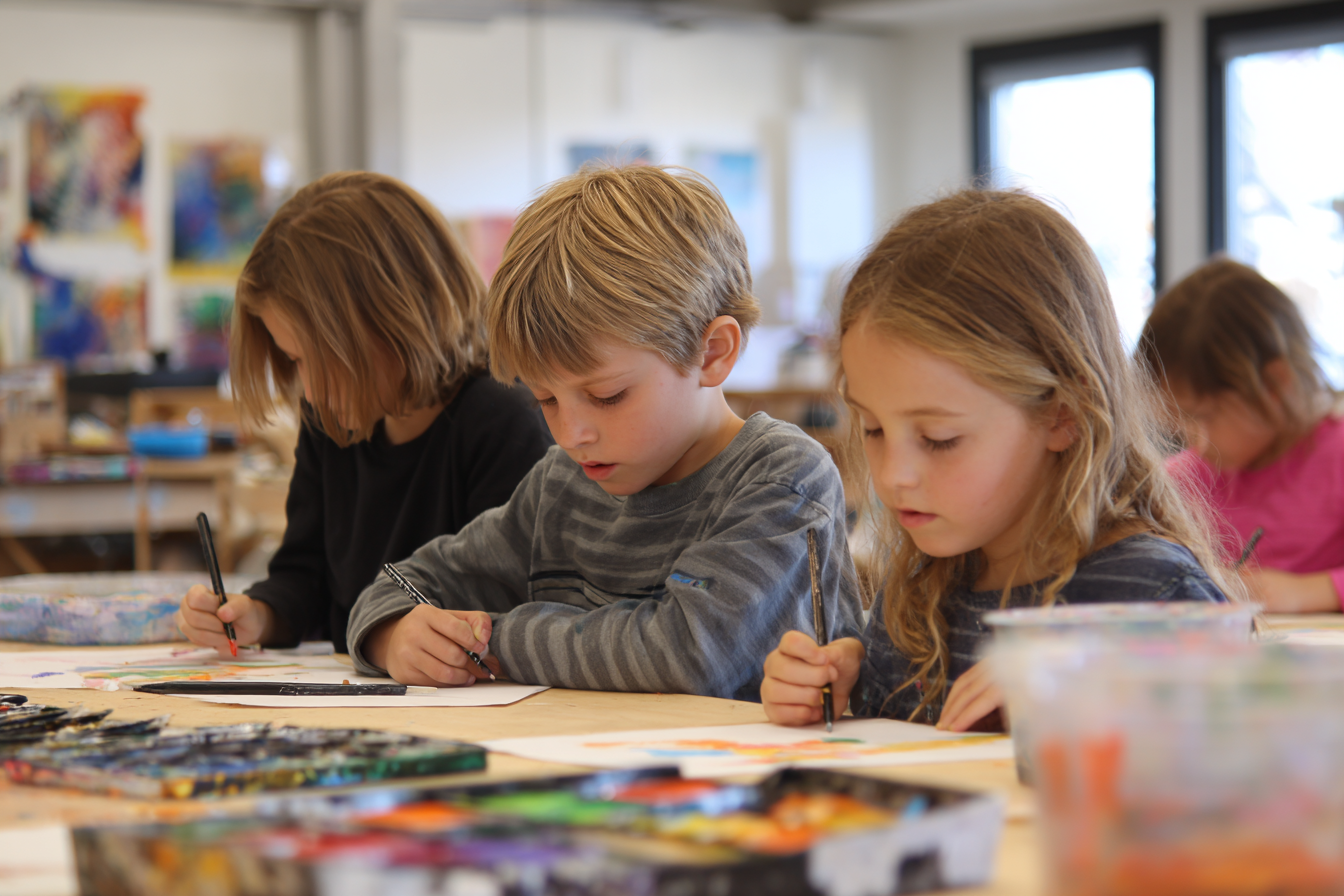
Focus: Create artwork inspired by personal experiences and interests, while practicing how to generate ideas from everyday life, stories, and observations.
Grade Level: 2
Subject Area: Art (Visual Arts • Connecting & Creating)
Total Unit Duration: 1–3 weeks, 50–60 minutes per session
I. Introduction
In this unit, students explore their own lives as rich sources of ideas for art. They think about favorite places, people, celebrations, and interests, then practice turning those memories and interests into simple drawings and paintings. Through guided brainstorming, sketching, and sharing, students learn that their stories and feelings matter in art and that they can explain how their pictures connect to their lives.
Essential Questions
- How can my own life, memories, and interests give me ideas for art?
- What kinds of things do I notice in my world that I might want to draw or paint?
- How can I explain what my picture is about and why it is important to me?
- What helps me choose one strong idea to turn into a finished artwork?
II. Objectives and Standards
Learning Objectives — Students will be able to:
- Brainstorm ideas for artwork based on personal experiences, interests, and stories from their lives.
- Create quick sketches that show different ideas from their “artistic world” (home, school, favorite places, celebrations, hobbies).
- Choose one idea and develop it into a more detailed artwork that shows people, places, or things that matter to them.
- Use simple words to explain the connection between their artwork and their personal experience or interest.
- Share their artwork with classmates and listen to others’ stories with kind and respectful behavior.
Standards Alignment — 2nd Grade (NCAS-Aligned)
- VA:Cn10.2a — Create artwork inspired by personal experiences and explain those connections.
- Example: Students draw a family celebration and describe its importance.
- VA:Cr1.2a — Generate artistic ideas based on observations, stories, and personal experiences.
- Example: Students draw ideas inspired by a favorite season.
Success Criteria — Student Language
- I can think of ideas for art from my own life and interests.
- I can make sketches that show different ideas from my “artistic world.”
- I can choose one idea and make a finished picture that shows something important to me.
- I can tell a partner or the class what my artwork is about and how it connects to my life.
- I can listen to others’ stories and show respect for their artwork.
III. Materials and Resources
Tasks & Tools (teacher acquires/curates)
- Visual examples of children’s artwork that show personal experiences (family, pets, playgrounds, celebrations).
- Picture books or short visual stories with clear scenes drawn from everyday life (e.g., home, park, school).
- Drawing and coloring materials:
- Pencils, erasers.
- Crayons, colored pencils, markers.
- Optional: watercolor sets and brushes.
- Paper:
- Sketch paper or folded “idea booklets” for brainstorming.
- Heavier drawing paper for final artworks.
- “My Artistic World” brainstorm sheet with simple icons and prompts (e.g., “People I love,” “Places I go,” “Things I like to do”).
- Sharing tools: talking piece, carpet spots, or other routines for respectful circle sharing.
Preparation
- Create an anchor chart:
- “My Artistic World” with picture prompts (home, school, favorite place, favorite activity, special day).
- Create a second anchor chart:
- “Where Ideas Come From” (things I see, things I remember, stories I hear, things I like).
- Prepare brainstorm sheets and sketch paper for each student.
- Choose one or two picture books or images that show art based on personal experiences to read or display.
Common Misconceptions to Surface
- “Art only has to be about made-up things.” → Art can be about real life and memories too.
- “My life is not interesting enough for art.” → Everyone’s life has special people, places, and events that can inspire art.
- “If I copy someone else’s idea, my picture will be better.” → It is okay to get ideas from others, but we want to show our own stories.
- “I don’t need to explain my picture; people will just guess.” → Sharing the story behind the art helps others understand it better.
Key Terms (highlight in lessons) personal experience, memory, interest, idea, story, favorite, sketch, inspiration, artist, world
IV. Lesson Procedure
(Each session follows: Launch → Explore/Make → Discuss/Share → Reflect. Timing for a 50–60 minute class.)
Session 1 — Discovering My Artistic World (Core Session — Addresses Standards: VA:Cn10.2a, VA:Cr1.2a)
- Launch (8–10 min)
- Read a short picture book or show images of artwork where the artist drew a real-life experience (e.g., a day at the park, a family event).
- Ask: “What real-life things do you see in this picture? How might this connect to the artist’s life?”
- Introduce “My Artistic World” as all the people, places, and things in their life that can give them art ideas.
- Explore/Make (30–35 min)
- Part A — Brainstorming Ideas (VA:Cr1.2a):
- Students receive a “My Artistic World” brainstorm sheet with simple sections like:
- People I care about.
- Places I like to go.
- Things I like to do.
- A special day or memory.
- They draw small pictures or symbols in each section to brainstorm ideas (no pressure for details yet).
- Students receive a “My Artistic World” brainstorm sheet with simple sections like:
- Part B — Quick Sketches:
- Students choose 2–3 of their brainstorm ideas to turn into small sketches on a sketch page.
- Teacher prompts: “Show who was there,” “Show what you were doing,” “Show where you were.”
- Part A — Brainstorming Ideas (VA:Cr1.2a):
- Discuss/Share (5–7 min)
- In pairs, students point to one sketch and say:
- “This is about ___, and it is important to me because ___.”
- In pairs, students point to one sketch and say:
- Reflect (3–5 min)
- Quick written or oral prompt:
- “One idea from my artistic world that I might turn into a big picture is ___.”
- Quick written or oral prompt:
Optional Session 2 — Creating My Artistic World Artwork (Extension — Deepen VA:Cn10.2a)
- Launch (5–7 min)
- Review anchor chart: “Where Ideas Come From.”
- Ask: “Which idea from your brainstorm or sketches would you like to turn into a big artwork today?”
- Explore/Make (30–35 min)
- Students select one idea and draw it on heavier paper:
- Step 1: Light pencil sketch to place main people, objects, and setting.
- Step 2: Add details that show who, where, and what is happening.
- Step 3: Add color with crayons/markers/colored pencils. Encourage them to think about colors that match the feeling of the memory (happy, calm, exciting).
- Teacher circulates, asking guiding questions:
- “Who is in your picture?”
- “What are you doing?”
- “How can you show this place?”
- Students select one idea and draw it on heavier paper:
- Discuss/Share (8–10 min)
- Table share: students hold up their in-progress artwork and complete the sentence:
- “My picture shows my artistic world because…”
- Table share: students hold up their in-progress artwork and complete the sentence:
- Reflect (3–5 min)
- Students write or dictate a short sentence on a strip of paper to save for later labels:
- “This artwork is about ___.”
- Students write or dictate a short sentence on a strip of paper to save for later labels:
Optional Session 3 — Sharing Our Artistic Worlds (Extension — Solidify VA:Cn10.2a, VA:Cr1.2a)
- Launch (5–7 min)
- Remind students that artists often share their work and tell the stories behind it so others can appreciate and understand it.
- Review expectations for kind listening and comments (one nice comment, one question).
- Explore/Make (25–30 min)
- Students finish their artworks if needed (add color, small details, names).
- They then attach or copy a short artist sentence/label to the artwork, such as:
- “My artwork shows me ___.”
- “This is important to me because ___.”
- “I was inspired by ___.”
- Discuss/Share (10–12 min)
- Mini “My Artistic World” circle or gallery walk:
- A small group at a time shares; each student shows their picture and reads or says their artist sentence.
- Peers respond with a simple TAG-style response:
- Tell one nice thing.
- Ask one kind question.
- Mini “My Artistic World” circle or gallery walk:
- Reflect (3–5 min)
- Final reflection prompt:
- “One thing I learned about myself as an artist is ___.”
- Final reflection prompt:
V. Differentiation and Accommodations
Advanced Learners
- Encourage more detailed backgrounds (things in the setting that show where the story happens).
- Ask them to include more than one moment in one picture (e.g., different parts of the celebration, or different people doing different things).
- Challenge them to write a short caption with two sentences instead of one, explaining both what is happening and how they felt.
Targeted Support
- Offer picture choices (small visual cue cards: birthday, park, pet, playground, school) for students who struggle to generate ideas.
- Provide sentence starters:
- “This is me with…”
- “We are at…”
- “I like this because…”
- Allow some students to dictate their reflections to an adult or peer.
- Reduce the number of brainstorm sketches (e.g., choose 1–2 ideas instead of many).
Multilingual Learners
- Allow students to brainstorm in their home language, then help them add key English words (e.g., “family,” “park,” “birthday”).
- Provide bilingual or picture-supported word banks with labels like family, home, friend, party, park, pet.
- Accept mixed-language artist sentences as long as they show understanding of personal connection.
- Pair students for partner talk so they can practice simple phrases before sharing to the class.
IEP/504 & Accessibility
- Provide larger paper, thicker markers, or adaptive tools as needed.
- Break the task into clear steps with visual icons (brainstorm → choose one → draw → color → write a sentence).
- Allow alternate forms of sharing: students may point and verbally describe their work while teacher or aide writes the sentence.
- Give extra time or reduced output expectations (e.g., one strong idea instead of several sketches).
VI. Assessment and Evaluation
Formative Checks (each session)
- Session 1 — Brainstorm sheets and sketches show students generating ideas from personal experiences and interests (VA:Cr1.2a).
- Optional Session 2 — In-progress artworks show a clear connection to a real-life story or interest, with emerging details (VA:Cn10.2a).
- Optional Session 3 — Artist sentences and sharing show students are beginning to explain how their artwork connects to their life (VA:Cn10.2a).
Summative — “My Artistic World” Artwork & Reflection (0–2 per criterion, total 10)
- Idea Generation from Personal World (VA:Cr1.2a)
- 2: Artwork clearly comes from a personal experience or interest (easily described) and shows planning from brainstorming/sketching.
- 1: Artwork may connect to personal life but connection is somewhat unclear or loosely described.
- 0: Artwork does not appear related to any personal experience or interest.
- Connection to Personal Experience (VA:Cn10.2a)
- 2: Student can clearly explain what the artwork is about and how it connects to their life (who, where, what).
- 1: Student gives a general explanation but details are limited or unclear.
- 0: Student cannot explain a meaningful connection to their own experience.
- Visual Communication of Story/Idea
- 2: Picture shows main people/objects/setting so viewers can understand the basic story or idea.
- 1: Some parts are understandable, but story or idea is partly confusing or missing.
- 0: It is very difficult to tell what the picture is about.
- Effort & Craftsmanship
- 2: Student shows good effort with careful coloring/drawing and uses most of the paper thoughtfully.
- 1: Some effort is shown, but there are rushed or unfinished areas.
- 0: Work appears very rushed or incomplete.
- Reflection / Artist Statement
- 2: Student provides at least one clear sentence or explanation about their artwork and what inspired it.
- 1: Statement is present but very brief or not strongly connected to the artwork.
- 0: No reflection or statement provided.
Feedback Protocol (TAG)
- Tell one strength (e.g., “Your picture clearly shows you and your family at the park.”).
- Ask one question (e.g., “What were you doing right before this moment?”).
- Give one suggestion (e.g., “Maybe you could add a little more to the background to show where you are.”).
VII. Reflection and Extension
Reflection Prompts
- What is one special memory or interest you enjoyed turning into art?
- How did drawing or coloring your own story feel different from drawing something made up?
- What is one idea from your artistic world that you might want to make into another artwork later?
Extensions
- My Artistic World Mini-Book: Students create a small booklet with 3–4 tiny drawings, each showing a different part of their artistic world (home, school, favorite place, hobby), with short labels.
- Class “Our Artistic World” Mural: Each student designs a small panel about their own life; panels are combined into a big mural that shows the class’s shared and different experiences.
- Storytelling Circle: Students bring their artwork to a circle and tell a short story about the moment or interest they drew, practicing speaking and listening skills alongside art.
Standards Trace — When Each Standard Is Addressed
- VA:Cn10.2a — Session 1 (linking brainstormed ideas to personal experiences), Optional Session 2 (creating artwork based on a meaningful experience or interest), Optional Session 3 (explaining connections in artist sentences and sharing).
- VA:Cr1.2a — Session 1 (generating multiple ideas through brainstorming and sketches), Optional Session 2 (selecting and developing one idea from personal experiences), Optional Session 3 (revisiting the idea while finishing and sharing the artwork).