Unit Plan 1 (Grade 2 Music): Music Routines & Listening
Grade 2 music unit building routines and listening skills as students discuss music choices, connecting personal interests to purposes movement calm.

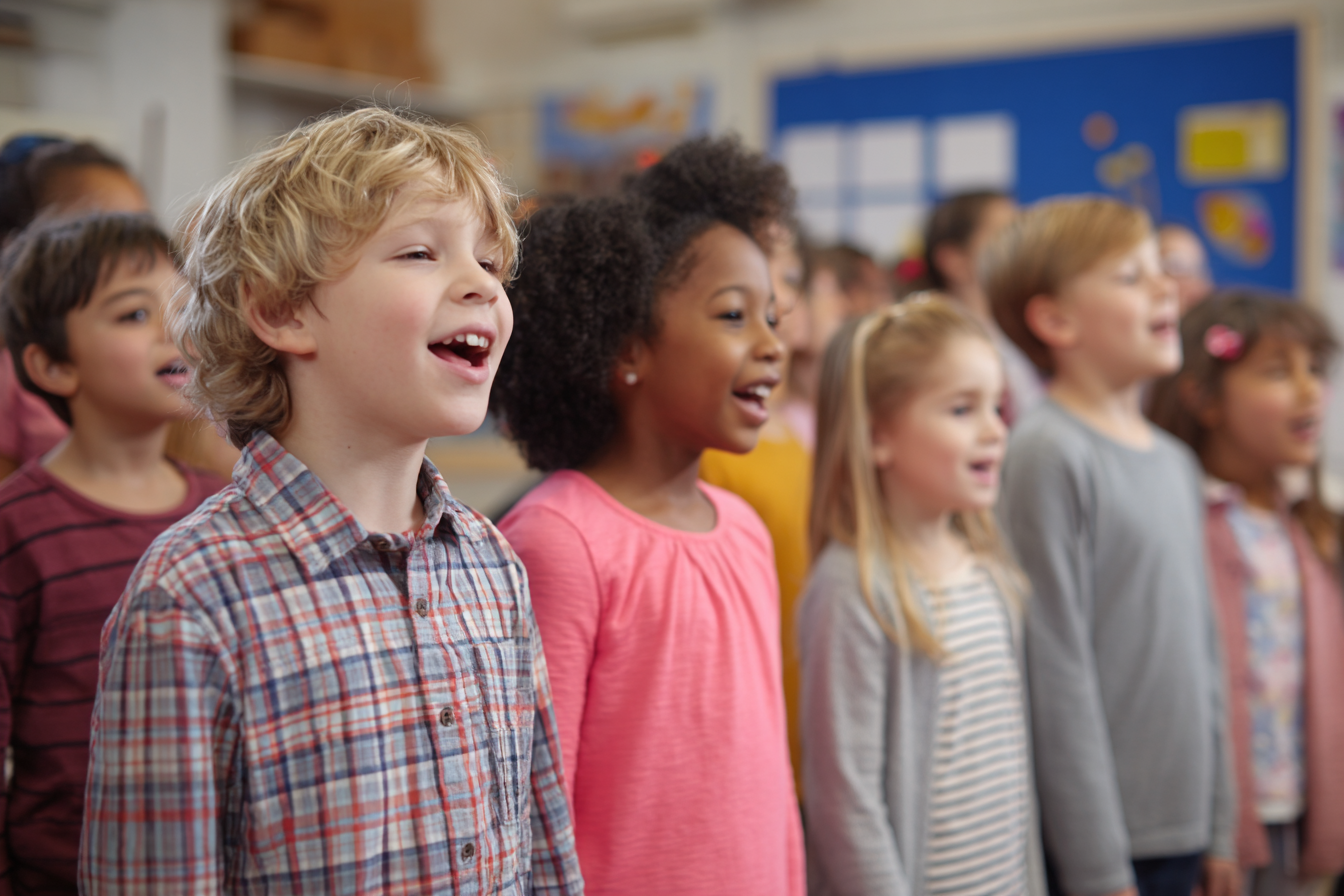
Focus: Establish music routines, listening expectations, and habits for talking about music choices based on personal interests, experiences, and purposes.
Grade Level: 2
Subject Area: Music (Responding • Performing • Classroom Community)
Total Unit Duration: 1–3 sessions (3+ weeks), 50–60 minutes per session
I. Introduction
In this unit, students learn how music class works: how to enter, sit or stand, use instruments safely, and respond to teacher signals. They practice being focused listeners who can talk about how music connects to their own interests and experiences. Students explore short listening examples and classroom songs, then explain which pieces they would choose for different purposes—like a movement break, quiet work time, or a celebration. By the end, they can follow music routines and share simple reasons for their music choices.
Essential Questions
- What are our music class routines, and why do they matter?
- How do my interests and experiences help me choose music for different purposes?
- How can I be a good listener and talk about the music we hear in class?
- How do I explain why a song is good for moving, relaxing, or celebrating?
II. Objectives and Standards
Learning Objectives — Students will be able to:
- Follow basic music room routines for entering, sitting/standing, handling instruments, and responding to signals.
- Demonstrate listening expectations (quiet body, watching the teacher, listening all the way to the end of a piece).
- Explain how their personal interests and experiences influence the music they enjoy and choose for a purpose (e.g., movement break, calm time).
- Demonstrate and explain a simple music selection for a specific purpose (e.g., choosing energetic music for movement or gentle music for quiet drawing).
- Use simple music talk sentences (“I chose this music because…”, “This song is good for…”) to share ideas with classmates.
Standards Alignment — Grade 2 Music (NAfME-Aligned)
- MU:Re7.1.2a — Explain and demonstrate how personal interests and experiences influence musical selection for specific purposes.
- Example: Choosing energetic music for a movement break.
- MU:Pr4.1.2a — Demonstrate and explain personal interest in, knowledge about, and purpose of varied musical selections.
- Example: Explaining why a song is good for dancing or celebration.
Success Criteria — Student Language
- I can follow our music class routines without reminders most of the time.
- I can listen to music with a quiet body and show I am paying attention.
- I can tell how my likes and experiences help me choose a song.
- I can choose a song for a purpose (moving, calming down, celebrating) and explain why it fits.
- I can use music words and sentence frames to talk about what I hear and choose.
III. Materials and Resources
Tasks & Tools (teacher acquires/curates)
- Music & listening examples
- 3–5 short listening selections with clear, contrasting purposes (e.g., energetic, calm, celebratory).
- Familiar classroom songs for greeting, movement, and closing.
- Optional: simple instrumental tracks for background or movement.
- Visuals & routines
- Routines posters: “Enter,” “Sit/Stand,” “Instruments,” “Listening,” “Signals.”
- Visual listening rules (eyes, ears, heart, quiet body icons).
- Simple tempo and dynamics icons (fast/slow, loud/soft) to support discussion.
- Discussion supports
- “Music Talk Cards” with picture + sentence frames:
- “I like this music because __.”
- “This music makes me feel __.”
- “This music is good for __ (movement, quiet time, celebration) because __.”
- Chart paper for “Music for Different Purposes” (Movement, Calm, Celebrate).
- “Music Talk Cards” with picture + sentence frames:
Preparation
- Choose your opening/closing songs and one or two simple movement pieces for routine use.
- Select listening examples that clearly fit different purposes so students can compare.
- Prepare anchor charts for routines and listening expectations; plan to co-create details with students.
- Copy/prepare Music Talk Cards and simple individual reflection slips.
Common Misconceptions to Surface
- “If I’m talking while the music plays, I’m still listening.” → True listening means quiet body and voice.
- “Only the teacher chooses music.” → Students’ interests and experiences help guide music choices, too.
- “All fun music is good for every time.” → Different times need different purposes (movement vs. calm vs. celebration).
- “I don’t know how to talk about music.” → Everyone can start with simple words about how it feels and what it’s for.
Key Terms (highlight in lessons) routine, listening, purpose, movement break, calm music, celebration, fast, slow, loud, soft, favorite music, music choice
IV. Lesson Procedure
(Each session is designed for a 50–60 minute class period.)
Session 1 — Music Class Routines & First Listening (Re7.1 & Pr4.1)
- Launch (8–10 min)
- Greet students with a simple welcome song; invite them to echo a short phrase.
- Ask: “Where do you hear music in your life? At home? In the car? At games?”
- Briefly connect to the idea that we will learn how music class works and how to talk about the music we hear.
- Explore, Part A: Building Music Routines (10–12 min)
- Introduce and practice basic routines:
- How to enter the room.
- Where and how to sit/stand.
- How to hold and put away instruments (even if not used this unit, introduce expectations).
- Teacher signal for “freeze and listen.”
- Have students practice the routines as a game:
- “When the music stops, show me your listening body.”
- Give quick feedback: “I see many students ready with quiet bodies and eyes on me.”
- Introduce and practice basic routines:
- Explore, Part B: Listening Expectations (10–12 min)
- Show the listening rules visual (eyes, ears, heart, quiet body).
- Play a short piece of music (about 30–60 seconds).
- Students practice:
- Sitting with quiet bodies.
- Listening until the music stops, then showing a silent signal (e.g., thumbs on knees) when it ends.
- Ask a few students:
- “How did this music make you feel?”
- “What do you think this music might be good for—moving, calming down, or celebrating?”
- Explore, Part C: Music for Different Purposes (10–12 min)
- Explain that we sometimes pick music for special jobs (movement break, quiet work, party).
- Play two contrasting pieces:
- One energetic (good for movement).
- One calm (good for quiet drawing or resting).
- After each, have students move to a side of the room that matches the purpose (Movement, Calm, Celebrate chart on walls) or raise a matching icon card.
- Use simple talk frames:
- “This music sounds __ (fast/slow, loud/soft). I think it is good for __.” (MU:Re7.1.2a, MU:Pr4.1.2a).
- Discuss (5–7 min)
- As a class, add a few song titles or descriptions to the “Music for Different Purposes” chart:
- Movement: “fast drum song,” “clapping song.”
- Calm: “soft piano song.”
- Ask: “Why is it helpful to think about what music is for?”
- As a class, add a few song titles or descriptions to the “Music for Different Purposes” chart:
- Reflect (3–5 min)
- Quick exit prompt:
- “One routine I can remember for next music class is __.”
- “One kind of music I like for a movement break or calm time is __.”
- Quick exit prompt:
Optional Session 2 — My Interests & Music Choices (Re7.1 & Pr4.1)
- Launch (5–7 min)
- Review routines quickly with a routine challenge:
- “Show me how we enter and sit in 10 seconds.”
- Remind students that their own likes and experiences help them pick music for different purposes.
- Review routines quickly with a routine challenge:
- Explore, Part A: Favorite Music & Experiences (10–12 min)
- Ask students to think quietly about one song or kind of music they like (it can be from home, school, or anywhere).
- Use think–pair–share:
- “Tell your partner: What is your favorite music and where do you hear it?”
- Invite a few volunteers to share:
- “I like __. I hear it when __ (in the car, at a game, at a party).”
- Connect to MU:Re7.1.2a:
- “Your experiences help you decide what music you choose.”
- Explore, Part B: Choosing Music for a Purpose (15–18 min)
- Present simple scenario cards (picture + words), such as:
- Movement Break
- Quiet Reading or Drawing
- Birthday Celebration
- For each scenario:
- Play two short music clips that are different in tempo/dynamics.
- Students vote with body movement (point, stand, move to side of room) for which piece fits the purpose better.
- Use Music Talk Cards:
- “I chose this music because it is __ (fast/slow, loud/soft).”
- “It is good for __ (movement, calm, celebration) because __.” (MU:Re7.1.2a, MU:Pr4.1.2a).
- Present simple scenario cards (picture + words), such as:
- Explore, Part C: Small-Group Music Choice (8–10 min)
- In small groups, give students one scenario card and 2–3 short clips or descriptions (you can replay tracks).
- Each group:
- Chooses one selection.
- Practices a short sentence together:
- “We chose song #__ for a __ because __.”
- Discuss (5–7 min)
- Have 1–2 groups share their choice and sentence.
- Highlight language that connects interest, sound of the music, and purpose.
- Reflect (3–5 min)
- Students draw or write on a small slip:
- A picture of themselves using music for a purpose (e.g., dancing, calming down) and one word or phrase describing it.
- Students draw or write on a small slip:
Optional Session 3 — Listening Circles & Music Talk (Re7.1 & Pr4.1)
- Launch (5–7 min)
- Review listening expectations with a quick chant:
- “Eyes are watching, ears are listening, body’s still, heart is ready.”
- Explain that today students will practice talking about music in small listening circles.
- Review listening expectations with a quick chant:
- Explore, Part A: Listening Circle (12–15 min)
- Arrange students in a circle or small groups.
- Play a short piece of music all the way through.
- After listening, pass around one or two Music Talk Cards per group with sentence frames:
- “This music makes me feel __ because __.”
- “I would use this music for __ (movement, calm, celebration) because __.”
- Each student shares one sentence in their group.
- Explore, Part B: Classifying Music by Purpose (10–12 min)
- Play 2–3 additional short excerpts.
- After each one, students hold up or point to a purpose icon (Movement/Calm/Celebrate) and briefly share with a partner:
- “I chose __ because __.”
- Record examples on the “Music for Different Purposes” chart.
- Explore, Part C: Connecting to Personal Interest (8–10 min)
- Ask:
- “Who liked that last piece? Why?”
- “Who didn’t like it very much? Why not?”
- Emphasize that it is okay to have different personal interests, and that these interests help us choose music for different times.
- Ask:
- Discuss (5–7 min)
- Whole-class:
- “What did you notice about how we talked about music today?”
- “How can these ideas help us choose music in future music classes?”
- Whole-class:
- Reflect (3–5 min)
- Final quick reflection:
- “One way I can be a good listener and music chooser is __.”
- Final quick reflection:
V. Differentiation and Accommodations
Advanced Learners
- Encourage students who are ready to:
- Use more detailed descriptors (e.g., “bouncy,” “smooth,” “marching,” “sleepy”) when talking about music.
- Suggest different purposes for the same piece (“It could be calm for me, but a celebration for someone else.”).
- Invite them to lead a listening circle by choosing a piece and asking classmates the question prompts.
Targeted Support
- Use lots of modeling and echoing of sentence frames.
- Provide picture cues for feelings (happy, calm, excited, sleepy) to help students describe responses.
- Offer yes/no or either/or questions for students who struggle with open-ended discussion:
- “Is this more for moving or for resting?”
- Keep music excerpts short and clearly contrasting to support classification.
Multilingual Learners
- Use visual supports (icons for movement, calm, celebration; facial expression pictures).
- Allow students to think or discuss in their home language first, then share a short idea in English.
- Provide a word bank with simple adjectives and purposes:
- fast, slow, loud, soft, move, calm, party.
- Accept drawings plus a few words as evidence of understanding.
IEP/504 & Accessibility
- Allow flexible seating (e.g., chairs, floor spots, wiggle cushions) as long as listening expectations are met.
- Provide enlarged, high-contrast visuals for routines and icons.
- Offer extra processing time before asking students to share.
- Allow alternative ways to respond (pointing to icons, thumbs up/down, drawing) instead of or in addition to speaking.
VI. Assessment and Evaluation
Formative Checks (ongoing in all sessions)
- Are students:
- Following music routines with fewer reminders over time?
- Demonstrating listening behaviors during music excerpts?
- Correctly matching music examples to appropriate purposes (movement, calm, celebration)?
- Using simple music talk to explain their choices (even with support)?
Summative — “My Music Choice” Card (0–2 per criterion, total 10)
Students complete a Music Choice Card: they listen to 1–2 teacher-selected pieces and/or think of a familiar classroom song, then draw/write:
- The music they choose.
- The purpose (movement, calm, celebration, other).
- One simple reason for their choice.
- Connection to Personal Interest/Experience (MU:Re7.1.2a)
- 2: Clearly connects the chosen music to a personal interest or experience (“I hear this at home…,” “I like to dance to this”).
- 1: Shows some personal connection but it is vague or incomplete.
- 0: No clear personal connection stated.
- Clarity of Purpose (MU:Re7.1.2a & MU:Pr4.1.2a)
- 2: Clearly states an appropriate purpose for the music (e.g., movement break, calm time, celebration).
- 1: Purpose is present but somewhat unclear or not a strong match.
- 0: No meaningful purpose described.
- Explanation of Choice (MU:Pr4.1.2a)
- 2: Gives at least one simple reason that relates to how the music sounds or feels (fast/slow, loud/soft, happy/calm).
- 1: Provides a reason that is vague or only “I like it,” with little detail.
- 0: No reason given.
- Routines & Listening Behavior
- 2: Consistently follows music routines and listening expectations during assessment activities.
- 1: Follows routines and expectations with occasional reminders.
- 0: Frequently needs reminders or does not follow routines.
- Use of Music Talk or Representation
- 2: Uses words, drawings, or icons to communicate music choice and purpose clearly.
- 1: Partially completes the card; some ideas are unclear.
- 0: Card is mostly incomplete or does not relate to the task.
Feedback Protocol (TAG)
- Tell one strength (e.g., “You chose great music for a movement break and explained that it was fast and bouncy.”).
- Ask one question (e.g., “When else might you like to hear this music?”).
- Give one suggestion (e.g., “Next time, try adding one more word about how the music makes you feel.”).
VII. Reflection and Extension
Reflection Prompts
- How did our routines help music class feel safe and organized?
- What did you learn about the kinds of music you like for different purposes?
- How does listening carefully change the way you think about music?
- How can you use what you learned about music choices at home or in your classroom?
Extensions
- Class Playlist by Purpose: Create a chart or digital playlist with student suggestions for “Movement Break Music,” “Calm/Quiet Music,” and “Celebration Music.”
- Home Connection: Send home a simple note inviting families to talk about a song they use for a specific purpose (cleaning, bedtime, parties) and have students share in class.
- Cross-Curricular Link: Connect with classroom routines by choosing a class song for transitions (e.g., lining up, cleanup) and letting students help decide based on purpose.
Standards Trace — When Each Standard Is Addressed
- MU:Re7.1.2a — Session 1 (identifying music for different purposes and sharing simple reasons), Optional Session 2 (favorite music and scenario-based choices), Optional Session 3 (listening circles and purpose-based classification and discussion).
- MU:Pr4.1.2a — Session 1 (connecting pieces to movement/calm/celebration purposes), Optional Session 2 (demonstrating and explaining choices for specific scenarios), Optional Session 3 (explaining interest in and purpose of varied listening examples during circles and whole-class discussion).