Unit Plan 1 (Grade 2 Science): Science Routines & Inquiry
Build science routines as students practice lab safety, careful observation, data recording, and simple measurement to prepare for early engineering and design thinking.

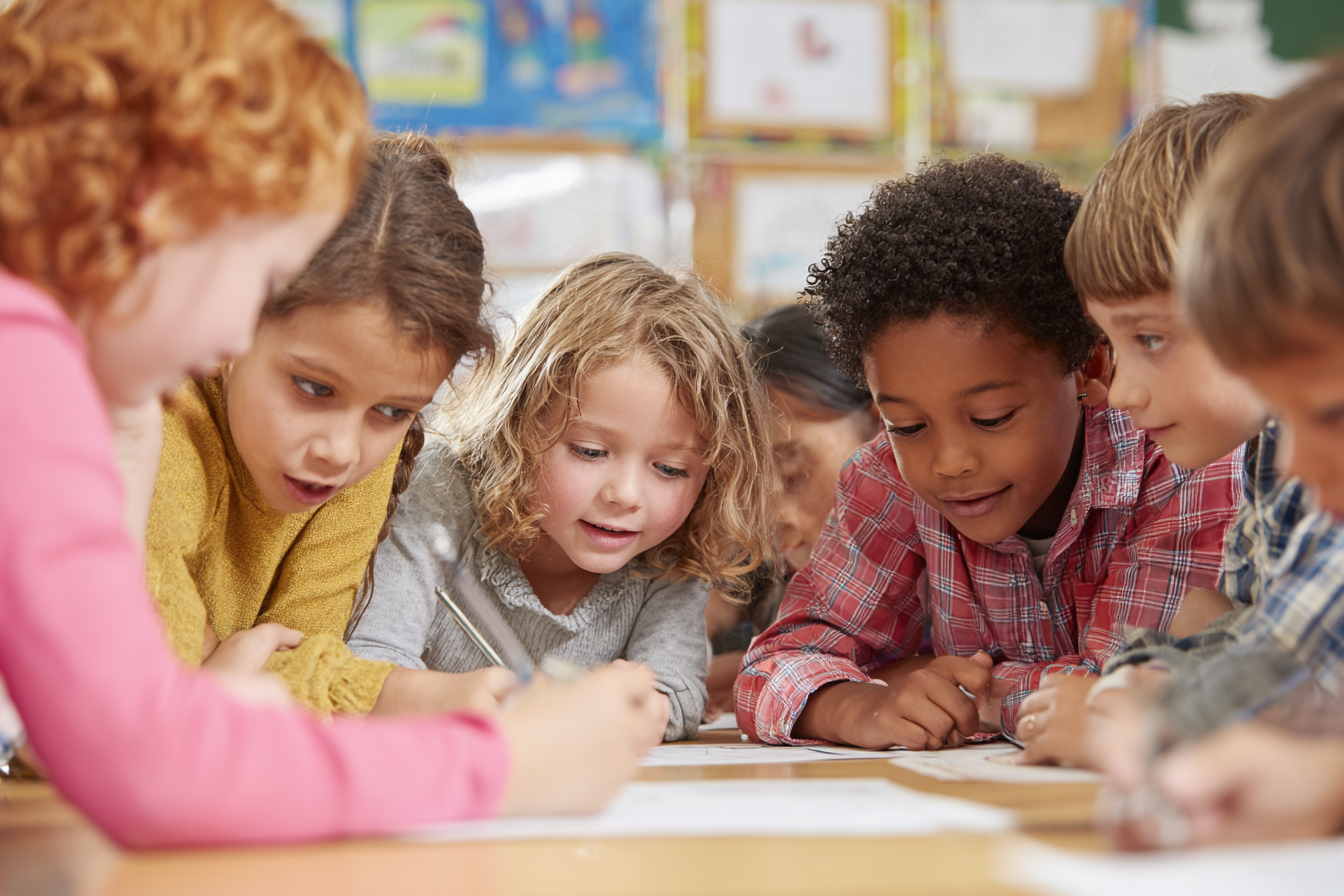
Focus: Introduce lab safety, observation skills, data recording, and simple measurement as core science routines that prepare students to ask questions, make observations, and gather information for solving simple design problems.
Grade Level: 2
Subject Area: Science (Science & Engineering Practices • Classroom Routines • Early Engineering)
Total Unit Duration: 5 sessions (one week), 30–45 minutes per session
I. Introduction
This launch unit builds students’ identities as young scientists and engineers. Students learn and practice classroom science routines: how to move and work safely with materials, how to observe closely using senses (and tools), how to record data with pictures, words, and simple tallies, and how to use nonstandard and simple standard measurement tools (cubes, paper clips, rulers) accurately enough for their work. Throughout the week, they ask questions and notice small problems in the classroom or school (spills, messy bins, hard-to-reach items), then practice gathering information they’ll later use to define simple design problems in line with K-2-ETS1-1.
Essential Questions
- What does it mean to work like a scientist in our classroom?
- How can we stay safe and take care of materials during science time?
- How do careful observations and data recording help us understand the world better?
- How can we use questions, observations, and simple measurements to notice problems people want to change?
II. Objectives and Standards
Learning Objectives — Students will be able to:
- Describe and follow classroom science safety rules (eyes watching, walking feet, careful hands, asking before using materials).
- Use their senses (sight, touch, hearing, smell—no tasting) to make simple observations about familiar objects and pictures, and share what they notice.
- Record observations using pictures, labels, tallies, and simple words or numbers in a science notebook or on recording sheets.
- Use nonstandard measurement tools (cubes, paper clips, sticks) and simple standard tools (ruler to nearest inch or centimeter) to compare lengths or sizes, with teacher support.
- Ask questions and make observations about a classroom situation people want to change (e.g., messy pencil bin, spilled water, noisy spot) and gather information (what, where, how often) to start defining a simple problem (K-2-ETS1-1 prep).
- Work cooperatively in pairs or small groups, taking turns observing, measuring, and recording data.
Standards Alignment — K–2 (NGSS-Aligned)
- K–2-ETS1-1 (prep focus) — Ask questions, make observations, and gather information about a situation people want to change to define a simple problem that can be solved with a new or improved object or tool.
- In this unit, students practice the asking, observing, and information-gathering pieces that will later support full problem definition and solution design.
Success Criteria — Student Language
- I can tell and show how to use science tools safely in our classroom.
- I can make careful observations and say more than “It’s cool” or “It’s big.”
- I can draw or write what I see and use simple numbers or tallies to record data.
- I can use cubes or a ruler to measure how long or tall something is (with help if needed).
- I can ask a question about something in our classroom we might want to change and help gather information about it.
III. Materials and Resources
Tasks & Tools (teacher acquires/curates)
- Safety & routines
- Visual science safety rules chart (goggles symbol, no running, careful carrying, ask before using materials).
- Plastic or child-safe goggles (optional but motivating).
- Science tool baskets (magnifiers, rulers, nonstandard measuring items).
- Observation & data recording
- Mystery objects or sets: shells, rocks, classroom items, leaves, classroom tools.
- Magnifying glasses or hand lenses.
- Science notebooks or simple recording sheets with spaces for drawings, words, and numbers.
- Clipboards (optional) for walk-around observations.
- Measurement
- Nonstandard units: linking cubes, paper clips, popsicle sticks.
- Simple rulers (inches and/or centimeters) and clear demonstrations of “start at zero.”
- A variety of classroom items to measure: books, pencils, glue sticks, boxes.
- Inquiry and classroom situations
- Photos or quick teacher sketches of classroom “situations people want to change,” e.g.:
- A messy supply bin.
- Water spill near the sink.
- Crowded backpack area.
- Noisy reading corner.
- Simple “Question & Observation” organizer (What do you notice? What do you wonder? How could we find out more?).
- Photos or quick teacher sketches of classroom “situations people want to change,” e.g.:
Preparation
- Decide on 3–4 key safety rules and create a large chart with icons and short phrases (e.g., “Eyes watching / Ears listening / Hands careful / Feet walking”).
- Prepare observation trays with 3–4 small objects per group; label them with numbers or letters for easy recording.
- Copy data recording sheets with:
- One version mostly pictures and labels.
- One version with simple tables for tallies and numbers (for more ready writers).
- Gather and label measurement tools, and mark some practice items with “teacher answer” so you can quickly check measuring technique.
- Choose 1–2 classroom situations you genuinely might want to improve so the inquiry feels authentic.
Common Misconceptions to Surface
- “Science is just fun experiments with no rules.” → Science time has special safety rules and routines that help everyone learn and stay safe.
- “Any quick look is a good observation.” → Good observations are careful, specific (“striped, bumpy, about this long”), not just “cool” or “pretty.”
- “Measuring can start anywhere on the ruler.” → We usually start at zero or at the edge marked for measuring.
- “Questions have to be big and fancy.” → Simple, curious questions (“Why is this always messy?” “Where does the water go?”) are valuable and can start design thinking.
Key Terms (highlight in lessons) science routine, safety, observe, observation, data, record, measure, length, tool, question, problem, situation, change, simple problem
IV. Lesson Procedure
(Each day follows: Launch → Explore → Discuss → Reflect. Timing for a 30–45 minute block.)
Session 1 — Science Safety & Routines
- Launch (6–8 min)
- Show a picture of children doing science safely and another with obvious unsafe choices (running, spilling, waving tools).
- Ask: “Which group looks ready to learn like scientists? What do you notice?”
- Introduce the idea of science routines and why we need them.
- Explore (20–25 min)
- Unveil the Science Safety Rules anchor chart. Go through each rule with simple motions (e.g., pointing to eyes, ears, hands, feet).
- Give each group a basket with safe tools (magnifier, ruler, cubes). Let them practice handling each tool correctly as you narrate: “I see ___ using two hands… I see ___ putting tools back in the basket.”
- Quickly model what not to do with a tool (silly but safe), then have students correct you with the rule.
- Discuss (5–7 min)
- Whole-class: “What are the most important things to remember during science time?”
- Add student ideas to the chart, keeping wording simple.
- Reflect (3–5 min)
- Students draw themselves as a safe scientist and label one safety rule (or dictate to the teacher).
Session 2 — Observations: Looking Closely Like Scientists
- Launch (5–7 min)
- Hold up an object (e.g., a shell) and ask, “What do you notice?” Write first answers.
- Challenge them: “Can we make our observations more specific?” Model turning “It’s pretty” into “It has curved ridges and brown spots.”
- Explore (20–25 min)
- In groups, students get observation trays and magnifiers.
- They rotate through 3–4 numbered items, spending a few minutes at each to:
- Look closely.
- Draw the object.
- Label it with at least one describing word (color, shape, texture, size).
- More ready writers add a second detail or a comparison: “This is longer than the other one.”
- Discuss (8–10 min)
- Share a few drawings under the document camera or on a chart.
- Ask: “Which observations help you really picture the object in your mind? Why?”
- Circle or highlight strong observation words (striped, rough, tiny, shiny).
- Reflect (3–5 min)
- Exit slip: “One thing I learned about observing is that good scientists ___.”
Session 3 — Data Recording & Simple Measurement
- Launch (5–7 min)
- Show a page with just a picture of three pencils and a page with a picture plus simple numbers/tallies (e.g., 2 long, 1 short).
- Ask: “Which page helps you remember and share information better? Why?”
- Introduce the word data: information we collect on purpose.
- Explore (22–25 min)
- Demonstrate measuring a pencil with linking cubes and then with a ruler, starting at zero. Think aloud: “I need to line it up, keep it straight, and count carefully.”
- In pairs, students:
- Choose 3–4 classroom objects (e.g., glue stick, marker, math book, eraser).
- Measure each using nonstandard units (cubes or paper clips) and record the number.
- If ready, also measure one item with a ruler and record to nearest inch or cm.
- They fill in a simple table: Object / How many cubes long? (and inch/cm for some).
- Discuss (8–10 min)
- Ask: “What went well when you measured? What was tricky?”
- Highlight common issues (starting at the end of the ruler, gaps between cubes) and fix them together.
- Reflect (3–5 min)
- Quick write/draw: “Today I measured a ___ and it was about ___ cubes long. Measuring helps scientists because ___.”
Session 4 — Questions & Situations People Want to Change (K–2-ETS1-1 prep)
- Launch (6–8 min)
- Show a photo or simple drawing of a messy supply bin or water spill near a sink.
- Ask: “What do you notice? What do you wonder? Is this a situation people might want to change?”
- Introduce the idea that scientists and engineers look for situations people want to change and ask questions.
- Explore (22–25 min)
- As a class or in small groups, walk to one or two spots in the classroom or hallway (or use more photos) where there might be a problem (e.g., crowded area, noisy corner, messy shelf).
- Students use a “Question & Observation” organizer to:
- Draw or describe the spot.
- List observations: What is happening? How often? Who uses this area?
- Ask questions: “Why is it always messy?” “When does it get busy?” “What could help?”
- Back in the classroom, groups share their observations and questions on chart paper.
- Discuss (8–10 min)
- Choose one situation to focus on as a class example. Talk through:
- Why might people want this to change?
- What else would we need to know before trying to fix it?
- Emphasize that they are gathering information now to help define a simple problem later.
- Choose one situation to focus on as a class example. Talk through:
- Reflect (3–5 min)
- Exit slip: “One situation I think people might want to change is ___. One question I have about it is ___.”
Session 5 — Our Science Routines & Inquiry Plan
- Launch (5–7 min)
- Review the week’s anchor charts: Safety Rules, Strong Observations, Measuring & Data, Situations People Want to Change.
- Ask: “How will these routines help us the rest of the year when we do more science and engineering?”
- Explore (25–30 min)
- Students rotate through 3 quick practice stations:
- Safety & Tools Station — Handle tools correctly, identify one safety reminder.
- Observation & Data Station — Observe a new object, draw it, and add at least one label and one number/tally (e.g., stripes, bumps).
- Question Station — Look at a picture of the chosen classroom situation and add one new observation or question to the class chart.
- At each station they use the routines learned earlier in the week.
- After stations, co-create a “Science & Inquiry Promise” chart:
- “We promise to… observe carefully / measure carefully / record our data / ask questions / work safely.”
- Students rotate through 3 quick practice stations:
- Discuss (5–8 min)
- Whole-class share: “Which science routine do you think you are best at now? Which one do you want to practice more?”
- Reflect (3–5 min)
- Students complete a self-reflection: circle or color smiley faces for safety, observing, recording, measuring, asking questions, and write/draw one goal.
V. Differentiation and Accommodations
Advanced Learners
- Encourage more detailed written observations using adjectives and comparisons (“longer than,” “heavier than”).
- Ask them to create simple bar graphs from their measurement data (objects vs. number of cubes).
- Invite them to help lead a safety demonstration or co-write a class “Science How-To” page.
Targeted Support
- Use picture-supported safety rules and data sheets with icons for “draw,” “write,” “count.”
- Provide sentence frames:
- “I notice ___.”
- “It is about ___ cubes long.”
- “I wonder why ___.”
- Pair students strategically so less confident readers/writers work with peers who can model language.
- Limit measurement tasks to 2–3 objects with clear shapes.
Multilingual Learners
- Offer a visual glossary for key words: observe, measure, count, question, problem.
- Allow students to talk and plan in their home language, then record short English labels or numbers.
- Accept labeled drawings and tallies as valid data.
- Model sentences and have students echo or repeat with gestures (“I notice…”, “I wonder…”).
IEP/504 & Accessibility
- Break tasks into clear, small steps with a visual checklist (e.g., 1. Pick an object. 2. Look closely. 3. Draw it. 4. Add one label. 5. Count cubes.).
- Offer larger, easy-to-handle tools and objects for fine motor needs.
- Provide options for oral responses (recorded or with an adult) instead of or in addition to writing.
- Use high-contrast visuals and consistent workspace setups to reduce cognitive load.
VI. Assessment and Evaluation
Formative Checks (daily)
- Session 1 — Observation of students using tools and moving in the classroom; quick check marks on a safety/routines checklist.
- Session 2 — Observation sheets show specific, descriptive observations (more than “cool” or “nice”).
- Session 3 — Measurement tables show correct or nearly correct use of nonstandard units; teacher notes common errors to reteach.
- Session 4 — Question & Observation organizers show that students can notice a situation people might want to change and ask at least one question about it.
- Session 5 — Station rotations show students using safety, observation, data, and questioning routines with less prompting.
Summative — Science Routines & Inquiry Check (0–2 per criterion, total 10)
- Safety & Tool Use
- 2: Consistently follows safety rules and uses tools carefully with minimal reminders.
- 1: Usually follows rules but sometimes needs reminders.
- 0: Often unsafe or careless with tools despite reminders.
- Observation Skills
- 2: Makes specific observations using describing words and/or comparisons (size, shape, color, texture).
- 1: Observations are present but mostly general (“nice,” “big”) with limited detail.
- 0: Observations are missing or do not describe the object.
- Data Recording
- 2: Accurately records information with drawings and some labels/numbers; work is understandable to others.
- 1: Some data recorded but incomplete, hard to read, or missing labels/numbers.
- 0: Little or no data recorded.
- Measurement
- 2: Uses nonstandard units reasonably well (starting at one end, counting units) and can give an approximate length.
- 1: Attempts measurement but with frequent errors (gaps, uneven units, unclear results).
- 0: Does not attempt measurement or disregards instructions.
- Inquiry Habits (Questions & Situations)
- 2: Identifies at least one classroom situation people might want to change, makes observations, and asks a simple question about it.
- 1: Names a situation or question but does not clearly connect it to something people want to change.
- 0: Does not identify a situation or ask a question.
Feedback Protocol (TAG)
- Tell one strength (e.g., “You used great describing words in your observations.”).
- Ask one question (e.g., “Can you show me how you lined up your cubes when you measured?”).
- Give one suggestion (e.g., “Next time, add a number to show how many you counted.”).
VII. Reflection and Extension
Reflection Prompts
- Which science routine do you feel strongest in right now: safety, observing, recording, measuring, or asking questions? Why?
- How do you think careful observing and measuring can help us when we start solving problems later this year?
- What is one science goal you have for yourself for the next unit?
Extensions
- Class Science Notebook Cover: Have students design covers for their science notebooks showing themselves using at least one routine (observing, measuring, recording).
- Home Observation Challenge: Invite students to observe one object at home (a toy, plant, or pet), draw it, and label one describing word and one number (e.g., how many legs, wheels, or leaves).
- Problem Spot Hunt: Over the next week, students can quietly notice and jot down any new situations at school they think people might want to change (e.g., long line at the fountain, muddy spot at recess) to use in future design problem work.
Standards Trace — When Each Standard Is Addressed
- K–2-ETS1-1 — Sessions 2–5 (asking questions, making observations, and gathering information about classroom situations people might want to change, laying groundwork to define simple design problems in later units).