Unit Plan 1 (Grade 3 Music): Music Routines & Listening
Grade 3 music unit teaching class routines, focused listening, and performance expectations while students connect music to interests and choose songs for different contexts.

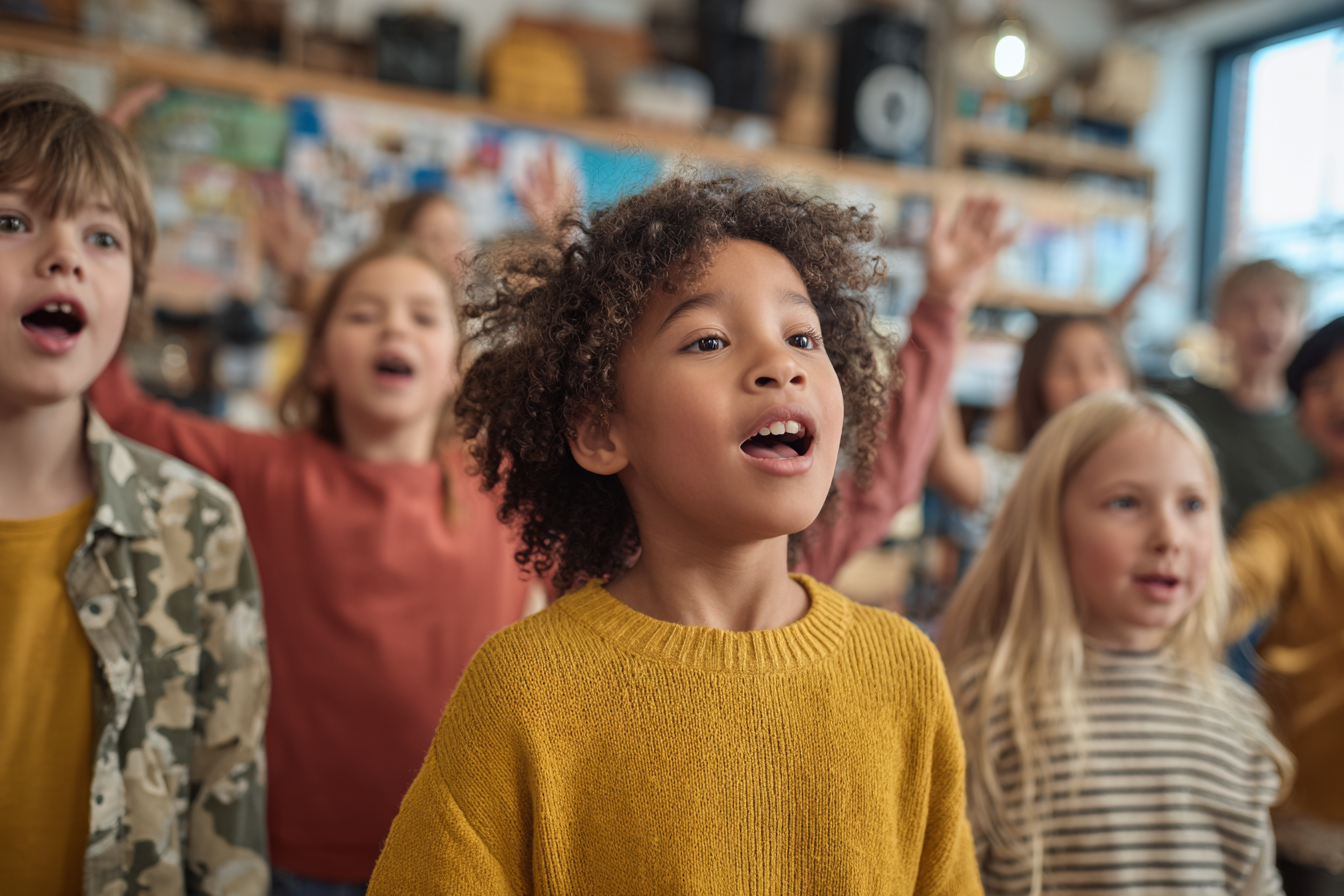
Focus: Establish music class routines, listening focus, and performance expectations, while helping students connect music to their interests, experiences, and purposes, and understand how people choose music to perform for different contexts.
Grade Level: 3
Subject Area: Music (Listening • Performing • Classroom Routines)
Total Unit Duration: 1–3 sessions (3+ weeks), 50–60 minutes per session
I. Introduction
This beginning-of-year unit builds a foundation for how music class works. Students learn entering/exiting routines, how to move between seated and active music-making, and what good performer and audience behavior looks like. They practice focused listening to short musical excerpts and talk about how the music connects to their own interests, experiences, and different purposes (celebration, calm, marching, game, etc.). They also explore how we choose music to perform, thinking about what would fit a school assembly, a classroom celebration, or a quiet time.
Essential Questions
- What routines help our music class run smoothly and safely every week?
- How can I listen with focus and describe how music connects to my experiences, feelings, and interests?
- How do purpose and context (what an event is for, who is there) affect the kind of music people choose to perform?
- What does it look and sound like to be a respectful performer and a respectful audience member in music class?
II. Objectives and Standards
Learning Objectives — Students will be able to:
- Follow classroom music routines for entering, sitting/standing, getting instruments, and putting materials away.
- Demonstrate focused listening by staying quiet, watching, and responding to teacher prompts during musical excerpts.
- Describe how selected music connects to their own interests, experiences, or the purpose of an event (e.g., celebration, calm time) in simple language.
- Sing or play short patterns/songs and explain how the selection of music might change depending on the purpose (assembly, classroom activity, game).
- Demonstrate basic performance expectations (posture, voice use, starting/stopping together, audience etiquette) during short in-class sharings.
Standards Alignment — Grade 3 Music (NAfME-Aligned)
- MU:Re7.1.3a — Demonstrate and describe how selected music connects to and is influenced by specific interests, experiences, or purposes.
- Example: Explaining why a song reminds them of a celebration.
- MU:Pr4.1.3a — Demonstrate and explain how the selection of music to perform is influenced by personal interest, knowledge, purpose, and context.
- Example: Choosing upbeat music for a school assembly.
Success Criteria — Student Language
- I can follow our music routines so class starts and ends smoothly.
- I can show focused listening with my body and eyes and share one idea about how the music connects to me or its purpose.
- I can say why a piece of music might be good for a celebration, quiet time, or another kind of event.
- I can sing or play a simple piece and explain why it would be a good choice for a certain context.
- I can show respectful behavior when I perform and when I listen to others.
III. Materials and Resources
Tasks & Tools (teacher acquires/curates)
- Listening excerpts
- Short recordings (30–60 seconds) of contrasting pieces:
- Upbeat/celebratory music.
- Calm/relaxing music.
- March or game-like music.
- Optional: one or two familiar songs that students might already know.
- Short recordings (30–60 seconds) of contrasting pieces:
- Class performance material
- 1–2 simple class songs or call-and-response chants for quick success.
- Short body percussion or rhythm patterns that can be done without instruments.
- Visual supports
- Anchor charts:
- “Music Class Routines” (enter, sit/stand, listen, move, clean up).
- “Good Listening Looks Like…” (eyes on performer/teacher, quiet mouth, still-ish body).
- “Performer & Audience Expectations” (posture, starting together, clapping, no talking during performances).
- Cards or images for different contexts: assembly, classroom quiet time, birthday celebration, outdoor game, etc.
- Anchor charts:
- Reflection & discussion tools
- Simple listening response sheets (picture or word options: happy, calm, excited, sleepy; “reminds me of…”).
- Think–pair–share prompts and sentence frames for describing connections and choices.
Preparation
- Decide on 1–2 class routines for entering/exiting, seating, and transitions (e.g., line-up song, freeze signal, instrument distribution).
- Prepare a short list of listening pieces that clearly suggest different purposes/contexts.
- Choose at least one simple class song or pattern that could be used in different ways (e.g., slow/soft for calm, fast/loud for fun).
- Create or post anchor charts before class so they can be referred to during teaching.
Common Misconceptions to Surface
- “Listening means being totally still like a statue.” → Listening can include relaxed, focused bodies and sometimes quiet movement that matches the music.
- “If I like the song, that’s the only thing that matters.” → Our interests are important, but we also think about purpose and context when choosing music.
- “All loud music is for parties, and all soft music is for bedtime.” → Many different styles can be used in different ways; we listen closely to decide.
- “Routines are just rules; they don’t help us.” → Routines help us have more time for making and listening to music safely and happily.
Key Terms (highlight in lessons) routine, listening focus, performance, audience, context, purpose, celebration, calm, assembly, experience, interest
IV. Lesson Procedure
(Each session is designed for a 50–60 minute class period.)
Session 1 — Music Class Routines & First Listening (All Standards)
- Launch (8–10 min)
- Greet students at the door and guide them through the entering routine you want to establish (e.g., quiet line, walk to spots, sit on a teacher signal).
- Once seated, ask: “What do you think music class will be like this year? What helps a music class go well?”
- Introduce the Music Class Routines anchor chart (enter, sit/stand, listen, move, clean up).
- Explore, Part A: Practicing Routines & Quick Music-Making (12–15 min)
- Teach or review a short class song or chant with a steady beat.
- Practice:
- Moving from seated to ready-to-sing/ready-to-move position on a signal.
- Starting together on a cue (e.g., count-in, breath, hand signal).
- Ending together and freezing in silence.
- Connect to performance routines: “These habits make us look and sound like a musical team.”
- Explore, Part B: Focused Listening & Personal Connections (18–20 min)
- Introduce the Good Listening Looks Like… chart (eyes on source, quiet mouth, respectful body).
- Play a short listening excerpt (e.g., upbeat celebration music). Students listen using the chart as a guide.
- After listening, invite quick reactions:
- “How did this music make you feel?”
- “Does it remind you of anything you’ve done, seen, or a place you’ve been?”
- Repeat with a second contrasting excerpt (e.g., calm or quiet piece).
- Have students complete a simple listening response (drawing or writing a short sentence) about how one excerpt connects to their interests, experiences, or what they think its purpose might be (party, rest time, parade, etc.).
- Discuss (8–10 min)
- Share a few student responses:
- “I think this sounds like music for ___ because ___.”
- “This reminds me of ___ from my life.”
- Connect this to MU:Re7.1.3a: demonstrating and describing how music connects to experiences and purposes.
- Briefly ask: “If we were going to perform a song for a school assembly, what kind of music might we choose? Why?” (Connect to MU:Pr4.1.3a.)
- Share a few student responses:
- Reflect (3–5 min)
- Quick exit prompt:
- “One routine I will remember next music class is ___. One way I can show good listening is ___.”
- Quick exit prompt:
Optional Session 2 — Choosing Music for Different Contexts (Reinforcing Standards)
- Launch (6–8 min)
- Review Music Class Routines quickly with a call-and-response or rhythm game.
- Show images for different contexts (assembly, classroom quiet reading, birthday celebration, recess game).
- Ask: “Would we choose the same music for all of these? Why or why not?”
- Explore, Part A: Listening Sort — Which Music Fits Where? (18–20 min)
- Play 3–4 short musical excerpts that clearly suggest different moods (excited, calm, serious, playful).
- After each excerpt:
- Students hold up or point to the context card(s) they think match the music.
- Ask a few students to explain: “I chose assembly because…” or “This sounds like quiet time music because…”.
- Chart answers to show how purpose and context influence the music we choose.
- Explore, Part B: Class Song for Many Purposes (15–18 min)
- Take a simple class song or pattern they know.
- Try performing it in different ways to fit different purposes:
- As assembly music (strong, confident, maybe a bit louder).
- As calm classroom music (softer, slower, gentler).
- As game music (perhaps faster and more energetic).
- After each version, ask: “Which event do you think this version would fit best? Why?”
- Emphasize how MU:Pr4.1.3a appears when we adjust how we perform a piece based on purpose and context.
- Discuss (5–7 min)
- Whole-class discussion:
- “How does changing the way we sing or play the same song change what it’s good for?”
- “What kind of music would you choose for a school assembly or a classroom celebration?”
- Whole-class discussion:
- Reflect (3–5 min)
- Reflection prompt:
- “One way I can help choose the right music for a special event is by thinking about ___.”
- Reflection prompt:
Optional Session 3 — Mini Sharing & Listening Responsibilities (Reinforcing Standards)
- Launch (5–7 min)
- Explain: “Today we’ll have a short mini sharing time. Some groups will perform a little, and everyone will practice listening and concert behavior.”
- Review Performer & Audience Expectations chart.
- Explore, Part A: Small Group Preparation (15–18 min)
- In pairs or small groups, students:
- Choose one class song, chant, or pattern to perform.
- Decide what kind of event or purpose it might fit (e.g., welcome song, quiet classroom song, game start signal).
- Practice starting/ending together and using expression that matches their chosen context.
- Teacher circulates, coaching routines (standing/sitting, starting on a cue) and helping students verbalize their purpose: “We want this to sound like ___ because ___.”
- In pairs or small groups, students:
- Explore, Part B: Mini Sharing Circle (20–22 min)
- Groups take turns performing for the class. Before each performance:
- The group briefly states their chosen context (“We imagine this for a classroom celebration…”).
- Audience practices good listening and applause.
- After each performance, invite one or two short comments:
- “This reminded me of ___ because ___.” (MU:Re7.1.3a)
- “I think this would be good for ___ because ___.” (MU:Pr4.1.3a)
- Groups take turns performing for the class. Before each performance:
- Discuss (5–7 min)
- Ask:
- “What did you notice about how we behaved as a performing group?”
- “What did you notice about how we behaved as an audience?”
- Reinforce how routines and expectations help everyone feel safe, respected, and ready to learn in music.
- Ask:
- Reflect (3–5 min)
- Final reflection:
- “One thing I am proud of in my music routines and listening is ___. One thing I want to keep working on is ___.”
- Final reflection:
V. Differentiation and Accommodations
Advanced Learners
- Invite students to lead or suggest additional routines (e.g., student-led warm-up call-and-response, student signal for clean-up).
- Ask them to make more detailed connections between music and context (e.g., describing style, instruments, and tempo when explaining their choices).
- Encourage them to create short verbal introductions for mini performances that explain why they chose a particular piece for a given purpose.
Targeted Support
- Use clear, repeated visual cues for routines (floor spots, arrows, pictorial schedules).
- Model and practice routines in short chunks, gradually adding more steps as students are successful.
- Offer sentence frames for listening and selection:
- “This music reminds me of ___ because ___.”
- “This song would be good for ___ because it sounds ___.”
- Keep listening excerpts short and simple, and review key ideas right after each one.
Multilingual Learners
- Use pictures and icons to label contexts (party, assembly, quiet reading, game) and routines (enter, sit, listen, clean up).
- Allow partners to discuss in their home language first, then share a short English statement with support.
- Provide a word bank with feelings and purposes (happy, calm, excited, serious, celebration, quiet time, game, assembly).
- Accept drawings plus a few words as valid listening responses.
IEP/504 & Accessibility
- Break routines into step-by-step checklists; practice each step with generous modeling and praise.
- Allow preferred seating or alternative positions (e.g., chair instead of floor) to support focus.
- Use audio/visual supports (e.g., visual timers, icons, large-print charts) to clarify transitions and expectations.
- Offer alternative ways to participate in sharing (e.g., body percussion instead of singing, moving only arms rather than whole body) based on individual needs.
VI. Assessment and Evaluation
Formative Checks (ongoing in all sessions)
- Routines & behavior — Observe how students enter, transition, and clean up, noting how consistently they follow music routines.
- Listening focus — Watch for body language that shows focus (eyes on source, quiet mouth, limited off-task movement) and responses that show they heard key musical features.
- Connections & purposes — Listen to student explanations of how music connects to their experiences and what kinds of events it might fit.
- Music selection thinking — Note how students explain why a piece or performance style fits a certain context (assembly vs. quiet time).
Summative — Music Routines & Listening Check (0–2 per criterion, total 10)
- Music Routines & Expectations
- 2: Consistently follows music routines (entering, sitting/standing, transitions, clean up) with little reminder.
- 1: Follows routines with some teacher prompts; occasional confusion or reminders needed.
- 0: Frequently ignores or forgets routines; behavior often off-task or unsafe.
- Listening Focus (MU:Re7.1.3a)
- 2: Demonstrates strong listening focus (body/eyes) and can share at least one clear connection or idea about the music’s experience or purpose.
- 1: Shows partial listening focus or gives general reactions; connections to experience/purpose are vague.
- 0: Has difficulty showing listening focus and/or cannot express any connection or purpose.
- Context & Purpose Understanding (MU:Re7.1.3a)
- 2: Accurately suggests reasonable contexts/purposes for different musical excerpts and explains choices in simple language.
- 1: Can suggest contexts but explanations are limited or sometimes mismatched.
- 0: Struggles to match music to any context or cannot explain choices.
- Music Selection Thinking (MU:Pr4.1.3a)
- 2: When choosing or adapting a class song/pattern, clearly explains how it fits a particular purpose or event.
- 1: Gives some reasoning for music choices but not clearly tied to purpose/context.
- 0: Offers little to no explanation of why a piece fits a given event.
- Performer & Audience Behavior
- 2: Demonstrates respectful performer and audience behavior most of the time (posture, focus, appropriate applause).
- 1: Shows mostly appropriate behavior with a few lapses.
- 0: Frequent behavior issues that interfere with performances or listening.
Feedback Protocol (TAG)
- Tell one strength (e.g., “You showed great listening focus during the calm piece.”).
- Ask one question (e.g., “What event do you think this song would be best for?”).
- Give one suggestion (e.g., “Next time, try waiting for the signal before you start singing so we begin together.”).
VII. Reflection and Extension
Reflection Prompts
- Which music routine helps you the most in feeling ready to learn and make music? Why?
- How did focused listening change the way you heard the music in this unit?
- Think of a song you like outside of school. What event or purpose do you think it would be best for, and why?
- How do you want to behave as a performer and as an audience member in music class this year?
Extensions
- My Music & Me Collage: Students create a mini poster showing a song they like, where they hear it (home, car, party), and what purpose it has in their lives.
- Context-Musical Match Game: In a later lesson, students design a simple card game where they match music descriptions or styles with different events (assembly, quiet reading, celebration, etc.).
- Class Music Promise: As a class, write a short “Music Class Promise” poem or chant about routines, listening, and respect, then perform it at the start of each music class.
Standards Trace — When Each Standard Is Addressed
- MU:Re7.1.3a — Session 1 (focused listening and personal/purpose connections to excerpts), Optional Session 2 (sorting excerpts by event/context and describing purposes), Optional Session 3 (sharing how performances remind listeners of experiences or fit certain purposes).
- MU:Pr4.1.3a — Session 1 (discussing which kinds of music fit different class events), Optional Session 2 (adapting a class song for different contexts and justifying choices), Optional Session 3 (small groups choosing and presenting pieces with stated purposes for mini sharing).