Unit Plan 26 (Grade 3 Music): Music Storytelling
Grade 3 unit: students create and perform story/scene music, explaining expressive intent (tempo, dynamics, sound choices) and how personal interests inspired their composition.

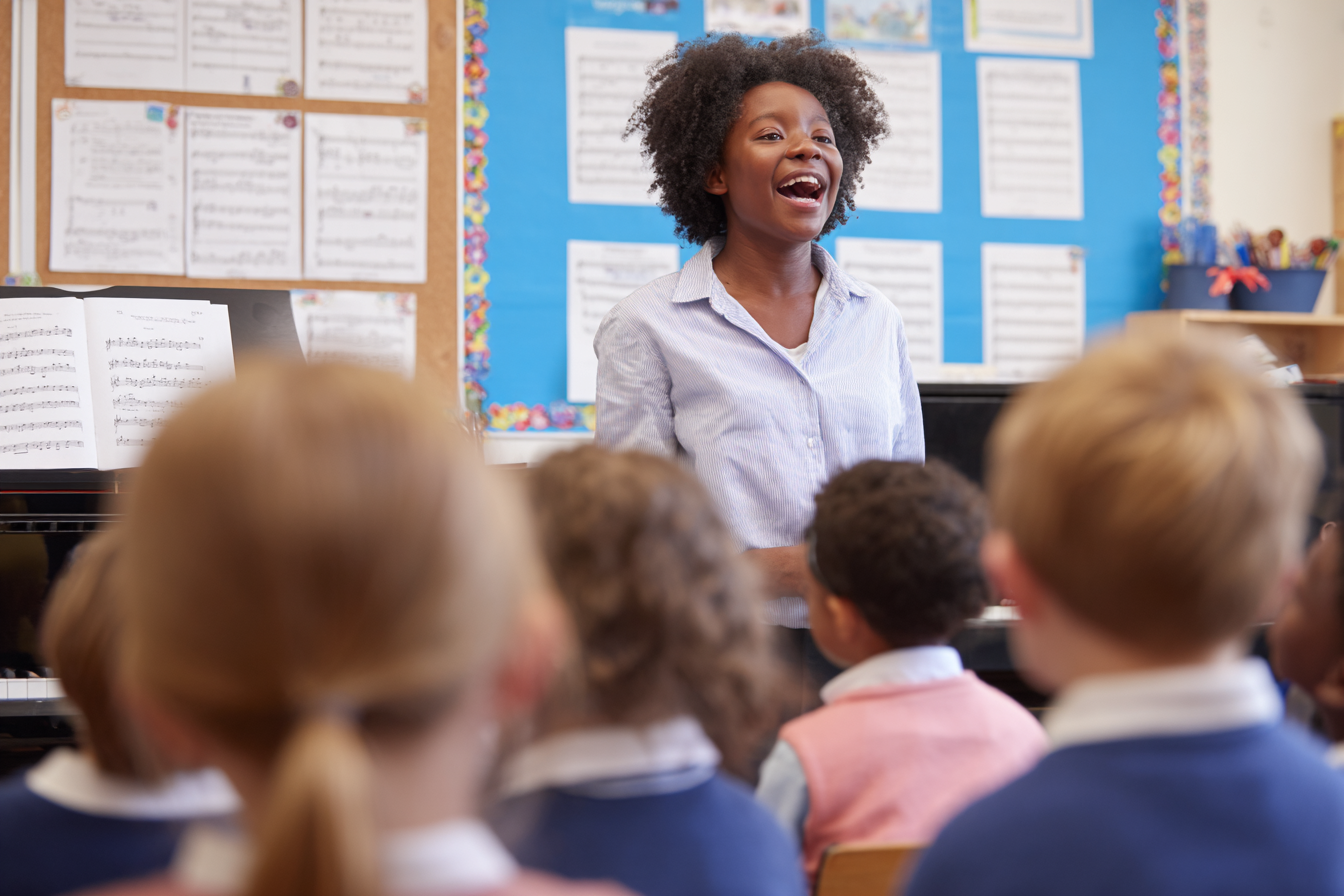
Focus: Create and present music to support characters or scenes, explaining how musical choices show expressive intent and connect to personal interests.
Grade Level: 3
Subject Area: Music (Creating • Connecting • Performing)
Total Unit Duration: 1–3 sessions (3+ weeks), 50–60 minutes per session
I. Introduction
In this unit, students become musical storytellers. They create short pieces of music to match characters, settings, or scenes from stories, pictures, or their own imaginations. Using voices, body percussion, and classroom instruments, they choose sounds, patterns, and expressive qualities (like tempo and dynamics) that show how a character feels or what is happening in a scene. Then, they present their finished music to classmates and explain how it connects to their expressive intent and to their own interests and experiences (such as favorite books, games, or movies).
Essential Questions
- How can music help tell a story or show what a character is like?
- How do our interests, knowledge, and skills influence the musical choices we make when creating story music?
- What does it mean to have expressive intent in a piece of music?
- How can we explain how our music matches the characters, scenes, or feelings we want to show?
II. Objectives and Standards
Learning Objectives — Students will be able to:
- Choose a character, setting, or scene and plan musical ideas (patterns, sounds, dynamics, tempo) that fit its mood.
- Use classroom instruments, body percussion, and/or voices to create and refine a short musical piece that supports a story moment.
- Present a final version of their created music for classmates, performing with a clear beginning, middle, and ending.
- Describe how their musical choices (instruments, patterns, dynamics, tempo) connect to their expressive intent for the character or scene.
- Explain how their own interests, knowledge, and skills helped shape the way they created and performed their story music.
Standards Alignment — Grade 3 Music (NAfME-Aligned)
- MU:Cr3.2.3a — Present the final version of created music for others and describe how it connects to expressive intent.
- Example: Performing a finished composition and explaining its mood.
- MU:Cn10.0.3a — Demonstrate how interests, knowledge, and skills relate to personal choices and intent when creating, performing, and responding to music.
- Example: Creating music inspired by a favorite hobby.
Success Criteria — Student Language
- I can choose sounds, patterns, and instruments that fit a character or scene.
- I can organize my music so it has a clear beginning, middle, and end.
- I can perform my story music confidently for others.
- I can explain how my music shows what I wanted the character or scene to feel like.
- I can describe how my own interests (books, games, movies, hobbies) helped me decide what my music should sound like.