Unit Plan 6 (Grade 3 PE): Track & Field Basics
Develop Grade 3 track and field skills with safe, structured stations that build running, jumping, and throwing form, effort control, and equipment safety.

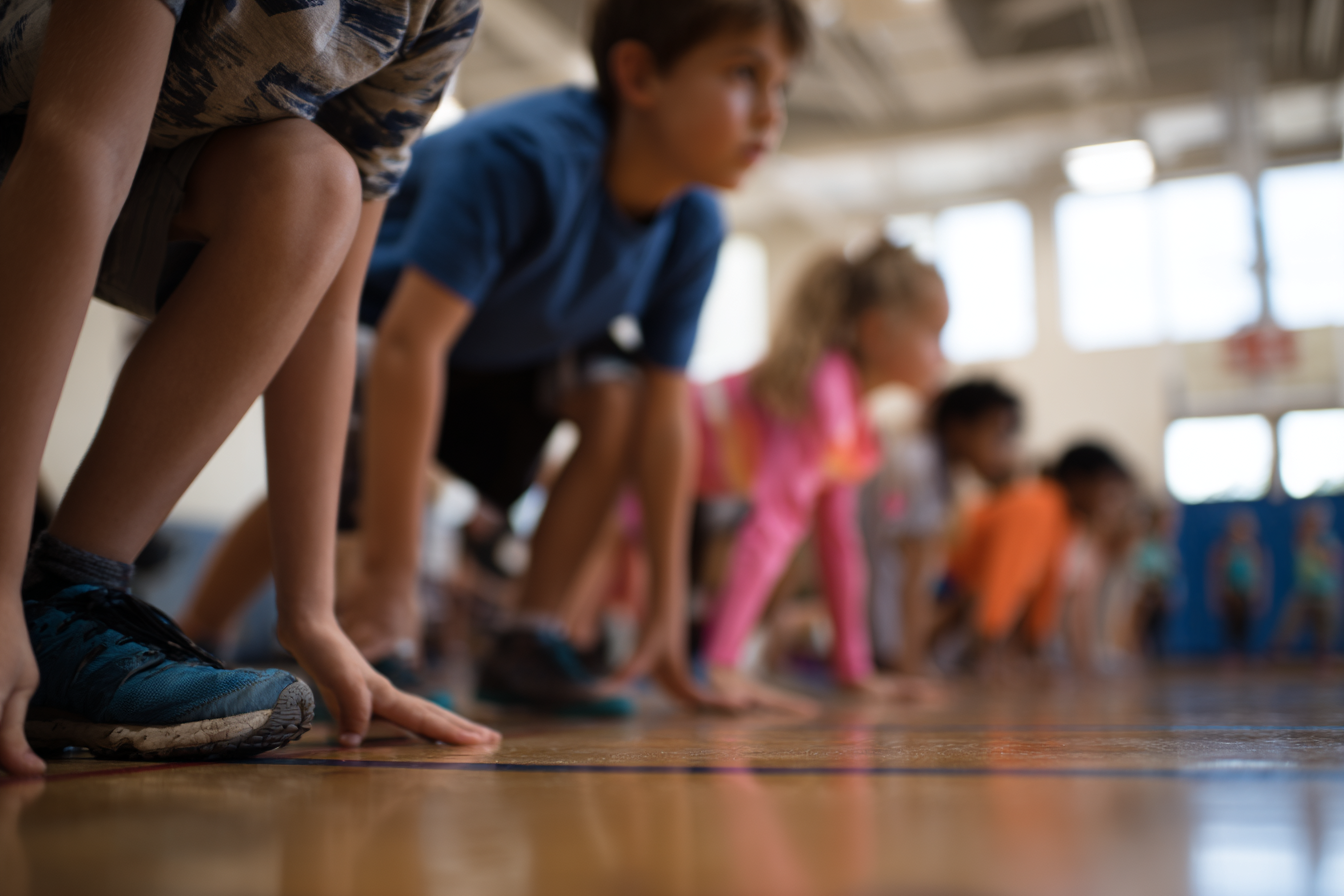
Focus: Build basic running, jumping, and throwing form while helping students use lanes, stations, and equipment safely during introductory track and field events.
Grade Level: 3
Subject Area: Physical Education (Track & Field • Running, Jumping & Throwing • Form & Safety)
Total Unit Duration: 1 core session + 2 optional sessions (1–3 weeks), 50–60 minutes per session
I. Introduction
Students explore track and field as a way to practice individual movement skills with attention to effort, control, and safe technique. In this unit, students begin with jog/walk intervals and dynamic stretches such as leg swings and lunges so they can prepare their bodies for faster running, jumping, and throwing. They then rotate through Sprint Lanes, Standing Long Jump, and Soft-Throw Javelin using foam implements or soft balls, where they learn how to run in a straight lane, jump with balance and safe landing, and throw with the right amount of force for distance. Throughout the unit, students focus on body control, event safety, effort, and learning that track and field events reward both technique and practice.
Essential Questions
- How can I run, jump, and throw with better control and form?
- Why is it important to use lanes and event spaces safely?
- How do I change my effort or force depending on the event?
- What helps me stay active and successful during track and field practice?
II. Objectives and Standards
Learning Objectives — Students will be able to:
- Perform locomotor movements with control during jogging, sprinting, and jumping tasks.
- Throw a soft object with improving accuracy and force for distance.
- Apply movement concepts such as pathway, direction, and level during running and jumping events.
- Adjust speed, effort, and force to match the demands of sprinting, jumping, and throwing tasks.
- Stay actively engaged in track and field stations for most of class time.
Standards Alignment — 3rd Grade (SHAPE America-based custom)
- PE:S1.3a – Locomotor Skills in Complex Pathways Perform locomotor skills (run, hop, jump, leap, slide, gallop, skip) with control, changing speed and direction in response to cues or game situations.
- Example: Students navigate a cone course, adjusting speed and direction while avoiding others during a tag-style warm-up.
- PE:S1.3c – Throwing & Catching in Games Throw (underhand and overhand) and catch objects with increasing accuracy and consistency in partner, group, and small-sided game situations.
- Example: Students complete a sequence of accurate passes with a partner while moving in a small grid.
- PE:S2.3b – Pathways, Levels, and Direction in Game Contexts Apply movement concepts (pathways, levels, directions) to gain advantage in chasing, fleeing, dodging, and invasion games.
- Example: Students change direction and levels to evade a tagger during a tag game.
- PE:S2.3c – Effort & Force to Match the Task Adjust speed, effort, and force (fast/slow, hard/soft) for successful performance in skills and games.
- Example: Students throw softly to a nearby partner and with more force to a distant target in a throwing game.
- PE:S3.3a – Participation in Moderate-to-Vigorous Activity Participate actively in moderate-to-vigorous physical activity for most of the PE class time.
- Example: Students remain engaged in continuous movement activities such as running games, circuits, or relays with minimal idle time.
Success Criteria — Student Language
- I can run in my lane with control.
- I can jump forward and land safely with balance.
- I can throw with the right amount of force for the task.
- I can change my speed and effort depending on the event.
- I can stay active and use the stations safely.