Unit Plan 19 (Grade 4 Art): Shading & Depth Techniques
Grade 4 art unit on value and shading techniques, teaching students to create 3D form and depth using light source, shadow, and controlled drawing for stronger craftsmanship.

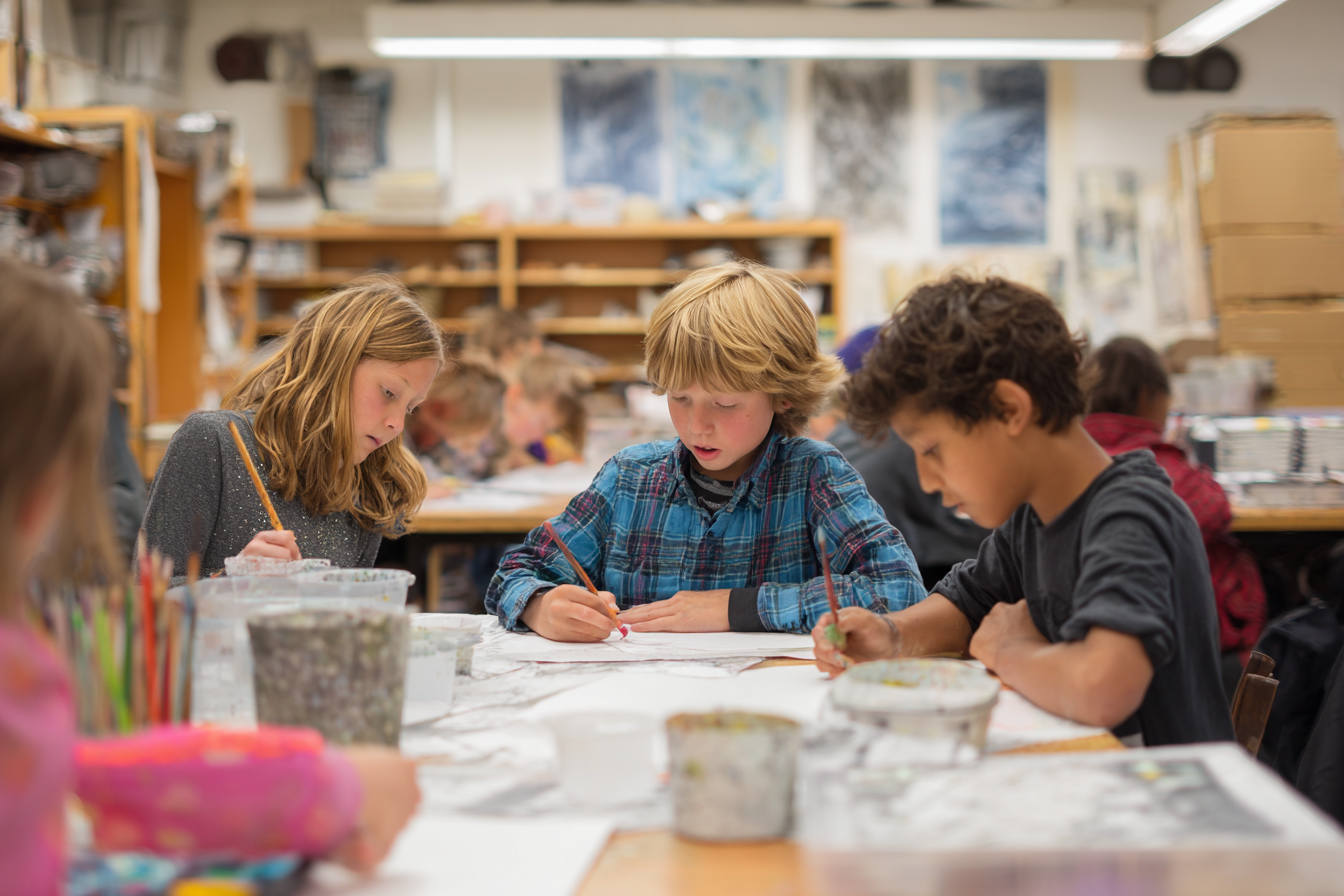
Focus: Use value and shading techniques to create the illusion of form and space in drawings.
Grade Level: 4
Subject Area: Art (Visual Arts • Creating)
Total Unit Duration: 1–3 weeks, 50–60 minutes per session
I. Introduction
In this unit, students explore how value (lightness and darkness) and shading techniques can make flat shapes look like 3D forms and create a sense of depth in a picture. Through guided practice, they experiment with different pencil and drawing methods—such as hatching, cross-hatching, and blending—to show light source, highlights, and shadows. By applying these techniques to simple forms and a small composition, students learn to control their tools more carefully and use value to suggest space and distance.
Essential Questions
- How does changing the value (lightness or darkness) of a color or pencil mark help show form and depth?
- What are some shading techniques I can use to make a circle look like a sphere or a square look like a box?
- How can I use light source, highlight, and shadow to make my drawings look more three-dimensional?
- In what ways does practicing control and craftsmanship with shading improve my overall artwork?
II. Objectives and Standards
Learning Objectives — Students will be able to:
- Define value and identify areas of light, medium, and dark in sample artworks.
- Experiment with different shading techniques (hatching, cross-hatching, blending, stippling) to change value.
- Use a consistent light source to add highlights and shadows to basic forms (sphere, cube, cylinder).
- Create a small drawing that uses value to show both form (3D objects) and space (objects nearer/farther away).
- Improve control and craftsmanship in pencil work by shading smoothly, staying inside edges, and building value gradually.
Standards Alignment — 4th Grade (NCAS-Aligned)
- VA:Cr2.4b — Experiment with tools, materials, and techniques to improve control and craftsmanship.
- Example: Students practice blending and layering techniques in paint.
Success Criteria — Student Language
- I can explain what value means and point out where an artwork is light, medium, or dark.
- I can use at least one shading technique to create different values with my pencil.
- I can show a light source in my drawing by placing highlights and shadows in the right places.
- I can make a flat shape look like a 3D form by using value changes.
- I can use careful, controlled shading to make my drawing look neat and intentional.