Unit Plan 16 (Grade 4 PE): Kickball with Positions & Strategy
Grade 4 kickball unit plan focused on kicking placement, smart base-running decisions, defensive positioning, and sportsmanship through structured team-based game play.

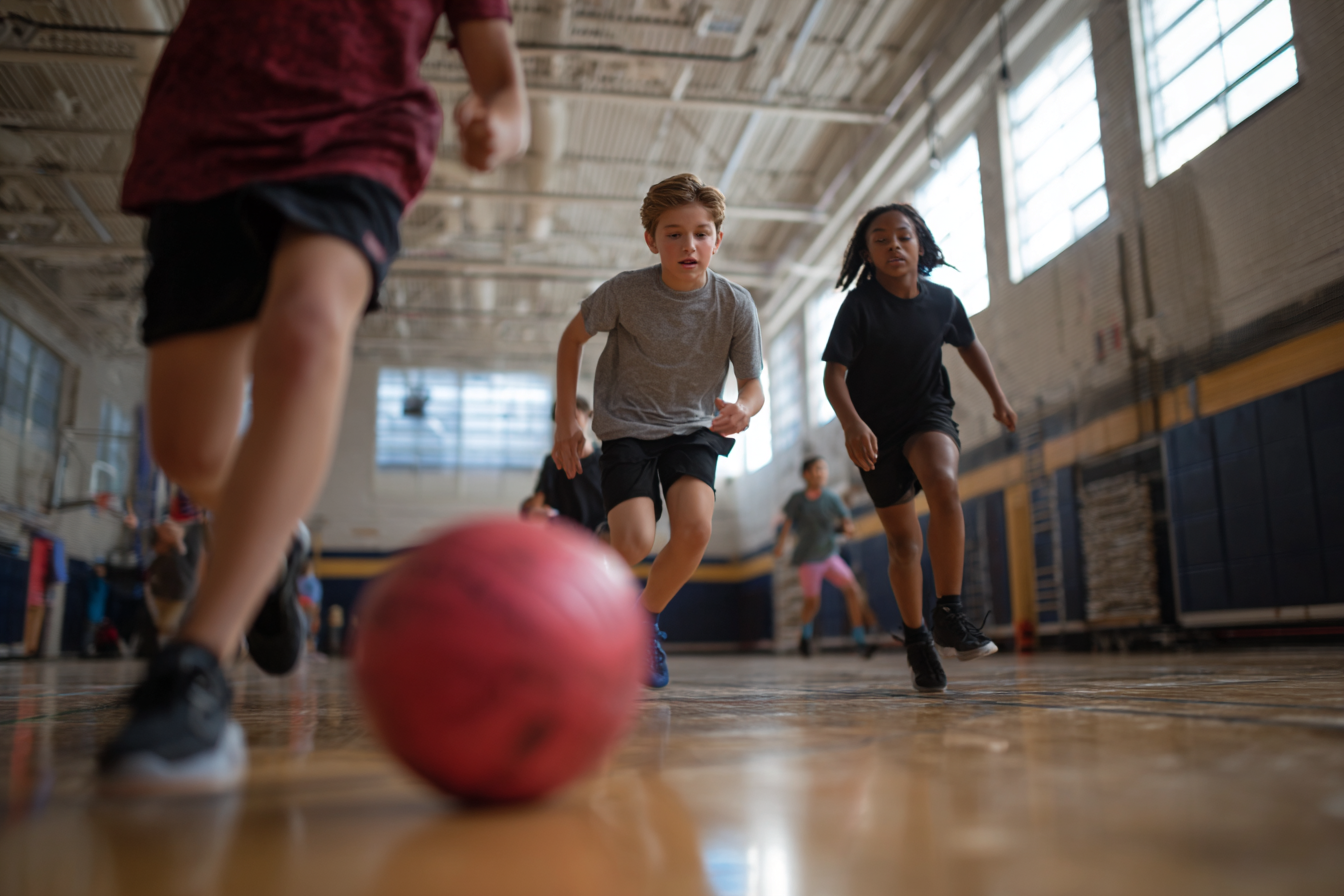
Focus: Develop kicking placement, smarter base-running decisions, and stronger defensive positioning through organized kickball games with clear team roles.
Grade Level: 4
Subject Area: Physical Education (Kickball • Game Strategy • Offense & Defense)
Total Unit Duration: 1 core session + 2 optional sessions (1–3 weeks), 50–60 minutes per session
I. Introduction
Students build kickball understanding by learning that success depends on more than simply kicking hard or running fast. In this unit, students begin with kicking to target zones and base-running practice so they can learn how to place the ball, run with control, and make smart choices about when to advance or stay. They then apply those skills in kickball games with clear infield and outfield positions and simple team strategy, such as deciding where to throw the ball and when runners should move. Throughout the unit, students focus on controlled kicking, reading the field, communicating with teammates, playing positions responsibly, and showing sportsmanship during competitive situations.
Essential Questions
- How can I use kicking placement to help my team instead of just kicking as hard as possible?
- What should a runner think about before deciding to go to the next base?
- How does knowing your position help a kickball team play better defense?
- What does strong sportsmanship look like during a competitive game?
II. Objectives and Standards
Learning Objectives — Students will be able to:
- Use locomotor skills with control while sprinting to bases, stopping safely, and changing direction during game play.
- Kick a ball with better placement and control to open field areas.
- Combine skills in sequence, such as kick → run → stop at base → decide to advance or field → throw → cover a base.
- Apply simple offensive strategies such as kicking away from defenders and making smart base-running choices.
- Apply simple defensive strategies such as playing infield/outfield positions, covering bases, and making good throw decisions.
- Work cooperatively with teammates by accepting positions, communicating during plays, and helping the team stay organized.
- Demonstrate self-control and good sportsmanship during close plays, outs, and scoring situations.
Standards Alignment — 4th Grade (SHAPE America-based custom)
- PE:S1.4a – Locomotor Skills in Dynamic Games Perform locomotor skills (run, hop, jump, leap, slide, gallop, skip) with control and efficiency while changing speed and direction in game situations.
- Example: Students use controlled sprinting, stopping, and quick changes of direction during tag, invasion games, or chasing/fleeing activities.
- PE:S1.4d – Kicking, Dribbling & Ball Control with Feet Dribble a ball with the feet using changes of speed and direction, and perform controlled passes and shots to targets or teammates.
- Example: In modified soccer, students dribble through defenders, then accurately pass to an open teammate or shoot on goal.
- PE:S1.4f – Combining Skills in Game Sequences Combine multiple skills (dribble, pass, catch, shoot, strike, run, dodge) in game-like sequences with basic fluidity.
- Example: In handball lead-up games, students catch a pass, take a few steps to open space, and then pass or shoot toward a goal.
- PE:S2.4d – Offensive Strategies in Small-Sided Games Demonstrate basic offensive strategies such as moving without the ball, creating passing lanes, using give-and-go plays, and choosing high-percentage shots.
- Example: In a 3v3 basketball or soccer game, students cut to open space to receive a pass and choose appropriate times to shoot.
- PE:S2.4e – Defensive Strategies & Position Play Demonstrate basic defensive ideas such as maintaining proper position (between opponent and goal), marking a player, and attempting legal interceptions.
- Example: A student stays between an opponent and the goal in handball or soccer, trying to block shots or intercept passes without fouling.
- PE:S4.4b – Cooperation, Leadership, and Team Roles Work cooperatively with classmates, accept and share roles (captain, scorekeeper, equipment manager), and demonstrate inclusive leadership.
- Example: During small-sided games, students rotate roles fairly, encourage quieter peers to participate, and help organize teams.
- PE:S4.4c – Emotional Regulation & Sportsmanship Demonstrate self-control and positive sportsmanship by handling winning and losing respectfully, managing frustration, and encouraging others.
- Example: A student calmly accepts a referee’s call or a loss, shakes hands with the other team, and says “good game.”
Success Criteria — Student Language
- I can kick to open space instead of always kicking straight ahead.
- I can run the bases under control and decide when to stop or keep going.
- I can help on defense by knowing where to stand and where to throw.
- I can work with my team by communicating and playing my role.
- I can stay calm and show good sportsmanship during competitive moments.