Unit Plan 2 (Grade 4 PE): Soccer Fundamentals & Small-Sided Play
Build Grade 4 PE soccer skills with dribbling, passing, spacing, and defending through fun small-sided games that boost teamwork and active play.

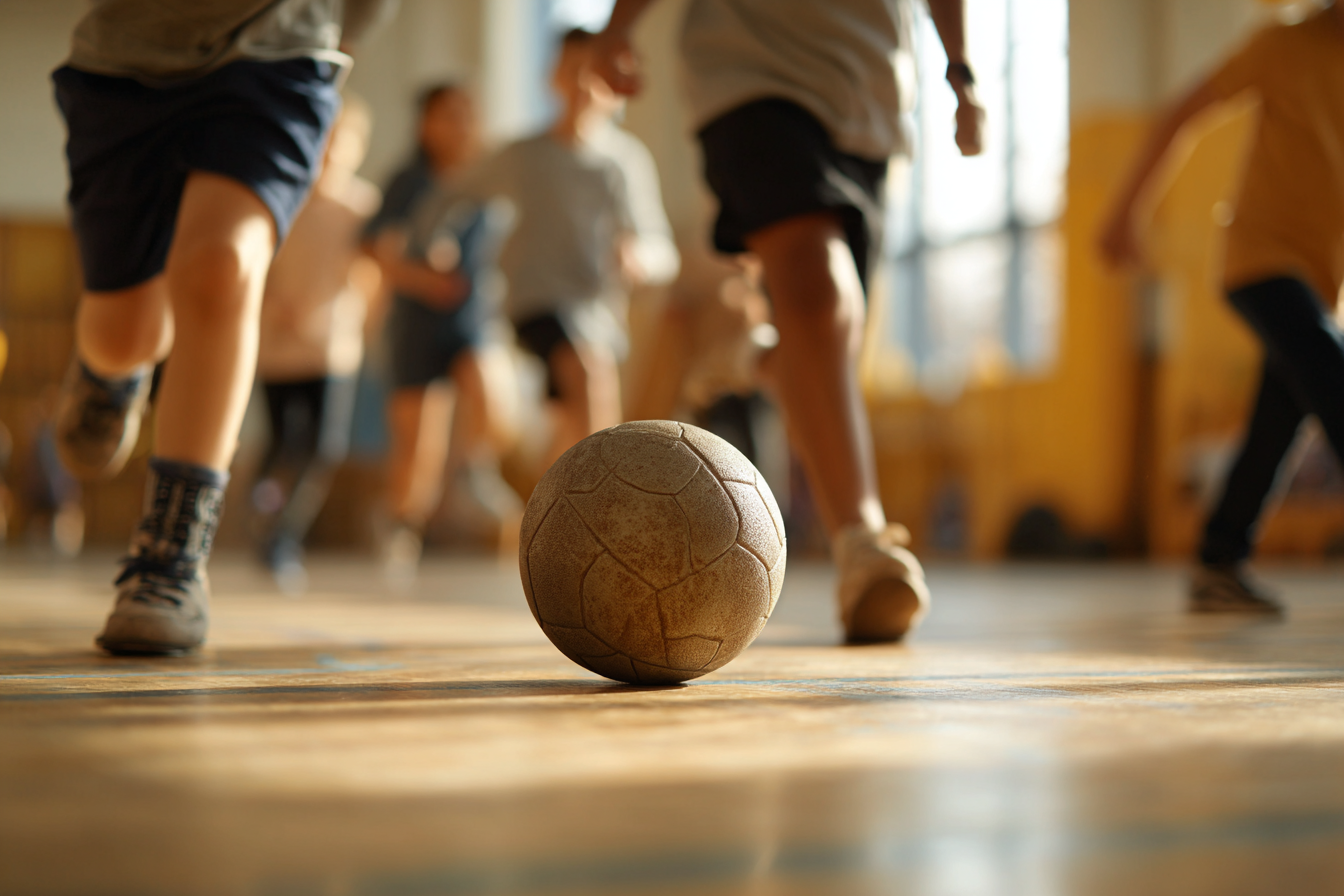
Focus: Build soccer fundamentals through controlled dribbling, accurate passing, better offensive spacing, and simple defending in small-sided play.
Grade Level: 4
Subject Area: Physical Education (Soccer Skills • Small-Sided Games • Offense & Defense)
Total Unit Duration: 1 core session + 2 optional sessions (1–3 weeks), 50–60 minutes per session
I. Introduction
Students build core soccer skills by learning how to control the ball with both feet, move into open space, and work with teammates in small-sided game situations. In this unit, students begin with dribbling in lanes where they practice changing speed and direction on signal while keeping the ball close and under control. They then apply those skills in 3v3 soccer mini-fields with a class rule requiring 3 passes before shooting, encouraging teamwork, patience, and smarter attacking choices. Throughout the unit, students focus on ball control, passing to open teammates, spreading out on offense, and staying between an opponent and the goal on defense.
Essential Questions
- How can I keep the ball under control while dribbling with both feet?
- How does moving to open space help my team keep possession and attack?
- Why is passing often a better choice than trying to dribble through everyone?
- What does good defensive position look like in a small-sided soccer game?
II. Objectives and Standards
Learning Objectives — Students will be able to:
- Dribble a soccer ball with both feet using changes of speed and direction while keeping control.
- Combine soccer skills in sequences such as dribble → pass → move to space → receive again.
- Move to open space and create simple passing lanes during 3v3 play.
- Apply basic offensive ideas such as passing before shooting, spreading out, and choosing better scoring chances.
- Apply basic defensive ideas such as staying between an opponent and the goal, marking safely, and attempting simple interceptions.
- Stay actively engaged in small-sided soccer activities for most of class time.
Standards Alignment — 4th Grade (SHAPE America-based custom)
- PE:S1.4d – Kicking, Dribbling & Ball Control with Feet Dribble a ball with the feet using changes of speed and direction, and perform controlled passes and shots to targets or teammates.
- Example: In modified soccer, students dribble through defenders, then accurately pass to an open teammate or shoot on goal.
- PE:S1.4f – Combining Skills in Game Sequences Combine multiple skills (dribble, pass, catch, shoot, strike, run, dodge) in game-like sequences with basic fluidity.
- Example: In handball lead-up games, students catch a pass, take a few steps to open space, and then pass or shoot toward a goal.
- PE:S2.4a – Space Awareness & Positioning Use personal and general space effectively by moving to open areas, avoiding overcrowded zones, and maintaining safe distances in games.
- Example: In small-sided games, students spread out instead of clustering around the ball, making it easier to receive passes.
- PE:S2.4d – Offensive Strategies in Small-Sided Games Demonstrate basic offensive strategies such as moving without the ball, creating passing lanes, using give-and-go plays, and choosing high-percentage shots.
- Example: In a 3v3 basketball or soccer game, students cut to open space to receive a pass and choose appropriate times to shoot.
- PE:S2.4e – Defensive Strategies & Position Play Demonstrate basic defensive ideas such as maintaining proper position (between opponent and goal), marking a player, and attempting legal interceptions.
- Example: A student stays between an opponent and the goal in handball or soccer, trying to block shots or intercept passes without fouling.
- PE:S3.4a – Active Participation in MVPA Participate actively in moderate-to-vigorous physical activity (MVPA) for most of the class, minimizing off-task time.
- Example: During fitness circuits, stations, or games, students remain engaged and moving rather than standing and watching others.
Success Criteria — Student Language
- I can dribble with better control using both feet.
- I can pass to an open teammate instead of forcing the ball into traffic.
- I can move to open space so my team has better options.
- I can stay between my player and the goal when defending.
- I can stay active and ready during the whole game.