Unit Plan 8 (Grade 4 PE): Volleyball/Newcomb Net Games
Explore this Grade 4 PE Newcomb and beginning volleyball unit plan focused on ready position, rotation, teamwork, communication, and placing the ball into open space.

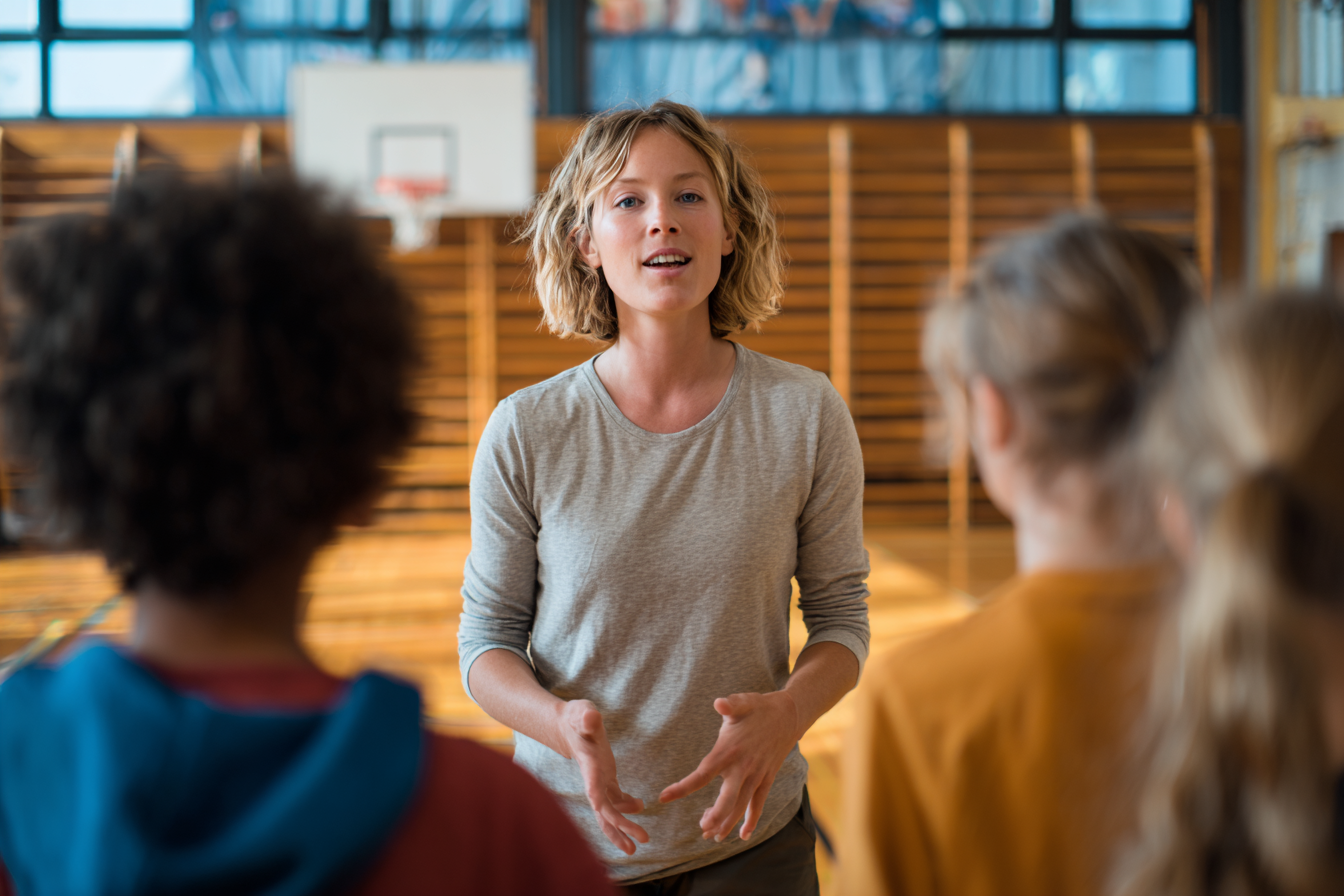
Focus: Develop ready position, basic rotation, stronger net-game communication, and better placement of the ball into open space through Newcomb and beginning volleyball-style play.
Grade Level: 4
Subject Area: Physical Education (Net & Wall Games • Team Communication • Ball Placement & Rotation)
Total Unit Duration: 1 core session + 2 optional sessions (1–3 weeks), 50–60 minutes per session
I. Introduction
Students explore net games as activities that depend on teamwork, communication, positioning, and controlled ball placement. In this unit, students begin with underhand passing and overhead set-and-catch with partners so they can practice body position, soft hands, and tracking the ball. They then move into Newcomb with rotation, where players catch and throw the ball over the net, before progressing toward light volleying in small-sided game play. Throughout the unit, students focus on getting into a ready position, calling “mine”, rotating fairly after serves or side-outs, and placing the ball into open areas instead of sending it randomly over the net.
Essential Questions
- How does a strong ready position help me respond to the ball more quickly?
- Why is calling “mine” or communicating early important in net games?
- How can players place the ball into open space instead of just sending it anywhere?
- What does good teamwork look like when a class is learning rotation and small-sided game play?
II. Objectives and Standards
Learning Objectives — Students will be able to:
- Demonstrate controlled ball contact and handling patterns used in beginning net games, including underhand passing and overhead set-and-catch.
- Combine skills in sequence, such as ready position → move to ball → catch/pass/set → send over net → recover to position.
- Use space effectively by spreading out, avoiding bunching, and moving to cover playable areas on a small-sided court.
- Apply basic offensive strategy by communicating, placing the ball to open space, and using simple team rotations.
- Work cooperatively with classmates by sharing roles, encouraging teammates, and helping games run smoothly.
Standards Alignment — 4th Grade (SHAPE America-based custom)
- PE:S1.4e – Striking with Implements in Games Strike a moving or stationary object with a short- or long-handled implement (paddle, racket, bat, stick) with control of direction and force.
- Example: Students strike a pitched or tossed ball in wiffle ball, or pass a ball along the floor with a hockey stick to a target or teammate.
- PE:S1.4f – Combining Skills in Game Sequences Combine multiple skills (dribble, pass, catch, shoot, strike, run, dodge) in game-like sequences with basic fluidity.
- Example: In handball lead-up games, students catch a pass, take a few steps to open space, and then pass or shoot toward a goal.
- PE:S2.4a – Space Awareness & Positioning Use personal and general space effectively by moving to open areas, avoiding overcrowded zones, and maintaining safe distances in games.
- Example: In small-sided games, students spread out instead of clustering around the ball, making it easier to receive passes.
- PE:S2.4d – Offensive Strategies in Small-Sided Games Demonstrate basic offensive strategies such as moving without the ball, creating passing lanes, using give-and-go plays, and choosing high-percentage shots.
- Example: In a 3v3 basketball or soccer game, students cut to open space to receive a pass and choose appropriate times to shoot.
- PE:S4.4b – Cooperation, Leadership, and Team Roles Work cooperatively with classmates, accept and share roles (captain, scorekeeper, equipment manager), and demonstrate inclusive leadership.
- Example: During small-sided games, students rotate roles fairly, encourage quieter peers to participate, and help organize teams.
Success Criteria — Student Language
- I can get into a ready position and move toward the ball quickly.
- I can call “mine” and communicate with teammates so we do not run into each other.
- I can send the ball to open space instead of right to the other team.
- I can rotate to the next spot when the game calls for it.
- I can work with my team by sharing turns, helping others, and staying positive.