Unit Plan 36 (Grade 5 Counselor): Grade 5 Counselor Celebration and Transition Reflection
Celebrate Grade 5 counseling growth with reflection on coping, empathy, problem-solving, responsibility, and middle school readiness.

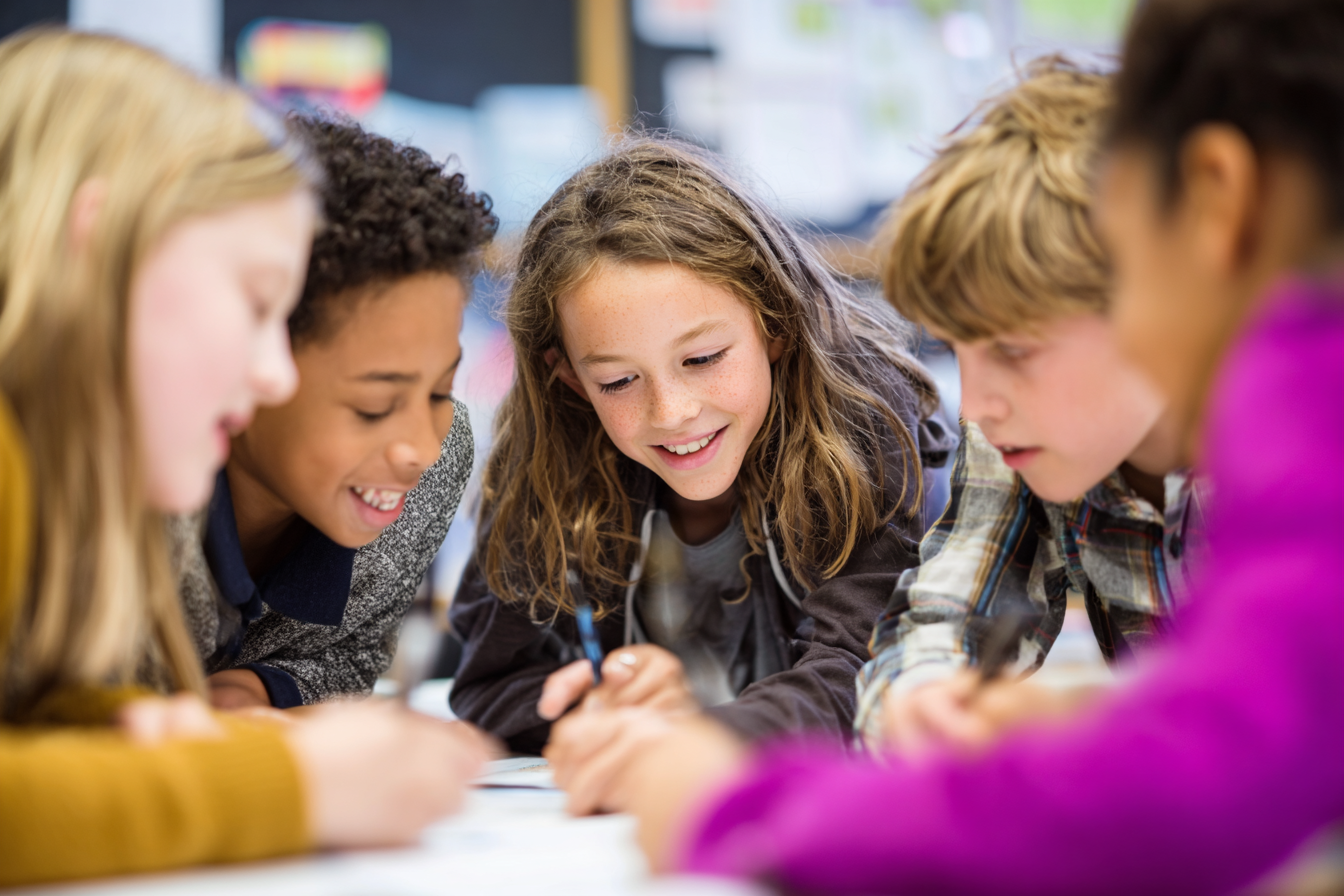
Focus: Celebrate students’ growth in counseling skills and look ahead to the next stage of school. Students review emotions, coping tools, empathy, assertive communication, conflict resolution, trusted adults, boundaries, digital responsibility, goals, and responsible choices through a game, class circle, reflection sheet, or transition activity. The lesson should feel affirming and forward-looking, reminding students that they have practical tools to handle challenges, support others, and succeed in middle school.
Grade Level: 5
Subject Area: School Counseling (Celebration • Transition Reflection • Middle School Readiness)
Total Unit Duration: 1–2 weeks, 30 minutes per session
I. Introduction
This final Grade 5 counseling lesson celebrates the growth students have made throughout the year. Students have practiced naming feelings, identifying stressors, using coping strategies, showing empathy, communicating assertively, resolving conflict, respecting boundaries, making responsible choices, asking trusted adults for help, and setting goals. This lesson brings those skills together in a positive and reflective way.
Students participate in a review game, class circle, reflection sheet, or transition activity that helps them recognize the tools they can carry into middle school. The counselor emphasizes that students do not have to be perfect to be ready. They are ready when they know how to pause, choose a strategy, treat others with respect, seek support, and keep growing.
Essential Questions
- What counseling skills have helped me grow this year?
- How can I use coping tools, empathy, conflict-resolution skills, and responsible choices in middle school?
- How can I support others while also taking care of myself?
- What strengths and strategies do I want to carry forward into the next stage of school?
II. Objectives and Standards
Learning Objectives — Students will be able to:
- Reflect on growth in counseling skills, including emotions, coping, empathy, communication, conflict resolution, boundaries, responsibility, and goals.
- Identify coping strategies and support tools they can use during stress, conflict, transitions, or strong emotions.
- Describe how empathy, respect, and inclusion help build a positive school community.
- Review problem-solving steps and decision-making tools that help students choose safe and respectful responses.
- Name one strength, strategy, or leadership behavior they want to carry into middle school.
- (Optional Session) Create a transition reflection product, celebration card, or personal toolkit for middle school readiness.
Standards Alignment — Grade 5 (ASCA-based Custom)
- C:S1.5c — Contribute to a Respectful and Inclusive School Community
- Recognize how personal words, choices, attitudes, and actions can support belonging, respect, inclusion, trust, and leadership.
- Example: A student notices a classmate being left out of a group and helps create a role so the classmate can participate.
- C:S2.5b — Choose Coping Strategies for Different Situations
- Select and practice coping tools such as breathing, positive self-talk, movement, journaling, taking a break, reframing, problem-solving, or asking for help.
- Example: A student uses positive self-talk and breaks a big assignment into smaller steps instead of giving up.
- C:S3.5a — Show Empathy and Respect for Others
- Recognize how others may feel and respond with kindness, respect, care, and maturity.
- Example: A student notices that a classmate is embarrassed after a mistake and responds with encouragement instead of laughter.
- C:S4.5b — Use Problem-Solving Steps and Consider Consequences
- Use steps such as pause, calm down, name the problem, consider choices, predict consequences, choose a safe solution, and reflect on the result.
- Example: A student says, “If I respond angrily, the problem may get worse. I can take a break and talk when I am calmer.”
- C:S5.5b — Use Perseverance, Growth Mindset, and Strategy Switching
- Keep trying when learning, friendships, responsibilities, or personal goals feel difficult and use strategies, feedback, self-talk, or support to improve.
- Example: A student says, “This project is hard, so I will break it into steps and ask for feedback before I quit.”
- C:S6.5c — Make Safe, Respectful, and Responsible Choices
- Choose actions that support safety, learning, respect, responsibility, and positive leadership in classrooms, hallways, cafeteria, playground, group work, and digital spaces.
- Example: A student chooses not to participate in gossip, online teasing, unsafe dares, or exclusion and seeks adult help when needed.
Success Criteria — Student Language
- I can name counseling skills I have learned and practiced this year.
- I can choose coping tools for stress, worry, anger, embarrassment, or feeling overwhelmed.
- I can explain how empathy and respect help others feel included.
- I can use problem-solving steps before making a choice.
- I can identify safe, respectful, and responsible choices for middle school.
- I can name one strength or strategy I want to carry forward.
III. Materials and Resources
Tasks & Tools (counselor prepares/curates)
- Counseling skills review game cards or slides with categories such as:
- Emotions and Body Clues
- Coping Tools
- Empathy and Inclusion
- Assertive Communication
- Conflict Resolution
- Trusted Adults and Reporting
- Boundaries and Digital Responsibility
- Goals and Growth Mindset
- Safe, Respectful, Responsible Choices
- Reflection sheet options, such as:
- “Skills I Learned This Year”
- “My Middle School Toolkit”
- “Letter to My Future Middle School Self”
- “One Strength, One Strategy, One Goal”
- Scenario cards for final review, such as:
- Feeling overwhelmed by assignments.
- Seeing someone excluded from a group.
- Feeling pressured to join gossip.
- Needing to apologize after a hurtful comment.
- Receiving an unkind digital message.
- Feeling nervous about middle school.
- Having a conflict during group work.
- Class circle prompts or discussion cards.
- Colored pencils, markers, or note cards for celebration reflections.
- Exit tickets or final reflection slips.
- Optional envelopes for future-self letters.
Preparation
- Prepare a review activity that feels celebratory, such as a game, circle, station rotation, bingo board, toolkit challenge, or class reflection.
- Create anchor charts:
- “Tools I Can Carry Forward”
- “Pause, Cope, Communicate, Solve, Ask for Help”
- “Middle School Readiness Is Growth, Not Perfection”
- “Strengths and Strategies for What Comes Next”
- Prepare a counselor model reflection, such as: “A skill I grew in this year is using calm communication. A strategy I want to keep using is pausing before responding.”
- Remind students that reflections can be personal and that they only need to share what feels comfortable.
Common Misconceptions to Surface
- “Being ready for middle school means never needing help.” → Readiness means knowing how to use tools, ask questions, and seek support when needed.
- “If I still get stressed, I did not learn coping skills.” → Coping skills help students respond to stress, not avoid every hard feeling.
- “Leadership means being perfect.” → Leadership means using choices, words, responsibility, and empathy to influence others in positive ways.
- “One mistake cancels out growth.” → Growth includes mistakes, reflection, repair, and strategy switching.
- “Counseling skills are only for elementary school.” → These skills apply to middle school, friendships, digital choices, learning, stress, and future goals.
Key Terms (highlight in lessons) celebration, growth, reflection, transition, middle school readiness, coping tool, empathy, respect, inclusion, problem-solving, consequence, perseverance, strategy switching, responsibility, safe choice, leadership, support
IV. Lesson Procedure
(Each session follows: Welcome & Connection → Counselor Activity → Discussion & Practice → Reflection. Timing for a 30-minute counseling lesson.)
Session 1 — Celebrating Growth and Carrying Skills Forward (Core Session — Addresses All Standards: C:S1.5c, C:S2.5b, C:S3.5a, C:S4.5b, C:S5.5b, C:S6.5c)
- Welcome & Connection (5–6 min)
- Counselor asks:
- “What is one counseling skill Grade 5 students have practiced this year that could help in middle school?”
- Record examples such as coping tools, empathy, assertive communication, problem-solving, boundaries, digital responsibility, perseverance, trusted adults, and responsible choices.
- Explain that today’s lesson is a celebration and transition reflection. Students will look back at growth and choose tools to carry forward.
- Reinforce the message: middle school readiness does not mean perfection; it means having strategies and knowing when to use them.
- Counselor asks:
- Counselor Activity (12–15 min)
- Students participate in a counseling skills review game, class circle, or toolkit challenge.
- Possible review prompts include:
- Name one coping tool for stress before a test.
- What could you say to show empathy when someone feels embarrassed?
- What is one way to include someone who is left out?
- What is one problem-solving step before making a choice?
- What should you do if a digital situation feels unsafe or harmful?
- What is one example of strategy switching instead of giving up?
- What is one safe, respectful, responsible choice in middle school?
- Students then complete a “My Middle School Toolkit” reflection with prompts such as:
- One feeling I know how to handle better is ___.
- One coping tool I can use is ___.
- One way I can show empathy is ___.
- One conflict skill I can use is ___.
- One responsible choice I want to remember is ___.
- One strength I will carry forward is ___.
- One skill I will keep strengthening is ___.
- Counselor circulates and helps students connect their reflections to real middle school situations.
- Discussion & Practice (6–7 min)
- Whole-group discussion or circle prompts:
- “Which counseling skill feels most useful for middle school?”
- “How can students support others while still setting healthy boundaries?”
- “How can students use perseverance when a friendship, assignment, or routine feels difficult?”
- “What should students remember when they feel unsure or overwhelmed?”
- Practice final transition statements:
- “I can pause before I respond.”
- “I can use a coping tool before stress gets too big.”
- “I can include others and use respectful words.”
- “I can think about consequences before choosing.”
- “I can switch strategies instead of giving up.”
- “I can ask a trusted adult for help.”
- Counselor affirms that students have learned practical skills for challenges, relationships, responsibility, and middle school transition.
- Whole-group discussion or circle prompts:
- Reflection (2–3 min)
- Exit reflection prompt:
- “One skill I am proud of growing in is ___.”
- “One tool I will carry into middle school is ___.”
- Exit reflection prompt:
Optional Session 2 — Future-Ready Reflection and Celebration Circle (Extension — Reinforces All Standards)
- Welcome & Connection (4–5 min)
- Quick review: “What does middle school readiness mean?”
- Students name examples such as using coping tools, asking for help, staying organized, using respectful words, making responsible choices, and trying again after mistakes.
- Counselor Activity (15–17 min)
- Students create a final reflection product, such as:
- Letter to My Future Middle School Self
- My Counseling Skills Toolkit
- One Strength, One Strategy, One Goal Card
- Transition Reflection Shield
- The product includes:
- One strength I have built is ___.
- One coping tool I can use is ___.
- One way I can show empathy is ___.
- One problem-solving step I want to remember is ___.
- One way I can show perseverance is ___.
- One responsible choice I can make in middle school is ___.
- One goal or growth area I will keep working on is ___.
- Students may decorate, keep private, place in an envelope, or share one comfortable part with a partner or circle.
- Counselor reminds students that this is a celebration of progress, not a test of perfection.
- Students create a final reflection product, such as:
- Discussion & Practice (6–7 min)
- Counselor leads a celebration circle using optional prompts:
- “A skill I hope our class carries forward is…”
- “A way Grade 5 students can support each other is…”
- “A responsible choice that will matter in middle school is…”
- “A reminder I want my future self to remember is…”
- Students practice giving respectful affirmations, such as:
- “I noticed you grew in ___.”
- “One strength you bring to a group is ___.”
- “You helped our class by ___.”
- Counselor closes by affirming students’ growth in self-awareness, coping, empathy, problem-solving, responsibility, and leadership.
- Counselor leads a celebration circle using optional prompts:
- Reflection (2–3 min)
- Final reflection prompt:
- “I am leaving Grade 5 with ___.”
- “In middle school, I can help myself and others by ___.”
- Final reflection prompt:
V. Differentiation and Accommodations
Advanced Learners
- Invite students to connect specific counseling skills to realistic middle school situations, such as lockers, schedules, new friendships, group projects, digital communication, or increased responsibility.
- Encourage students to create a detailed future-self letter that includes challenges, strategies, supports, and goals.
- Ask students to identify how one skill can support both themselves and the larger school community.
Targeted Support
- Provide a menu of skills students can choose from, including coping, empathy, conflict resolution, boundaries, responsibility, help-seeking, and goal setting.
- Use sentence frames such as:
- “A skill I learned is ___.”
- “A tool I can use is ___.”
- “I can ask for help when ___.”
- “In middle school, I want to remember ___.”
- Allow students to complete fewer reflection prompts with stronger detail.
- Provide examples of middle school situations and matching strategies.
Multilingual Learners
- Provide visual and bilingual supports for key terms such as growth, coping, help, respect, goal, middle school, and responsibility.
- Allow students to brainstorm in a home language before completing the reflection in English.
- Use icons for coping tools, empathy, problem-solving, leadership, and help-seeking.
- Provide simple speaking stems:
- “I learned ___.”
- “I can use ___.”
- “I can help by ___.”
- “My goal is ___.”
IEP/504 & Accessibility
- Provide a simplified toolkit or reflection template with icons, checkboxes, and short sentence stems.
- Allow students to respond by drawing, circling, dictating, recording audio, or speaking instead of writing full sentences.
- Provide extra processing time during reflection and sharing.
- Allow private sharing with the counselor instead of partner or whole-group sharing when appropriate.
VI. Assessment and Evaluation
Formative Checks (each session)
- Session 1 — Review game, circle responses, or toolkit reflections show students can recall counseling skills and connect them to real school or transition situations.
- Optional Session 2 — Final reflection products show students can name strengths, coping tools, empathy actions, problem-solving steps, perseverance strategies, responsible choices, and future goals.
Summative — Grade 5 Counselor Celebration and Transition Reflection Task (0–2 per criterion, total 10)
- Respectful and Inclusive Community Growth (C:S1.5c, C:S3.5a)
- 2: Student clearly explains how empathy, respect, inclusion, or positive choices can help others feel valued and supported.
- 1: Student names empathy or inclusion but explanation is general or incomplete.
- 0: Student shows limited reflection on empathy, respect, or inclusion.
- Coping and Support Tools (C:S2.5b)
- 2: Student identifies coping tools that fit different situations and explains how they can be used during stress, worry, anger, embarrassment, or overwhelm.
- 1: Student names coping tools but gives limited explanation of when or how to use them.
- 0: Student shows limited understanding of coping tools.
- Problem-Solving and Consequence Thinking (C:S4.5b)
- 2: Student identifies problem-solving steps, considers consequences, and describes how to choose a safe solution.
- 1: Student names some problem-solving steps but explanation is incomplete.
- 0: Student shows limited understanding of problem-solving or consequence thinking.
- Perseverance and Responsible Choices (C:S5.5b, C:S6.5c)
- 2: Student explains how perseverance, strategy switching, responsibility, or safe choices can help them succeed in middle school.
- 1: Student names perseverance or responsibility but gives limited explanation.
- 0: Student shows limited understanding of perseverance or responsible choices.
- Participation & Transition Reflection
- 2: Student participates respectfully in the celebration, review, discussion, or reflection and completes a thoughtful transition reflection.
- 1: Student participates inconsistently or reflection is brief/general.
- 0: Student rarely participates or reflection is incomplete.
Feedback Protocol (TAG)
- Tell one strength (e.g., “You clearly named coping tools and explained how they can help in middle school.”).
- Ask one question (e.g., “What trusted adult or support could help if this strategy is not enough?”).
- Give one suggestion (e.g., “Try adding one specific middle school situation where you could use this skill.”).
VII. Reflection and Extension
Reflection Prompts
- What counseling skill are you most proud of learning or improving this year?
- Which tool will help you most as you move toward middle school?
- How can you use your growth to support yourself and others in the next stage of school?
Extensions
- Middle School Toolkit Card: Students create a small card with one coping tool, one respectful phrase, one problem-solving step, one trusted adult reminder, and one goal.
- Future-Self Letter: Students write a letter to their future middle school self with encouragement, strategies, strengths, and reminders.
- Celebration Circle: Students share one skill, strength, or positive choice they want the class to carry forward.
Standards Trace — When Each Standard Is Addressed
- C:S1.5c — Session 1 (reflecting on belonging, respect, inclusion, trust, and leadership), Optional Session 2 (celebration circle and future-ready reflection).
- C:S2.5b — Session 1 (reviewing coping tools for different situations), Optional Session 2 (Middle School Toolkit or future-self reflection with coping strategies).
- C:S3.5a — Session 1 (reviewing empathy and respect in peer and transition scenarios), Optional Session 2 (affirmations and celebration circle focused on kindness and maturity).
- C:S4.5b — Session 1 (reviewing problem-solving steps and consequence thinking), Optional Session 2 (reflection product naming problem-solving tools for middle school).
- C:S5.5b — Session 1 (reviewing perseverance, strategy switching, feedback, self-talk, and support), Optional Session 2 (future-self reminders about growth and persistence).
- C:S6.5c — Session 1 (reviewing safe, respectful, and responsible choices), Optional Session 2 (transition reflection on responsible choices and positive leadership in middle school).