Unit Plan 36 (Grade 5 Music): Music Sharing Day
Grade 5 Music Sharing Day unit where students perform familiar repertoire with confident expression, accurate rhythm/tempo, and strong audience etiquette while reflecting on growth and giving supportive feedback.

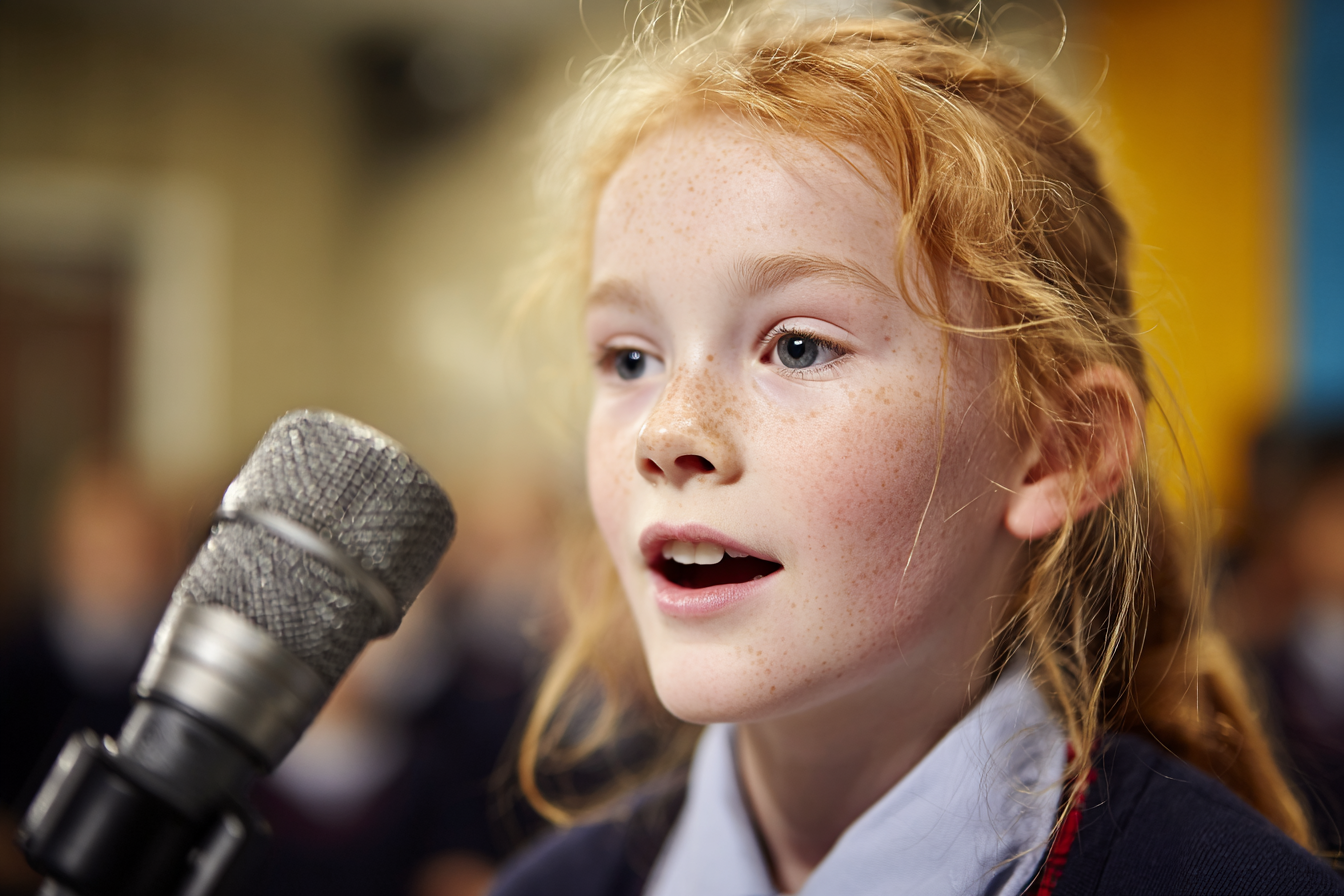
Focus: Perform music confidently with expressive intent and appropriate performance etiquette.
Grade Level: 5
Subject Area: Music (General Music • Performing • Responding)
Total Unit Duration: 1–3 sessions, 50–60 minutes each
I. Introduction
This culminating unit celebrates students’ musical growth by preparing and presenting a Music Sharing Day performance. Students select familiar pieces from the year’s repertoire, refine them for accuracy, expression, and ensemble cohesion, and practice demonstrating performance decorum as both performers and audience members. They reflect on how their skills have developed and how to support peers through focused listening and positive feedback. By the end of the unit, students showcase their best work for a class, grade-level, or family audience.
Essential Questions
- How can I show my best musicianship—in both sound and behavior—when I perform for an audience?
- What makes a performance feel confident, expressive, and well-prepared rather than rushed or uncertain?
- How does audience etiquette affect performers’ confidence and the overall success of a performance?
II. Objectives and Standards
Learning Objectives — Students will be able to:
- Perform selected music with accurate rhythm, pitch (when applicable), and steady tempo.
- Demonstrate expressive qualities (dynamics, articulation, tempo, and style) that match the character of the music.
- Show appropriate performance decorum (entrances, exits, focus, posture, and transitions) during Music Sharing Day.
- Demonstrate audience etiquette (attentive listening, appropriate applause, respectful silence) suitable to the performance context.
- Reflect on personal and ensemble growth, citing specific evidence from rehearsals and the final performance.
Standards Alignment — Grade 5 Music (NAfME-Aligned)
- MU:Pr6.1.5a — Perform music, alone or with others, with expression, technical accuracy, and appropriate interpretation.
- Example: Performing an ensemble piece with correct rhythm, pitch, and style.
- MU:Pr6.1.5b — Demonstrate performance decorum and audience etiquette appropriate for the context, venue, and genre.
- Example: Modeling appropriate concert behavior as performer and listener.
Success Criteria — Student Language
- I can perform my music with accurate rhythm and steady tempo, and I stay with the group.
- I can use dynamics, articulation, and style to show the mood of the piece.
- I can show professional performance behavior by how I walk on/off, stand, and focus.
- I can be a respectful audience member, listening quietly and applauding at the right times.
- I can describe at least one way I have improved as a musician this year and give evidence from our performance.
III. Materials and Resources
Tasks & Tools (teacher acquires/curates)
- Selected repertoire from the year (singing, Orff instruments, recorders, percussion, or combination).
- Performance space setup: risers or rows, instrument stations, conductor area, and clear entrance/exit paths.
- Cue cards or slides for performance order, group names, and audience reminders.
- Simple performance rubric/checklist for teacher and optional student self-assessment.
- Recording device (audio or video) to document the performance for later reflection (if permitted).
- Visuals/anchor charts:
- “Performer Etiquette” (posture, eyes on conductor, no talking, confident entrance/exit).
- “Audience Etiquette” (eyes on performers, quiet bodies, appropriate applause).
- “Expressive Performance” (dynamics, tempo, articulation, facial expression).
Preparation
- Select 2–4 short pieces representing different skills/styles from the year (e.g., one steady-beat piece, one with dynamic contrast, one with instruments).
- Arrange the running order and rehearse transitions (who plays/sings when, how to move between groups).
- Review any accompaniments (piano tracks, backing tracks, Orff parts) and ensure equipment is functional.
- Prepare a brief spoken introduction script (teacher-led or student-led) for each piece.
- Print or project the performance rubric and audience guidelines for students to review.
Common Misconceptions to Surface
- “If I play all the notes, I don’t need to think about expression.” → Expression (dynamics, tone, style) is what makes the performance musical, not just correct.
- “Performance etiquette doesn’t matter as long as the sound is good.” → How we enter, stand, and respond creates the overall impression and supports focus.
- “Audience members can talk quietly or move around if they’re bored.” → Audience behavior directly affects performer confidence and concentration.
- “One mistake ruins the whole performance.” → Musicians recover by staying calm, rejoining the group, and continuing with confidence.
Key Terms (highlight in lessons) performance, expression, dynamics, tempo, articulation, style, performance decorum, audience etiquette, posture, confidence, reflection
IV. Lesson Procedure
(Each class period follows: Launch → Explore/Rehearse → Discuss → Reflect. Session 1 is the core experience that fully addresses the standards; Sessions 2–3 are optional extensions for additional rehearsal and reflection.)
Session 1 — Core Music Sharing Day Performance (MU:Pr6.1.5a, MU:Pr6.1.5b)
Launch (8–10 min)
- Brief class huddle: review purpose of Music Sharing Day (celebrate growth, share music with others).
- Revisit “Performer Etiquette” and “Audience Etiquette” anchor charts.
- Ask: “What does our audience need from us as performers?” and “What do performers need from us as an audience?”
- Quick body/breath warm-up and short review of one key expressive element (e.g., dynamic contrast in a featured piece).
Explore/Rehearse & Perform (30–35 min)
- Run a short dress rehearsal of entrances/exits:
- Practice walking on, standing in place, eye contact with conductor, bow/acknowledgement, and exiting.
- Present the Music Sharing Day program in order:
- Before each piece, cue a brief student or teacher introduction (title, composer/tradition, one musical focus such as steady beat or dynamics).
- Perform each piece with emphasis on:
- Rhythmic and pitch accuracy (where applicable).
- Expressive qualities (dynamics, articulation, tempo, style).
- Professional behavior (no extra talking, focused eyes, poised posture).
- Invite students not currently performing (if rotating small groups) to practice audience etiquette: attentive silence, appropriate applause, no side conversations.
Discuss (5–7 min)
- Very brief post-performance debrief while experience is fresh:
- “What went well in our performance?” (aim for specific musical details: “We stayed together on the crescendo,” “Our entrances were together.”)
- “Where did we feel the most confident? Where do we think we could grow next time?”
Reflect (3–5 min)
- Students complete a quick exit slip or thumb-rating:
- “One thing I am proud of in my performance is…”
- “One performance habit I want to keep improving is…”
Optional Session 2 — Performance Reflection & Focused Re-Performance (MU:Pr6.1.5a, MU:Pr6.1.5b)
Launch (8–10 min)
- Review highlights from Session 1, naming specific successes (e.g., “Our dynamic contrast in the second piece was strong”).
- Introduce or revisit the performance rubric (accuracy, expression, decorum) at a kid-friendly level.
Explore/Rehearse & Re-Perform (25–30 min)
- If recorded, play back short clips from Music Sharing Day; if not recorded, invite volunteers to re-perform short sections.
- In small groups or whole-class, students use the rubric to self-assess:
- Circle or color-code how they did in accuracy, expression, and decorum.
- Choose one performance goal (e.g., “We will watch the conductor at the ending,” “We will exaggerate the crescendo in the middle section”).
- Re-rehearse selected pieces or sections focusing on one improvement at a time.
- Perform key sections again and notice whether the chosen goal is visible/audible.
Discuss (7–8 min)
- Share examples of improvement:
- “Before, our ending was uneven; now we watched together and cut off cleanly.”
- Highlight growth language: “We improved because we listened, adjusted, and tried again.”
Reflect (3–5 min)
- Students write or share:
- “One way I saw/heard our class grow as performers today is…”
- Option: add a brief note to a ‘Musician Growth Chart’ posted in the room.
Optional Session 3 — Sharing With a New Audience & Celebration (MU:Pr6.1.5a, MU:Pr6.1.5b)
Launch (5–8 min)
- Set expectations for sharing with a new audience (another class, younger grade, or invited adults).
- Quickly review one key musical focus (e.g., “dynamic storytelling” or “confident entrances”) and one behavioral focus (e.g., “silent transitions”).
Explore/Perform & Celebrate (30–35 min)
- Welcome the guest audience; student leaders may introduce the event and remind listeners of simple etiquette expectations.
- Present a shortened Music Sharing Day program:
- Students introduce each piece briefly (title, what to listen for).
- Perform with strong expressive intent and visible confidence.
- After performing, invite a short Q&A or comment time where audience members share what they noticed (e.g., “I liked how the drums got louder at the exciting parts”).
Discuss & Reflect (7–10 min)
- Back in class circle, guide reflection:
- “How did performing for a new audience feel compared to our earlier sharing?”
- “What does this performance show about who we are as musicians now?”
- Optional: students create a quick celebration card or note (to themselves or the class) naming one musical strength they want to remember for next year.
V. Differentiation and Accommodations
Advanced Learners
- Give leadership roles (introducing pieces, cueing entrances, leading a short warm-up, or helping model decorum).
- Invite them to add extra expressive detail (phrasing nuances, tasteful ornamentation, or dynamic shaping) without sacrificing ensemble unity.
- Ask advanced students to complete a brief written reflection connecting this performance to prior experiences (earlier concerts, other ensembles, or arts activities).
Targeted Support
- Provide a visual checklist for performance steps (stand tall, eyes on conductor, quiet hands, etc.).
- Allow students who feel nervous to perform in smaller groups or paired positions within the ensemble.
- Use call-and-response practice for entrances, cutoffs, and key transitions before the full performance.
- Offer simplified parts or rhythmic ostinatos for students who need more security.
Multilingual Learners
- Use visual supports (pictures or icons) for performance etiquette, audience expectations, and expressive terms.
- Encourage brief spoken intros or reflections in the language they are most comfortable with, adding short English phrases as they are ready.
- Pair with supportive peers for rehearsal talk (“What went well?” “What should we fix?”) using sentence frames.
IEP/504 & Accessibility
- Adapt standing/placement (chairs, stools, accessible riser spots) to meet physical needs.
- Provide extra rehearsal of transitions for students with anxiety or processing delays.
- Allow alternate demonstration of learning (e.g., playing a percussion part instead of singing, or assisting with cue cards/tech) while still participating in the performance event.
- Offer noise-reducing options or scheduled breaks for students sensitive to sound/crowds.
VI. Assessment and Evaluation
Formative Checks (ongoing)
- Session 1 — Teacher observes performance for rhythmic accuracy, ensemble cohesion, and visible decorum; notes quick positives and one next step.
- Optional Session 2 — Student self-assessments and rubric ratings show understanding of strengths and areas for growth; focused rehearsal reflects these goals.
- Optional Session 3 — Teacher and peer comments show increased awareness of audience needs, expressive communication, and confident stage presence.
Summative — Music Sharing Day Performance (0–2 per criterion, total 10)
- Technical Accuracy (MU:Pr6.1.5a)
- 2: Performs with mostly accurate rhythm (and pitch where applicable), steady tempo, and clear coordination with the ensemble.
- 1: Performs with some errors in rhythm or tempo that occasionally disrupt the music.
- 0: Frequent errors prevent the performance from staying together.
- Expressive Performance (MU:Pr6.1.5a)
- 2: Uses dynamics, articulation, and style appropriately to communicate the mood and character of each piece.
- 1: Shows some expressive contrast but it is limited, inconsistent, or not well matched to the music.
- 0: Little or no attention to expressive qualities; performance sounds flat or mechanical.
- Performance Decorum (MU:Pr6.1.5b)
- 2: Demonstrates strong performance etiquette (confident entrance/exit, focused posture, silent transitions) throughout the performance.
- 1: Generally shows appropriate decorum with a few lapses (talking, fidgeting, delayed response to cues).
- 0: Frequent lapses in decorum significantly distract from the performance.
- Audience Etiquette (MU:Pr6.1.5b)
- 2: When in the audience, consistently listens quietly, responds appropriately, and shows respect for all performers.
- 1: Usually demonstrates good audience behavior but occasionally talks, moves, or distracts others.
- 0: Often disregards audience expectations and distracts performers or peers.
- Reflection on Growth
- 2: Clearly identifies at least one area of musical growth with specific evidence from rehearsals or performance.
- 1: Names a general area of growth but provides limited or vague evidence.
- 0: Does not identify meaningful growth or evidence.
Feedback Protocol (TAG)
- Tell one strength (e.g., “Your dynamic contrast made the ending feel exciting.”).
- Ask one question (e.g., “How did you remember to watch the conductor at the cutoff?”).
- Give one suggestion (e.g., “Next time, try to keep your eyes up during the first measure.”).
VII. Reflection and Extension
Reflection Prompts
- What is one moment from Music Sharing Day that you feel especially proud of, and why?
- How has your performance etiquette changed from the beginning of the year to now?
- If you could give advice to a younger musician about performing, what would you say?
Extensions
- Performance Journal: Have students write a short journal entry or draw a comic showing their Music Sharing Day experience, including at least one musical strength and one next-step goal.
- Share With Families: If recorded permissions allow, share a performance clip with families and invite students to write a short viewer’s guide (“Listen for our dynamic contrast here”).
- Looking Ahead: Ask students to list two musical goals they want to work on in next year’s music class (e.g., playing a new instrument, improving sight-reading, singing with more confidence).
Standards Trace — When Each Standard Is Addressed
- MU:Pr6.1.5a — Session 1 (core performance), Optional Session 2 (refined re-performance), Optional Session 3 (sharing with new audience; focus on expression and accuracy).
- MU:Pr6.1.5b — Session 1 (initial performer and audience etiquette), Optional Session 2 (explicit reflection and rubric-based behavior goals), Optional Session 3 (etiquette with external audience).