Unit Plan 11 (Grade 5 Orchestra): Bowing Styles—Smooth & Detached
Grade 5 orchestra unit teaching legato and detached bowing so students shape tone, expression, and musical character with confident technique.

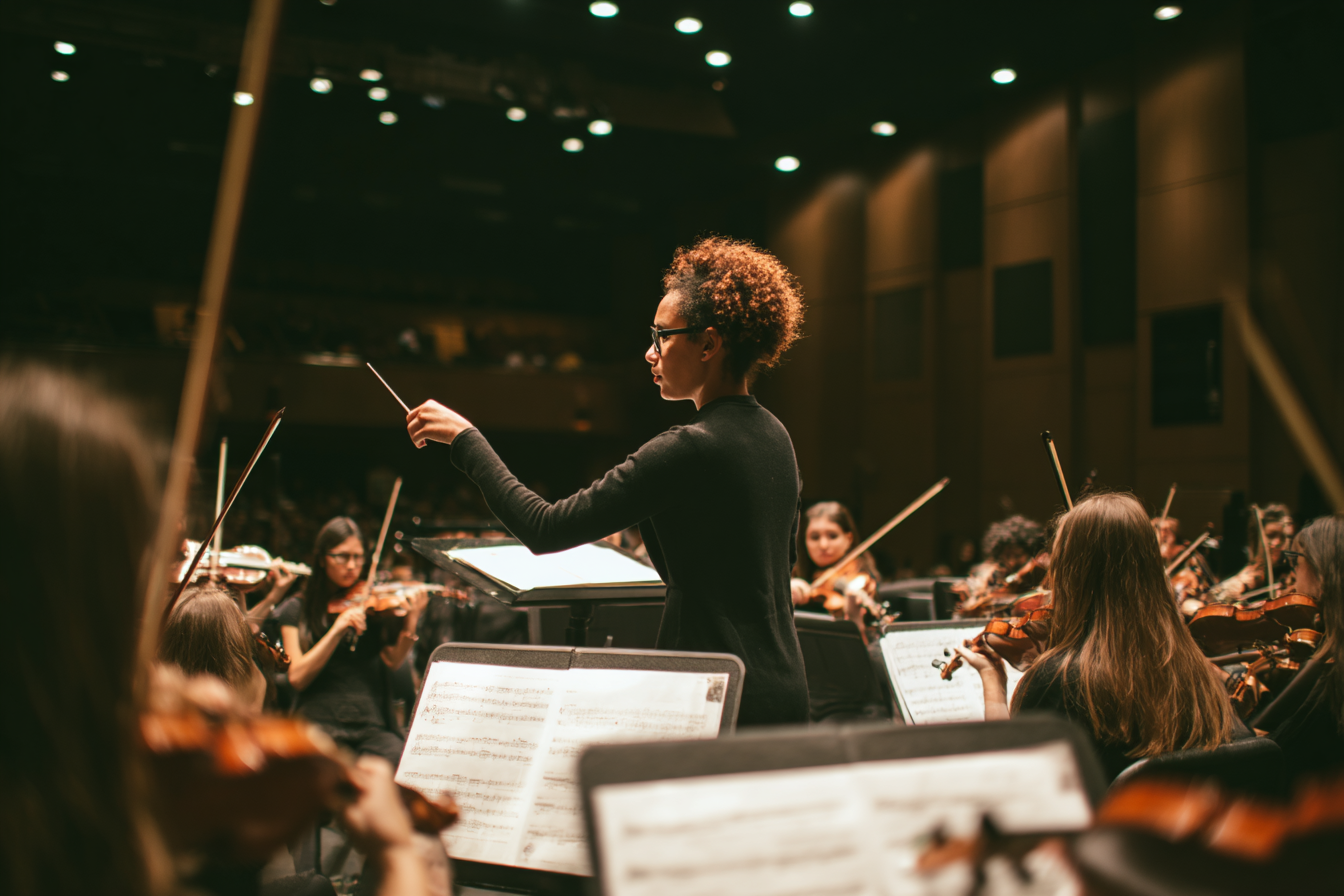
Focus: Explore legato and detached bowing styles and how they change sound and musical character.
Grade Level: 5
Subject Area: Orchestra (Technique • Expression)
Total Unit Duration: 1–2 weeks, 30-minute sessions
I. Introduction
Students explore two foundational bowing styles: legato (smooth, connected) and detached (separated strokes). Through listening, movement, and simple open-string patterns, they discover how changes in bow speed, bow pressure, and bow separation affect tone and expression. Students practice switching between smooth and detached bowing within short phrases and begin using words to describe how each style feels and sounds.
Essential Questions
- How do legato and detached bow strokes change the sound and character of the music?
- What bow choices (speed, pressure, contact point) help us play smoothly vs. separated?
- Why is it important for everyone in the orchestra to use the same bowing style at the same time?
II. Objectives and Standards
Learning Objectives — Students will be able to:
- Define and demonstrate legato bowing (smooth, connected strokes) on open strings.
- Define and demonstrate detached bowing (separate, clearly articulated strokes) on open strings.
- Switch between legato and detached bowing within simple one- and two-measure patterns.
- Use basic expressive vocabulary (smooth, bouncy, gentle, strong) to describe how each bowing style changes musical character.
- Perform a short exercise or phrase using teacher-marked bowings that clearly contrasts legato and detached sections.
Standards Alignment — Grade 5 Orchestra (custom, NAfME-style)
- OR:Pr4.5c — Demonstrate basic expressive elements (loud/soft, fast/slow, smooth/detached bowing) and describe how they change musical character.
- Example: Students play a phrase legato and then detached and describe the difference.
Success Criteria — Student Language
- I can show the difference between legato (smooth, connected) and detached (separated) bowing.
- I can change my bow speed and pressure to make a phrase sound smoother or more articulated.
- I can switch between legato and detached bowing when the music or teacher markings tell me to.
- I can describe how the sound changes when I play the same notes with different bowing styles.
- I can use matching bowings with my section so we look and sound more together.