Unit Plan 10 (Grade 5 Orchestra): Reading Simple Notation
Grade 5 orchestra unit building notation skills as students read and perform basic notes, rhythms, and rests with steady tempo and confident musicianship.

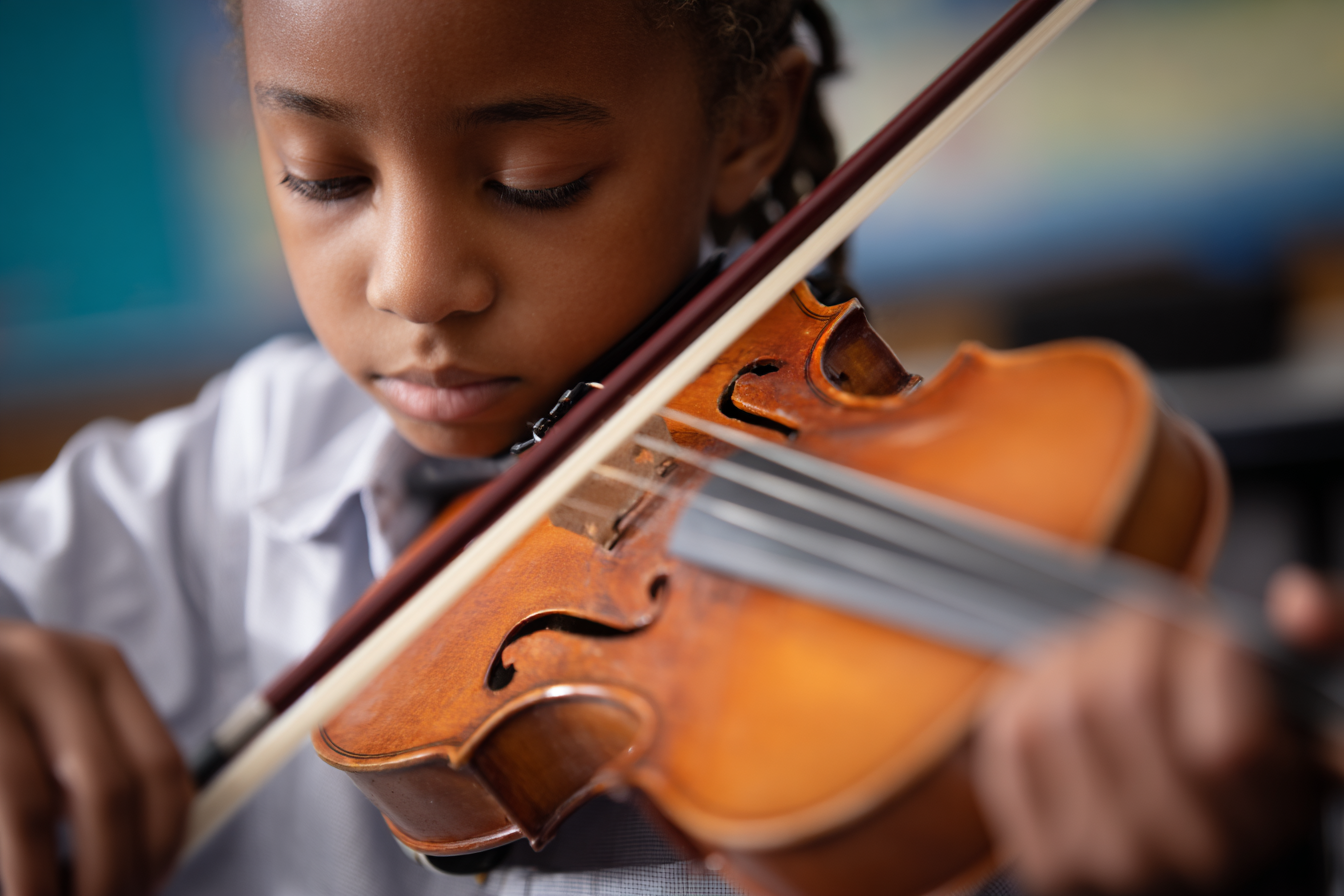
Focus: Read and perform basic notes, rhythms, and rests using standard notation.
Grade Level: 5
Subject Area: Orchestra (Reading • Rhythm • Musicianship)
Total Unit Duration: 1–2 weeks, 30-minute sessions
I. Introduction
Students deepen their understanding of standard notation so they can read and play from the page instead of relying only on memory. Using staff posters, flash cards, and short exercises, they connect note names, note values, and rests to what they see, feel, and hear when playing. Students practice reading simple patterns with steady tempo, learning how clear reading supports confident ensemble playing.
Essential Questions
- How does standard notation show what to play and how long to play it?
- Why is it important to read notes, rhythms, and rests accurately in orchestra?
- How do the symbols on the page connect to the sounds we make and the beat we feel together?
II. Objectives and Standards
Learning Objectives — Students will be able to:
- Identify basic note values (whole, half, quarter) and rests in beginning orchestra music.
- Point to and name pitches on a staff that match open strings and first-finger notes in their method book.
- Count and clap simple rhythm patterns (using numbers and “ta/ti-ti”) while keeping a steady beat.
- Read and perform short notation exercises that combine notes and rests at a steady tempo.
- Use simple markings (counting, finger numbers, bow directions) on their music to support accurate reading.
Standards Alignment — Grade 5 Orchestra (custom, NAfME-style)
- OR:Pr4.5b — Read and perform beginning string music using standard notation with simple rhythms, basic finger patterns, and steady tempo.
- Example: Students perform a short melody using quarter notes and first finger patterns.
Success Criteria — Student Language
- I can name and count basic notes and rests (whole, half, quarter).
- I can find notes on the staff that match my open strings and first-finger notes.
- I can clap and count simple rhythm patterns with a steady beat.
- I can play short exercises from the page using correct notes, rhythms, and rests.
- I can add helpful markings (counting, finger numbers, bow directions) to make reading easier.