Unit Plan 21 (Grade 5 PE): Ultimate Frisbee — Advanced Play
Grade 5 Ultimate Frisbee unit plan on cutting, leading passes, fakes, defense, and self-officiating through active team strategy and sportsmanship.

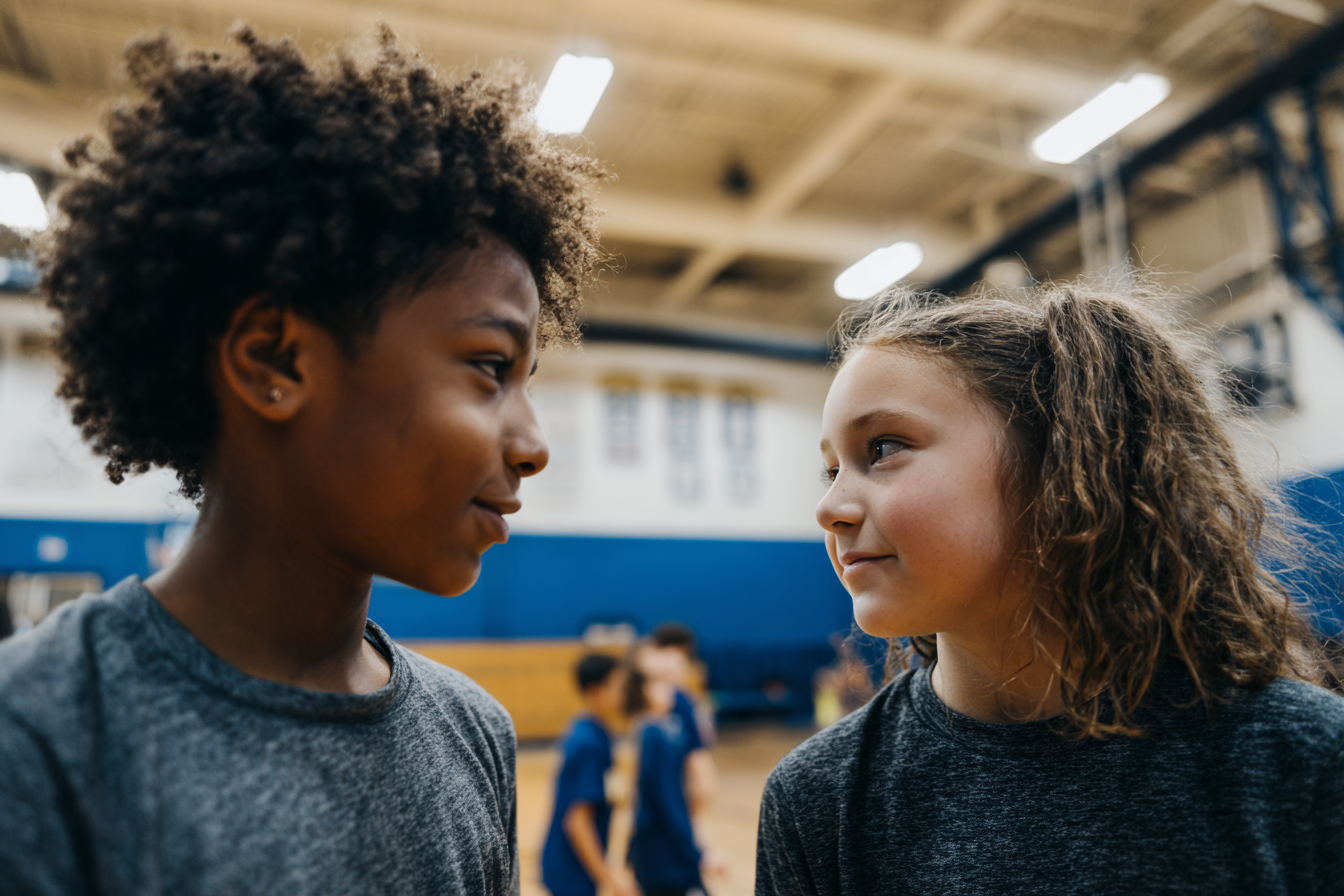
Focus: Develop stronger cutting to open space, timing passes, and use of fakes in Ultimate Frisbee while learning basic offensive structure, defensive support, and respectful self-officiating through the spirit of the game.
Grade Level: 5
Subject Area: Physical Education (Invasion Games • Throwing & Catching • Team Strategy & Sportsmanship)
Total Unit Duration: 1 core session + 2 optional sessions (1–3 weeks), 50–60 minutes per session
I. Introduction
Students build more advanced Ultimate Frisbee understanding by learning how movement away from the disc can create better passing opportunities than simply chasing the thrower. In this unit, students practice leading throws, catching on the move, and using simple 2v1 keep-away games to understand timing, spacing, and support. They then apply those skills in 5v5 Ultimate Frisbee with a basic offensive look such as spread or a simple stack, while also learning the importance of self-officiating and the spirit of the game. Throughout the unit, students focus on cutting into open space, throwing to where a teammate is going, using fakes to create separation, and resolving disagreements respectfully so the game stays fair, active, and positive.
Essential Questions
- How can I cut to open space so a teammate has a better throwing option?
- How do timing, leading passes, and fakes help an offense keep possession in Ultimate?
- What does strong defense look like when trying to mark, contain, and help without fouling?
- How can players solve disagreements respectfully when the game depends on self-officiating?
II. Objectives and Standards
Learning Objectives — Students will be able to:
- Throw and catch a flying disc accurately while moving and under defensive pressure.
- Combine Ultimate skills in sequence, such as cut → receive → pivot → throw → move again.
- Move to open space on offense and adjust position on defense to deny easy passing lanes.
- Use pathways, fakes, and timed cuts to gain advantage over a defender.
- Apply basic offensive strategy using a simple spread or stack look, along with support movement and high-percentage passing choices.
- Apply basic defensive strategy by marking safely, containing the thrower, and helping protect space when needed.
- Show self-control and positive sportsmanship during mistakes, turnovers, and close calls.
- Use fair self-officiating strategies to solve disagreements and restart play respectfully.
Standards Alignment — 5th Grade (SHAPE America-based custom)
- PE:S1.5c – Throwing & Catching with Accuracy under Pressure Throw (overhand and underhand) and catch different objects accurately over a variety of distances while both the thrower and receiver may be moving or defended.
- Example: In small-sided handball or basketball-style games, students lead teammates with accurate passes and catch under defensive pressure.
- PE:S1.5f – Combining Multiple Skills in Game Sequences Combine multiple skills (dribble, pass, catch, strike, run, dodge, jump, shoot) fluently and appropriately during game-like sequences.
- Example: In a modified invasion game, a student dribbles to space, passes to a teammate, cuts toward the goal, receives a return pass, and shoots.
- PE:S2.5a – Space Awareness & Positioning in Team Games Consistently move to open space on offense and adjust positioning on defense to support team play and maintain safety.
- Example: In 4v4 games, students spread out on offense to create passing lanes and reposition on defense to protect key areas of the court or field.
- PE:S2.5b – Pathways, Levels, and Fakes to Gain Advantage Use varied pathways (straight, curved, zigzag), levels (high, medium, low), and simple “fakes” or feints to gain advantage over opponents.
- Example: A student uses a head fake and low-level cut to evade a defender in a flag game, then accelerates into open space to receive a pass.
- PE:S2.5d – Offensive Strategies: Creating & Using Advantages Apply basic offensive strategies such as creating numerical advantages, give-and-go, using screens, and selecting high-percentage scoring opportunities.
- Example: In 3v3 basketball or handball, students set simple screens, drive to draw a defender, then pass to an open teammate for a better shot.
- PE:S2.5e – Defensive Strategies: Marking, Containment, & Help Defense Apply defensive strategies including marking a player, maintaining proper body position, containing attackers, and providing help defense.
- Example: Students stay between their assigned player and the goal, communicate switches, and step in to help when a teammate is beaten on defense.
- PE:S4.5c – Self-Control, Sportsmanship, and Emotional Regulation Maintain self-control and positive sportsmanship when facing success, mistakes, or disagreements, and demonstrate resilience when tasks are challenging.
- Example: A student responds calmly to a turnover or loss, acknowledges good play from opponents, and continues trying even when behind in a game.
- PE:S4.5d – Constructive Conflict Resolution & Self-Officiating Use agreed-upon strategies (e.g., rock-paper-scissors, replay, majority vote) to solve conflicts and participate in simple self-officiating when appropriate.
- Example: In four-square or small-sided games, students decide out-of-bounds calls using a quick, fair method and restart play without arguing.
Success Criteria — Student Language
- I can throw to where my teammate is moving, not just where they are standing.
- I can cut to open space and use a fake to get away from my defender.
- I can help my team keep possession by making smart, safe passing choices.
- I can defend by staying in good position and taking away easy options without fouling.
- I can solve disagreements respectfully and keep the game moving fairly.