Unit Plan 19 (Grade 6 Art): Drawing Depth & Perspective
Grade 6 drawing unit exploring shading, proportion, and perspective as students experiment with techniques to create depth and spatial illusion in drawings.

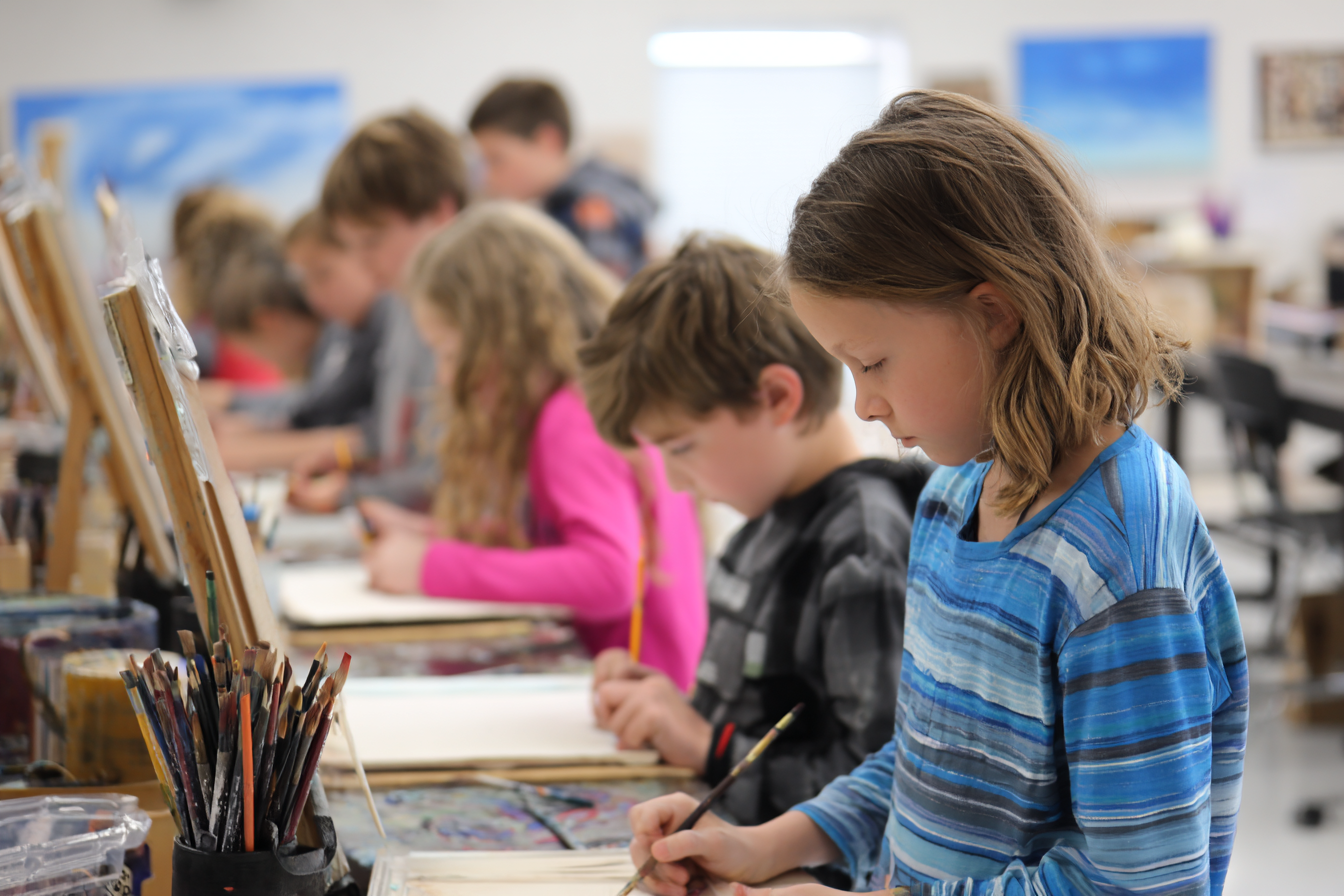
Focus: Use shading and proportion to create spatial illusion through experimental drawing techniques.
Grade Level: 6
Subject Area: Art (Visual Arts • Drawing & Space • Technique Exploration)
Total Unit Duration: 5 sessions (one week), 50–60 minutes per session
I. Introduction
In this unit, students explore how artists make flat drawings look three-dimensional by using shading, proportion, overlap, and perspective. Through guided experiments with pencils and other drawing tools, they practice techniques that create spatial illusion—objects that appear closer, farther, taller, or deeper in space. Students test different ways to show depth (size change, overlapping, one-point perspective, value gradients) and decide which techniques work best in their own drawings.
Essential Questions
- How can shading and value make shapes look three-dimensional instead of flat?
- What role do proportion and size change play in showing which objects are closer or farther away?
- How do artists use overlap and perspective lines to create a sense of space and depth?
- Why is it important to experiment with different techniques before deciding how to finish a drawing?
- How can I choose the materials and methods that best show depth in my own artwork?
II. Objectives and Standards
Learning Objectives — Students will be able to:
- Experiment with shading techniques (hatching, cross-hatching, blending) to turn simple shapes into forms with depth (VA:Cr2.6b).
- Use size, overlap, and placement on the page to create the illusion of foreground, middle ground, and background (VA:Cr2.6b).
- Practice basic one-point perspective by drawing simple forms (e.g., boxes, roads, rooms) using a horizon line and vanishing point (VA:Cr2.6b).
- Try different materials and tools (pencils, blending stumps, pens) to see which best communicate depth and spatial illusion (VA:Cr2.6b).
- Create a small final drawing that combines at least two depth techniques (shading + perspective, or shading + overlap, etc.) and reflect on which experiments helped the most (VA:Cr2.6b).
Standards Alignment — 6th Grade (NCAS-Aligned)
- VA:Cr2.6b — Experiment with a variety of materials and techniques to expand artistic skill and expressive possibilities.
- Example: Students test watercolor washes and blending techniques before finalizing artwork.
Success Criteria — Student Language
- I can use shading to make a flat shape look more like a 3D form.
- I can change size and placement so some objects look closer and others look farther away.
- I can draw simple objects using one-point perspective with a horizon line and vanishing point.
- I can experiment with different tools and techniques to see which ones best show depth.
- I can explain which depth techniques I used in my final drawing and why they work.