Unit Plan 20 (Grade 6 Art): Texture & Surface Exploration
Grade 6 art unit exploring texture in composition as students use contrast, emphasis, and surface detail to create visual interest and clear focal points.

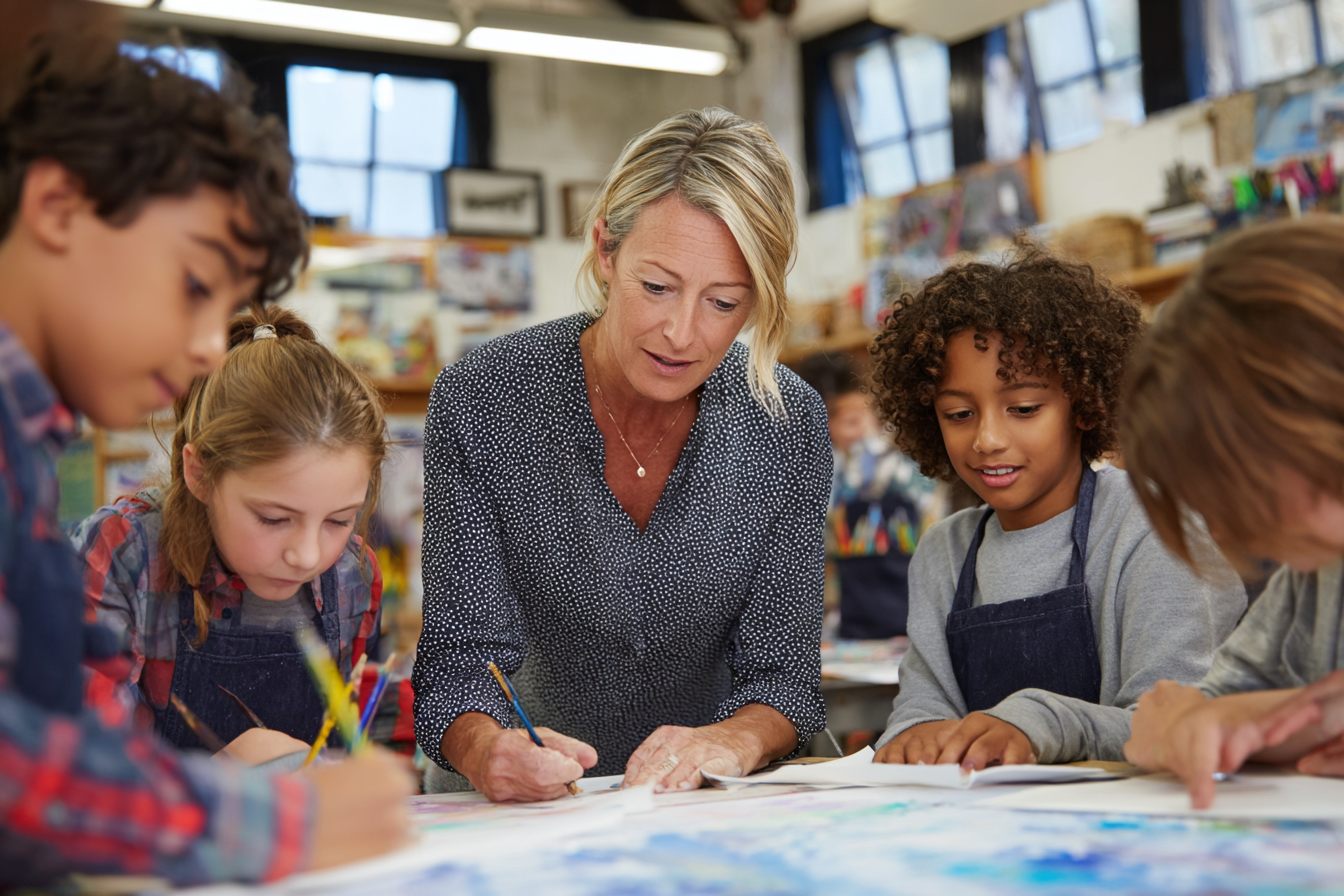
Focus: Apply texture intentionally in composition to create contrast, emphasis, and visual interest.
Grade Level: 6
Subject Area: Art (Visual Arts • Texture & Surface • Composition)
Total Unit Duration: 5 sessions (one week), 50–60 minutes per session
I. Introduction
In this unit, students explore how texture can change the look and feel of an artwork and help organize a composition. They learn the difference between actual texture (how something really feels) and implied texture (how it looks like it feels in a drawing or painting). Through guided experiments and a small final piece, students decide where to add texture and where to leave areas smoother, using texture to create contrast, emphasis, and clear focal points instead of covering the whole page randomly.
Essential Questions
- What is texture in art, and how can we create both actual and implied texture?
- How can texture help organize a composition and make the focal point stand out?
- How do contrast, repetition, and balance affect the way texture is read by a viewer?
- Why is it important to choose where to put texture instead of filling every space with detail?
- How can experimenting with different texture techniques help me grow as an artist?
II. Objectives and Standards
Learning Objectives — Students will be able to:
- Identify and describe actual and implied texture in artworks and classroom objects (VA:Cr2.6a).
- Experiment with different texture-making techniques (lines, patterns, rubbings, layered marks) using a variety of tools (VA:Cr2.6a).
- Plan a simple composition that uses texture intentionally to create emphasis, contrast, and clear focal areas (VA:Cr2.6a).
- Apply texture in a final artwork so that some areas feel active and others feel quiet, helping organize the composition (VA:Cr2.6a).
- Reflect on how their texture choices helped improve clarity and direct viewer attention (VA:Cr2.6a).
Standards Alignment — 6th Grade (NCAS-Aligned)
- VA:Cr2.6a — Apply elements of art and principles of design intentionally to organize composition and improve clarity.
- Example: Students use contrast and repetition to create emphasis.
Success Criteria — Student Language
- I can tell the difference between actual texture (real feel) and implied texture (drawn or painted).
- I can use lines, patterns, and marks to create implied texture in my drawing.
- I can plan where to put texture so that my main subject stands out.
- I can use contrast (busy vs. calm, dark vs. light) to help organize my composition.
- I can explain how my texture choices make my artwork clearer and more interesting for the viewer.