Unit Plan 36 (Grade 6 Band): End-of-Year Performance
Grade 6 band end-of-year unit performing concert repertoire with growth in accuracy, tone, expression, focus, ensemble etiquette, and reflection skills.

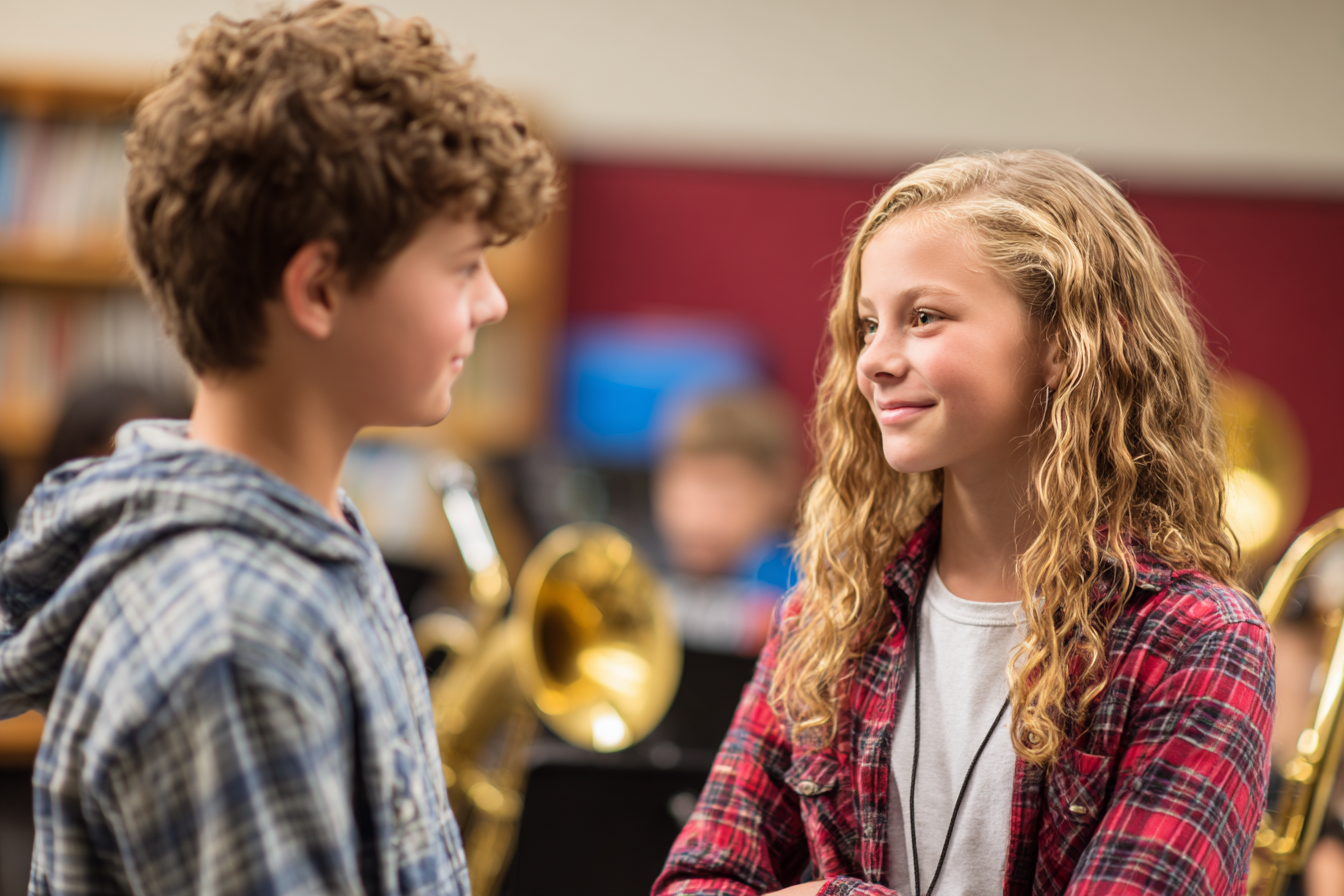
Focus: Perform end-of-year concert repertoire demonstrating growth in accuracy, tone, expression, focus, and ensemble etiquette as a band.
Grade Level: 6
Subject Area: Band (Performing • Presenting • Reflecting)
Total Unit Duration: 5 sessions (one week), 50–60 minutes per session
I. Introduction
In this culminating unit, students prepare for and present an end-of-year performance that showcases their growth as band musicians. They review concert etiquette, refine final details in their repertoire, and focus on accurate notes and rhythms, clear tone, balance, and basic expression. After the performance, students listen to a recording, reflect on how far they have come since the beginning of the year, and celebrate how focus, responsibility, and teamwork shape a successful ensemble.
Essential Questions
- What does it mean to perform with accuracy, tone, and expression as a band musician?
- How do focus, etiquette, and teamwork affect the success of an end-of-year performance?
- How can we tell that we have grown as individual players and as an ensemble since the start of the year?
- In what ways does preparing and performing a final concert help us get ready for future band experiences?
II. Objectives and Standards
Learning Objectives — Students will be able to:
- Perform end-of-year concert repertoire with accurate notes and rhythms at an appropriate tempo.
- Demonstrate clear tone, basic balance, and expressive dynamics as part of the full ensemble.
- Show appropriate rehearsal and performance etiquette, including focus on the conductor, quiet readiness, and respectful collaboration.
- Follow conductor cues and ensemble signals for entrances, cutoffs, and dynamic changes during the performance.
- Reflect on their musical growth over the year using evidence from rehearsals and the final performance.
Standards Alignment — 6th Grade Band (custom, NAfME-style)
- BD:Pr6.6a — Perform band music with accurate notes, rhythms, tone quality, and basic expression in an ensemble setting.
- Example: Students perform a Grade 1.5–2 piece with correct notes and clear dynamics.
- BD:Pr6.6b — Demonstrate appropriate rehearsal and performance etiquette as a band member, including respectful collaboration and focus.
- Example: Students follow conductor cues, track rests, and support ensemble success.
Success Criteria — Student Language
- I can perform our concert music with mostly accurate notes and rhythms at a steady tempo.
- I can play with a clear tone and follow basic dynamics (loud/soft) with my band.
- I can show good concert etiquette: watching the conductor, staying focused, and being respectful on stage.
- I can follow entrances, cutoffs, and changes in the music by watching and listening.
- I can explain how I have improved as a band musician since the beginning of the year.
III. Materials and Resources
Tasks & Tools (teacher acquires/curates)
- End-of-year concert repertoire (Grade 1.5–2 pieces) with full scores and parts.
- Music stands, chairs, and any needed percussion instruments, mallets, and accessories.
- Performance space (gym, auditorium, cafeteria) with staging plan for the band.
- Recording device (phone, tablet, or dedicated recorder) and speakers for playback.
- Simple performance rubric focusing on BD:Pr6.6a and BD:Pr6.6b (accuracy, tone, expression, etiquette).
- Rehearsal checklist for final run-through (transitions, starts, endings, bows).
- Anchor charts:
- “Concert Etiquette & Stage Presence” (enter, sit, focus, exit).
- “What Concert-Ready Playing Sounds Like” (accurate, steady, clear tone, expressive).
Preparation
- Confirm concert date, time, and location; share logistics with students (and families, as appropriate).
- Arrange seating chart and stage layout for the performance space.
- Prepare program order and decide when students will move on/off stage if multiple groups perform.
- Select an appropriate tuning routine and pre-concert warm-up.
- Prepare reflection prompts and copies of the performance rubric for post-concert use.
Common Misconceptions to Surface
- “The performance is just like rehearsal.” → Performance adds audience, nerves, and extra focus; etiquette matters more.
- “Only the teacher makes the performance good or bad.” → Every band member’s focus and sound affects the outcome.
- “Once we know the notes, we’re done.” → A concert needs tone, dynamics, balance, and stage presence, not just correct pitches.
- “Etiquette doesn’t matter if the music is good.” → Professional behavior on stage is part of being a successful musician.
Key Terms (highlight in lessons) performance, concert, concert-ready, tone quality, balance, blend, expression, etiquette, focus, stage presence, run-through, sound check, audience, reflection, growth
IV. Lesson Procedure
(Each day follows: Launch → Explore → Discuss → Reflect. Timing for a 50–60 minute block.)
Session 1 — Concert Expectations & Final Run-Through (Pr6.6a • Pr6.6b)
- Launch (6–8 min)
- Ask: “What do we want our audience to think and feel at our end-of-year concert?”
- Review the Concert Etiquette & Stage Presence chart, including how to enter, sit, watch, and exit.
- Explore (25–30 min)
- Complete a nearly full run-through of the concert program in classroom formation.
- Emphasize accurate notes/rhythms and watching the conductor for cues.
- Teacher notes a few priority spots (transitions, tricky rhythms, balance issues) to revisit later in the week.
- Discuss (8–10 min)
- Whole group: “Which pieces or sections feel most ready? Which need more work?”
- Students identify one personal focus area (e.g., entrance in one piece, dynamic contrast, counting long rests).
- Reflect (5–7 min)
- Quick write: “To be ready for our concert, I need to focus on __ in my playing and on __ in my concert etiquette.”
Session 2 — Polishing Transitions, Entrances, and Endings (Pr6.6a • Pr6.6b)
- Launch (5–7 min)
- Explain that today’s focus is on beginnings, transitions, and endings—the moments audiences remember most.
- Ask: “How can our body language and focus show that we are ready before we play a note?”
- Explore (25–30 min)
- Run opening measures of each piece multiple times, practicing silent setup, eye contact, and unified first attacks.
- Practice transitions between pieces: setting up music quickly, resetting posture, and signaling readiness.
- Rehearse final phrases and cutoffs, including bows or acknowledgments if part of performance routine.
- Discuss (8–10 min)
- Students share: “Which beginning or ending feels strongest now? What still needs attention?”
- Teacher highlights strong examples of etiquette and focus and connects them to BD:Pr6.6b.
- Reflect (5–7 min)
- Exit slip: “One way I showed better performance etiquette today was __, and it helps our band because __.”
Session 3 — End-of-Year Concert Performance (Pr6.6a • Pr6.6b)
- Launch (5–10 min)
- In the performance space (or simulated in class if needed), review stage procedures: entering, tuning, focusing, and exiting.
- Lead a short warm-up focusing on tone, tuning, and breath to set a calm, confident mood.
- Explore (30–35 min)
- Students perform the full end-of-year concert program for an audience (or a mock audience if scheduling requires).
- Teacher or designated student records the performance for later listening.
- Students practice concert-ready etiquette: no unnecessary talking, watching conductor, respectful demeanor throughout.
- Discuss (5–8 min)
- After the performance, very brief debrief: “How did it feel? What are you proud of?”
- Save deeper analysis for the next session to keep the focus on celebration today.
- Reflect (5–7 min)
- Quick reflection prompt: “The part of our performance I’m most proud of is __ because __.”
Session 4 — Listening Back & Celebrating Growth (Pr6.6a • Pr6.6b)
- Launch (5–7 min)
- Explain that today is for listening like musicians—hearing strengths and growth instead of only mistakes.
- Hand out the performance rubric for students to use as they listen.
- Explore (25–30 min)
- Play back selected sections or the full concert recording.
- Students mark rubric ratings (notes/rhythms, tone, expression, etiquette) and jot specific evidence (e.g., “clarinets strong at measure 12,” “we rushed in last chorus”).
- Pause periodically so students can write quick notes on what went well and what changed from earlier rehearsals.
- Discuss (8–10 min)
- Whole-group or section discussions:
- “Where do you hear the biggest improvement from our early rehearsals?”
- “How did our focus and etiquette affect how professional we sounded and looked?”
- Whole-group or section discussions:
- Reflect (5–8 min)
- Students complete a short written reflection: “One way I grew as a musician this year is __. One way our band grew as an ensemble is __.”
Session 5 — Year-in-Review & Looking Ahead (Pr6.6a • Pr6.6b)
- Launch (5–7 min)
- Ask: “Think back to our first performance this year. How is our playing and behavior different now?”
- Brainstorm a quick list of skills learned this year (tone, counting, balance, reading, etiquette).
- Explore (25–30 min)
- Light playing: choose one favorite piece or excerpt from the year and perform it once more for fun, focusing on best habits.
- Optional: Have a few volunteers share short “growth stories” (how they improved tone, confidence, or reading).
- Students complete a Year-in-Review sheet with prompts about skills, favorite moments, and future goals.
- Discuss (8–10 min)
- Share selected reflections: “What advice would you give to next year’s 6th grade band about performances and etiquette?”
- Emphasize that skills from this year form the foundation for 7th grade and beyond.
- Reflect (5–8 min)
- Final reflection: “Next year in band, I want to keep improving __. To do that, I will __.”
V. Differentiation and Accommodations
Advanced Learners
- Assign roles such as section leader or stage captain to help organize stands, chairs, and section entrances.
- Ask them to write a brief performance review using musical vocabulary to describe strengths and next steps for the ensemble.
- Have advanced students help peers with challenging passages in short, guided mini-tutoring moments before or after rehearsals.
Targeted Support
- Provide highlighted parts to emphasize important entrances, dynamic markings, and tricky rhythms.
- Offer visual cues (sticky notes, circled measures) for spots where students need extra reminders.
- Use call-and-response practice for difficult rhythms or tone exercises to build comfort before the concert.
- Allow students to focus on one or two rubric categories at a time (e.g., “Today I’m focusing mostly on tone and watching the conductor.”).
Multilingual Learners
- Use icons and short phrases on the rubric (e.g., 🎵 = notes/rhythm, 🔊 = dynamics, 👀 = watching conductor).
- Encourage students to discuss the performance with a partner using sentence starters (“I liked…”, “We improved in…”).
- Allow reflections to include short phrases, labeled diagrams, or audio recordings, not just long paragraphs.
- Pre-teach and post on the board key performance terms like tone, dynamics, tempo, balance, focus, audience.
IEP/504 & Accessibility
- Provide clear, predictable routines for the concert (visual schedule, step-by-step checklist).
- Offer alternative seating or stand height for comfort and accessibility.
- Allow students who struggle with performance anxiety to have a safe signal or modified role (e.g., smaller solo group, helping with setup plus playing core sections).
- Provide enlarged music, stands with better lighting, or colored overlays as needed.
VI. Assessment and Evaluation
Formative Checks (daily)
- Session 1 — Run-through and student reflections show awareness of what is concert-ready and what still needs work.
- Session 2 — Observations of transitions, entrances, and endings show improved focus, etiquette, and unified starts/stops.
- Session 3 — During the performance, students demonstrate accurate playing and appropriate stage behavior.
- Session 4 — Rubrics and reflections show that students can identify specific musical strengths and growth areas using the recording.
- Session 5 — Year-in-review reflections indicate understanding of personal and ensemble growth and setting of future goals.
Summative — End-of-Year Performance & Reflection (0–2 per criterion, total 10)
- Technical Accuracy (Pr6.6a)
- 2: Performs concert music with mostly accurate notes and rhythms at an appropriate tempo; errors are minor and non-disruptive.
- 1: Performs with some noticeable note or rhythm errors, but overall part remains recognizable and mostly steady.
- 0: Frequent inaccuracies in notes and rhythms significantly disrupt the performance.
- Tone Quality and Expression (Pr6.6a)
- 2: Demonstrates generally clear tone and follows basic dynamic and expressive markings (e.g., loud/soft, accents) throughout most of the performance.
- 1: Tone and expression are inconsistent; some phrases are clear and expressive, while others are flat or unfocused.
- 0: Tone is often unclear or harsh, with little attention to dynamics or expressive markings.
- Ensemble Balance and Cohesion (Pr6.6a)
- 2: Listens and adjusts so that the ensemble maintains appropriate balance (melody heard, accompaniment supportive) and stays together rhythmically.
- 1: Sometimes listens and adjusts, but there are noticeable moments of imbalance or ensemble separation.
- 0: Rarely listens or adjusts; frequent issues with playing too loud/soft or not staying together.
- Performance Etiquette and Focus (Pr6.6b)
- 2: Consistently demonstrates strong concert etiquette: enters/exits appropriately, watches conductor, remains focused and respectful throughout the performance.
- 1: Generally appropriate etiquette but with occasional lapses (talking, distraction, late focus) that do not seriously disrupt the concert.
- 0: Frequent etiquette or focus issues that distract from the performance.
- Reflection on Growth
- 2: Provides a thoughtful reflection describing specific ways they and the ensemble have improved (e.g., tone, reading, confidence), citing evidence from rehearsals or the concert.
- 1: Reflection mentions growth but is general or lacks clear examples linked to the performance.
- 0: Reflection is incomplete or does not show awareness of musical growth.
Feedback Protocol (TAG)
- Tell one strength (e.g., “Your section’s entrances were very together and showed strong focus.”).
- Ask one question (e.g., “How could you make the soft section in the middle even more expressive?”).
- Give one suggestion (e.g., “Try practicing long tones over the summer to keep building your tone quality.”).
VII. Reflection and Extension
Reflection Prompts
- What part of our end-of-year performance are you most proud of, and why?
- How did your focus and etiquette help (or sometimes hurt) our performance?
- If you could give advice to a new 6th grade band student about performances, what would you say?
- In what ways do you feel more confident as a musician now than you did at the beginning of the year?
Extensions
- Future Band Letter: Students write a short letter to next year’s 6th grade band explaining what helped them be successful in performances.
- Personal Practice Plan: Students create a simple summer or next-year practice plan focusing on one skill (tone, reading, rhythm) they want to keep improving.
- Highlight Reel: As a class, choose one or two recorded excerpts from the year (including the end-of-year concert) to save as a “growth playlist” that shows progress over time.
Standards Trace — When Each Standard Is Addressed
- BD:Pr6.6a — Sessions 1–5
- Session 1: Initial run-through emphasizes accurate notes and rhythms and sets expectations for concert-ready playing.
- Session 2: Work on beginnings, transitions, and endings refines control of pitch, rhythm, and ensemble timing.
- Session 3: End-of-year performance requires students to demonstrate accuracy, tone quality, and basic expression in a public setting.
- Session 4: Students analyze their performance recording, using evidence of accuracy and tone to reflect on how well they met the standard.
- Session 5: Light re-performances and reflections reinforce the skills needed for accurate, expressive ensemble performance in future years.
- BD:Pr6.6b — Sessions 1–5
- Session 1: Students review and commit to concert etiquette and stage presence expectations.
- Session 2: Practice of transitions, entrances, and endings highlights the importance of focus and professional behavior.
- Session 3: During the live concert, students demonstrate performance etiquette, including quiet readiness, watching the conductor, and respectful collaboration.
- Session 4: Reflection and rubric use help students evaluate how their behavior and focus influenced the performance.
- Session 5: Year-in-review discussions and letters to future students reinforce ongoing expectations for rehearsal and performance etiquette as they move forward in band.