Unit Plan 20 (Grade 6 Band): Instrumentation & Tone Color
Grade 6 band listening unit exploring instrument families and tone color, helping students explain how timbre and instrumentation shape character and meaning.

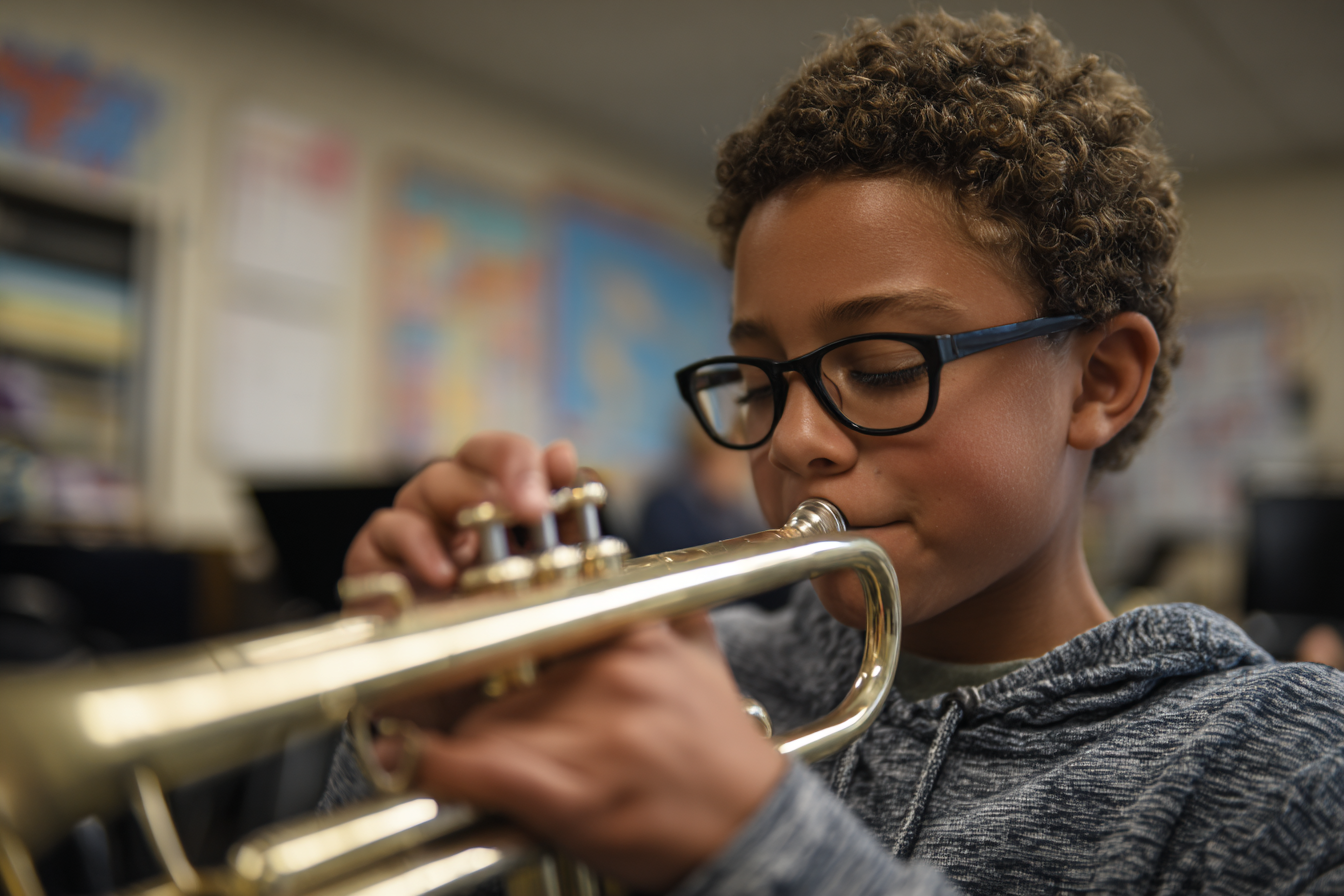
Focus: Explore how instrument families and tone color (timbre) affect musical character and meaning in band music.
Grade Level: 6
Subject Area: Band (Responding • Listening/Analysis)
Total Unit Duration: 5 sessions (one week), 50–60 minutes per session
I. Introduction
In this unit, students learn to listen for who is playing and how they sound, not just what the notes are. They explore instrument families (woodwinds, brass, percussion) and the idea of tone color (timbre)—how each instrument’s sound is bright, dark, warm, buzzy, piercing, mellow, or powerful. Through short recordings, score excerpts, and examples from their own band music, students connect instrumentation (which instruments play) to character and mood in pieces (e.g., “mysterious,” “heroic,” “peaceful”). By the end of the unit, they will be able to explain how changing instrumentation can change the meaning and feeling of band music.
Essential Questions
- How do different instrument families (woodwinds, brass, percussion) create unique tone colors in band music?
- How does instrumentation (who plays) affect the character and mood of a piece?
- How can we describe tone color using musical words instead of just “loud” or “soft”?
- How does understanding tone color and instrumentation help us perform and listen more thoughtfully in band?
II. Objectives and Standards
Learning Objectives — Students will be able to:
- Identify basic instrument families (woodwinds, brass, percussion) by sight and sound, using accurate names.
- Describe the tone color of instruments and families using musical adjectives (e.g., bright, dark, mellow, piercing, warm, powerful).
- Explain how instrumentation and tone color contribute to character and meaning in short band excerpts.
- Compare two versions of the same musical idea (e.g., melody played by different families) and describe how the change in instrumentation changes the mood.
- Create a simple tone color map or written explanation for a band excerpt, showing who plays when and how the instrumentation supports the piece’s character.
Standards Alignment — 6th Grade Band (custom, NAfME-style)
- BD:Re7.6b — Explain how instrumentation and tone color affect character and meaning in band music.
- Example: Students explain how low brass and percussion create a “powerful” sound.
Success Criteria — Student Language
- I can name the main instrument families and recognize them by sound.
- I can describe tone color using musical words like bright, dark, warm, or piercing, not just “good” or “bad.”
- I can explain how changing who plays (instrumentation) changes the character of the music.
- I can compare two versions of the same musical idea and tell how the mood changes because of tone color.
- I can create a tone color map or explanation that clearly shows how instrumentation affects the meaning of a band piece.