Unit Plan 5 (Grade 6 Band): Rhythm Accuracy & Counting
Improve rhythmic accuracy in Grade 6 band by using counting systems and subdivision to read, perform, and analyze rhythms with steady tempo.

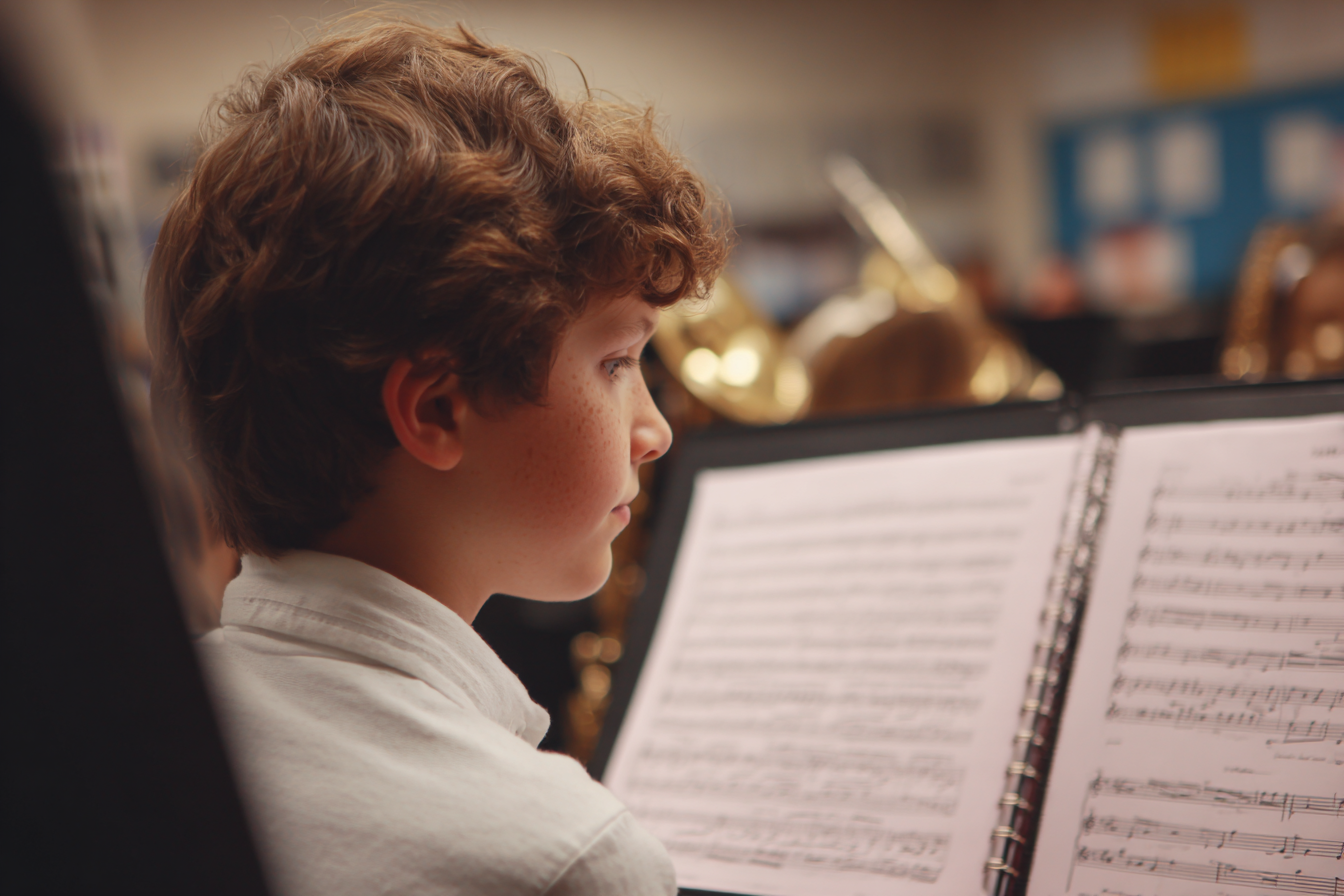
Focus: Strengthen rhythmic accuracy using counting systems and subdivision in standard band notation.
Grade Level: 6
Subject Area: Band (Performing • Reading • Responding)
Total Unit Duration: 5 sessions (one week), 50–60 minutes per session
I. Introduction
In this unit, students focus on how rhythm works and how to keep it accurate in real band music. They practice counting out loud, clapping, tapping, and playing rhythms, including simple subdivisions, while keeping a steady tempo with or without a metronome. Students also listen to and analyze short pieces to see how rhythm, dynamics, and tempo help create AB or ABA form and shape musical character. By the end of the week, students can explain and demonstrate how counting and subdivision help them play more confidently and together.
Essential Questions
- How does counting and subdivision help me play rhythms more accurately?
- Why is a steady beat important for both individual and ensemble performance?
- How do rhythm, dynamics, and tempo work together to create contrast and unity in band music?
- How can I recognize simple forms like AB and ABA by listening for rhythmic and dynamic changes?
II. Objectives and Standards
Learning Objectives — Students will be able to:
- Count, clap, and perform basic rhythms (whole, half, quarter, eighth notes and rests, simple dotted patterns) at a steady tempo.
- Use a consistent counting system to subdivide beats (e.g., “1 + 2 + 3 + 4 +”) and maintain accuracy in more detailed rhythmic patterns.
- Read and perform short band lines that combine notes, rhythms, and expressive markings, keeping the tempo stable.
- Identify and describe how rhythm, dynamics, and tempo contribute to AB or ABA form in short band excerpts.
- Apply rhythm-reading strategies (clap/count first, subdivide, slow tempo, isolate measures) to improve performance in class repertoire.
Standards Alignment — 6th Grade Band (custom, NAfME-style)
- BD:Pr4.6b — Read and perform band music using standard notation, including basic key signatures, rhythms, and expressive markings, maintaining steady tempo.
- Example: Students perform a piece with dotted rhythms and dynamic markings at a steady tempo.
- BD:Re7.6a — Identify and describe musical elements (rhythm, melody, dynamics, tempo) and simple form (AB/ABA) in band music.
- Example: Students identify an AB form and describe how the B section changes dynamics.
Success Criteria — Student Language
- I can count and clap rhythms correctly before I play them on my instrument.
- I can subdivide beats using a counting system so that my rhythms stay accurate.
- I can keep a steady tempo when performing a short line, even when rhythms get more detailed.
- I can listen to a piece and describe how rhythm, dynamics, and tempo change between sections (AB or ABA).
- I can use at least one rhythm strategy (like clapping first or isolating a measure) to fix tricky spots in my music.