Unit Plan 29 (Grade 6 Band): Sight-Reading Skills
Build Grade 6 band sight-reading confidence with a pre-reading checklist, steady counting, and rehearsal strategies like slow practice, chunking, and looping to improve accuracy and ensemble timing.

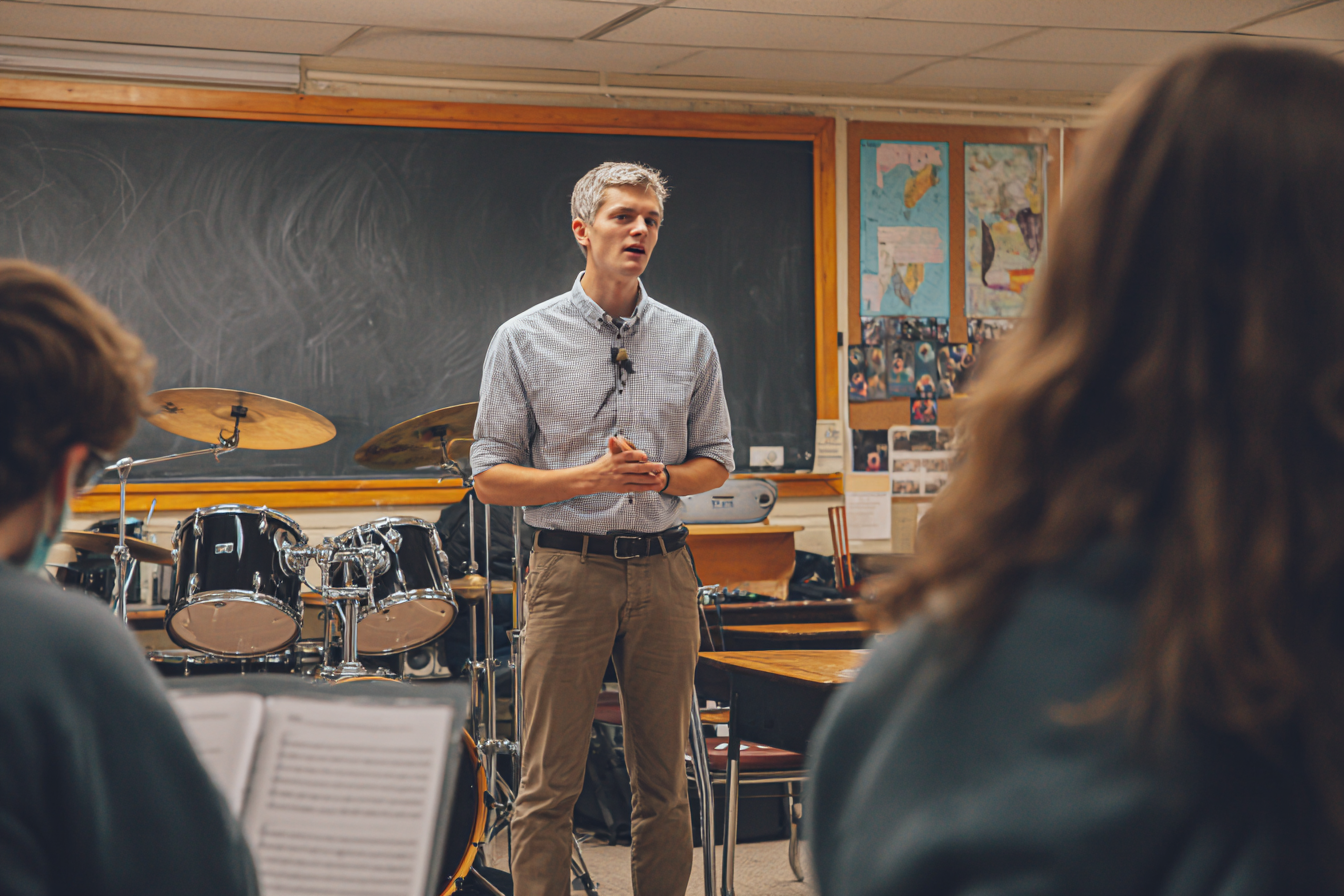
Focus: Build confidence reading unfamiliar band music by using clear pre-reading routines, steady counting, and simple rehearsal strategies (slow practice, chunking, looping).
Grade Level: 6
Subject Area: Band (Performing • Responding • Practicing/Rehearsing)
Total Unit Duration: 5 sessions (one week), 50–60 minutes per session
I. Introduction
In this unit, students learn how to sight-read new band music without fear by following a consistent set of pre-reading steps and rehearsal strategies. They practice scanning the page for key signatures, time signatures, rhythms, and road maps (repeats, D.S./D.C., endings) before they ever play. Then they use counting, subdivision, slow practice, chunking, and looping to keep going, even when they make mistakes. By the end of the unit, students can approach new music with a plan, helping the ensemble stay together, accurate, and confident when reading unfamiliar pieces.
Essential Questions
- What does it mean to sight-read music, and why is it an important skill for band musicians?
- How can pre-reading steps (looking at key, time, rhythms, and road map) make sight-reading feel less stressful?
- Which rehearsal strategies (slow practice, chunking, looping, counting) help us stay accurate in new music?
- How can we keep going confidently in sight-reading, even when we make mistakes?
II. Objectives and Standards
Learning Objectives — Students will be able to:
- Use a simple pre-reading checklist to scan unfamiliar band music (title, key signature, time signature, tempo, rhythms, road map).
- Sight-read short excerpts while maintaining a steady tempo and following basic dynamic markings.
- Apply rehearsal strategies (slow practice, chunking, counting, looping) to improve accuracy on tricky sight-reading spots.
- Work as an ensemble to keep together in new music, listening and adjusting to others while reading.
- Reflect on their sight-reading strengths and challenges and set a specific goal for continued improvement.
Standards Alignment — 6th Grade Band (custom, NAfME-style)
- BD:Pr4.6b — Read and perform band music using standard notation, including basic key signatures, rhythms, and expressive markings, maintaining steady tempo.
- Example: Students perform a piece with dotted rhythms and dynamic markings at a steady tempo.
- BD:Pr5.6a — Apply rehearsal strategies (slow practice, chunking, counting, looping) to improve individual accuracy and ensemble timing.
- Example: Students isolate a two-measure rhythm, count it, loop it, then reintegrate it into the full phrase.
Success Criteria — Student Language
- I can use a checklist to look at key, time, tempo, and tricky rhythms before I play new music.
- I can keep a steady beat while sight-reading, even if I miss a note or two.
- I can use slow practice, chunking, counting, and looping to fix difficult measures in new music.
- I can listen across the ensemble and stay with the group when we sight-read.
- I can name one strength and one goal for my future sight-reading.