Unit Plan 3 (Grade 6 Band): Tone Production Basics
Develop characteristic tone in Grade 6 band through focused airflow, embouchure, and mallet control while exploring tone color and musical character.

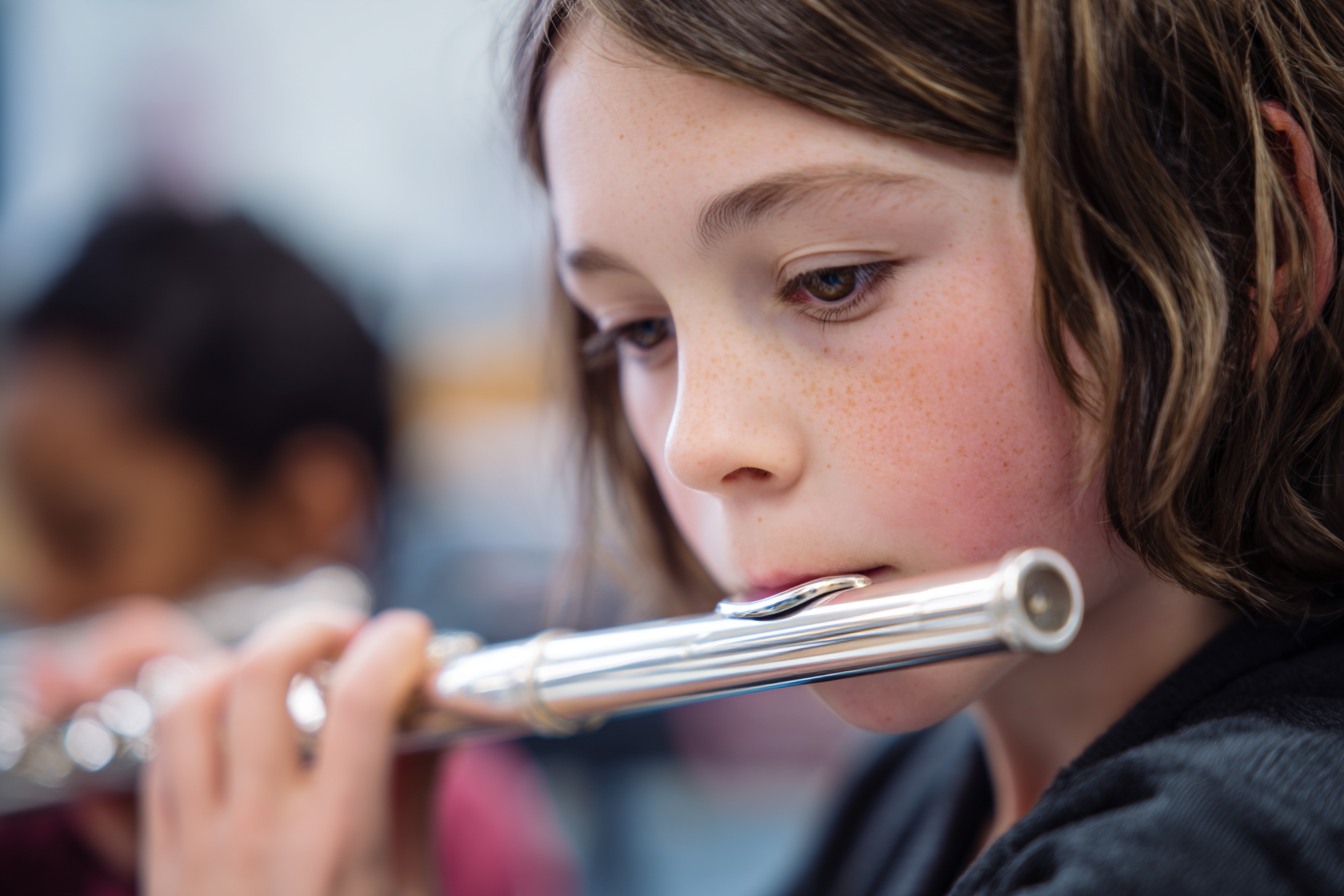
Focus: Develop a characteristic tone on each instrument through focused work on airflow, embouchure, and stick/mallet control, while listening for how instrumentation and tone color shape musical character.
Grade Level: 6
Subject Area: Band (Performing • Rehearsing • Responding)
Total Unit Duration: 5 sessions (one week), 50–60 minutes per session
I. Introduction
In this unit, students zoom in on how they sound, not just what notes they play. They investigate how steady airflow, embouchure shape, and stick/mallet technique affect tone on their own instruments, and how different instrument families create contrasting tone colors in band music. Through guided warm-ups, listening, and simple ensemble activities, students learn to recognize a characteristic tone and take concrete steps toward it. By the end of the week, they can demonstrate and describe tone choices that change the character and meaning of the music.
Essential Questions
- What does a characteristic tone sound like on my instrument, and how can I move closer to it?
- How do airflow, embouchure, and stick/mallet control affect the sound I produce?
- How do different instrument families (woodwinds, brass, percussion) create contrasting tone colors?
- How can tone color change the character or meaning of a piece of band music?
II. Objectives and Standards
Learning Objectives — Students will be able to:
- Demonstrate consistent airflow that supports steady tone in long tones and simple patterns.
- Maintain an appropriate embouchure or stick/mallet technique that supports a clearer, more characteristic tone.
- Listen to and describe differences in tone color among instrument families (e.g., bright vs. dark, mellow vs. powerful).
- Explain how choices in tone production (air, embouchure, mallet choice, playing area) affect the character of a passage.
- Use simple self- and peer-feedback to adjust technique and improve tone quality during warm-ups and short repertoire.
Standards Alignment — 6th Grade Band (custom, NAfME-style)
- BD:Pr4.6a — Demonstrate consistent instrument-specific technique (posture, embouchure/breathing, hand position, stick/mallet control) that supports a characteristic tone.
- Example: Students maintain steady airflow and correct hand position while playing a full warm-up.
- BD:Re7.6b — Explain how instrumentation and tone color affect character and meaning in band music.
- Example: Students explain how low brass and percussion create a “powerful” sound.
Success Criteria — Student Language
- I can use steady air and appropriate embouchure or stick control to make my tone more clear and stable.
- I can describe my tone using words like bright, dark, warm, mellow, powerful, thin, or airy.
- I can explain how different instruments (flute vs. trombone, clarinet vs. snare drum) create different tone colors.
- I can show how changing air, embouchure, or mallet choice changes the character of a short musical phrase.
- I can use a checklist or partner’s feedback to improve my tone during warm-ups or a simple piece.