Unit Plan 6 (Grade 2 Art): Texture & Tools Lab
Grade 2 art unit where students experiment with tools and textures to improve control, neatness, and craftsmanship in their artwork.

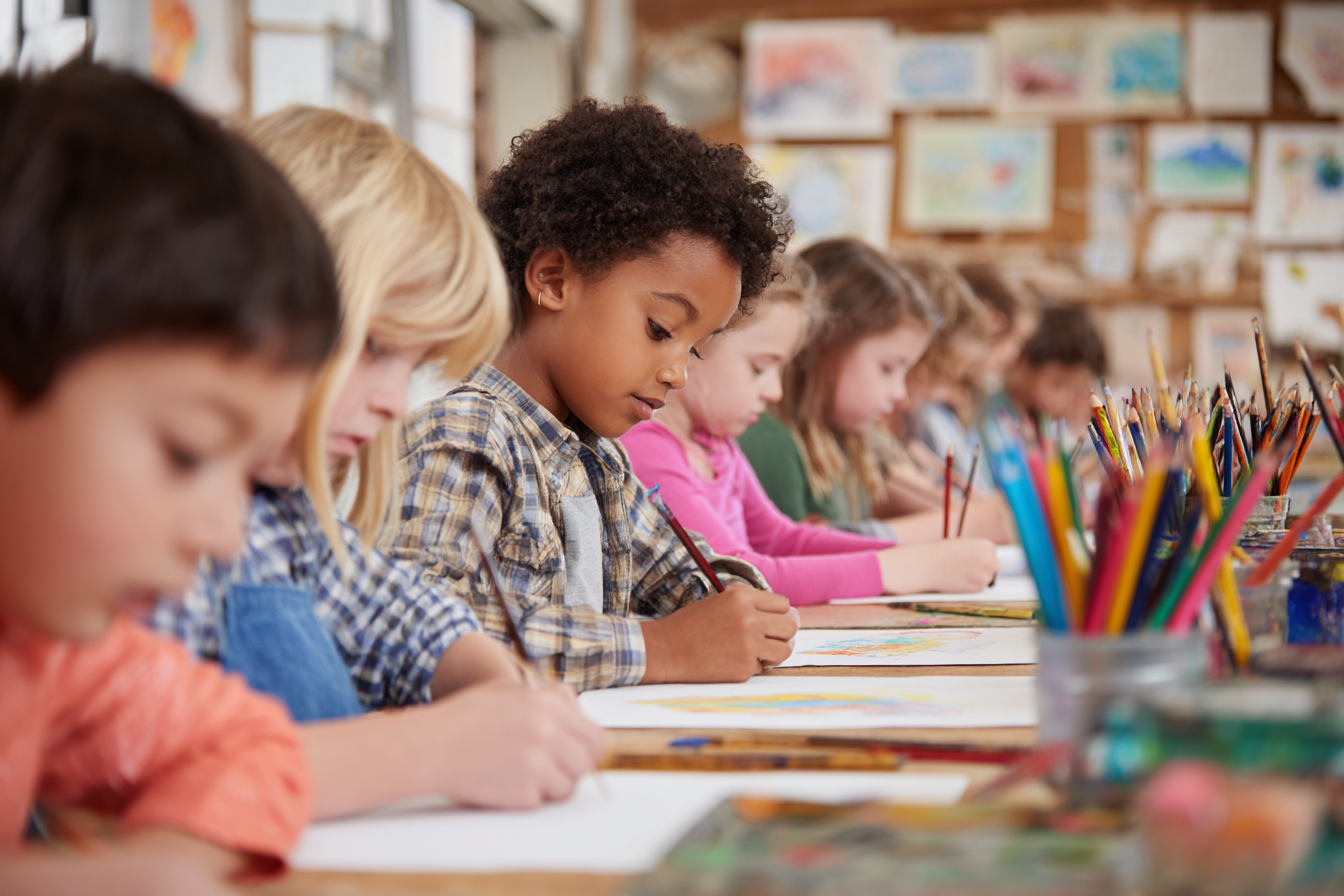
Focus: Experiment with different tools and textures to build better control and neatness in artwork.
Grade Level: 2
Subject Area: Art (Visual Arts • Creating)
Total Unit Duration: 1–3 weeks, 50–60 minutes per session
I. Introduction
Students explore how different art tools (crayons, markers, brushes, scissors, texture tools) can make a variety of textures and marks. Through playful stations and a small finished piece, they practice using tools carefully—controlling pressure, direction, and cutting/gluing. The goal is to help students notice how tools change the look and feel of artwork and to build habits of neatness and careful craftsmanship.
Essential Questions
- What is texture, and how can I show it in my artwork?
- How do different tools (crayon, marker, brush, scissors, sponges, etc.) make different kinds of lines, shapes, and textures?
- How can I use tools carefully and neatly so my artwork looks its best?
- How does practicing with tools help me feel more confident as an artist?
II. Objectives and Standards
Learning Objectives — Students will be able to:
- Describe texture (how something feels or looks like it feels) in classroom images and objects.
- Experiment with a variety of tools and materials (crayons, markers, brushes, sponges, scissors) to create different textures and marks.
- Practice using tools with improved control and neatness (e.g., cutting on a line, gluing just enough, coloring inside shapes).
- Create a small artwork or “texture sampler” that shows several different textures made with different tools.
- Reflect on which tools felt easiest or hardest to control and how they improved their neatness.
Standards Alignment — 2nd Grade (NCAS-Aligned)
- VA:Cr2.2b — Experiment with tools and materials to develop better control and neatness.
- Example: Students practice cutting curved lines carefully.
Success Criteria — Student Language
- I can tell what texture means and point out textures I see in pictures or around the room.
- I can try different tools and notice how each one makes different kinds of lines, shapes, or textures.
- I can use tools carefully and neatly, like cutting on a line or gluing without big puddles.
- I can make an artwork that shows more than one texture using different tools.
- I can say which tools I liked using most and how they helped my art look neat and clear.