Unit Plan 27 (Grade 6 Orchestra): Ensemble Performance
Perform Grade 6 orchestra repertoire with steady tempo, unified bowing, and characteristic tone while building rehearsal etiquette, conductor focus, and reflective skills for ensemble success.

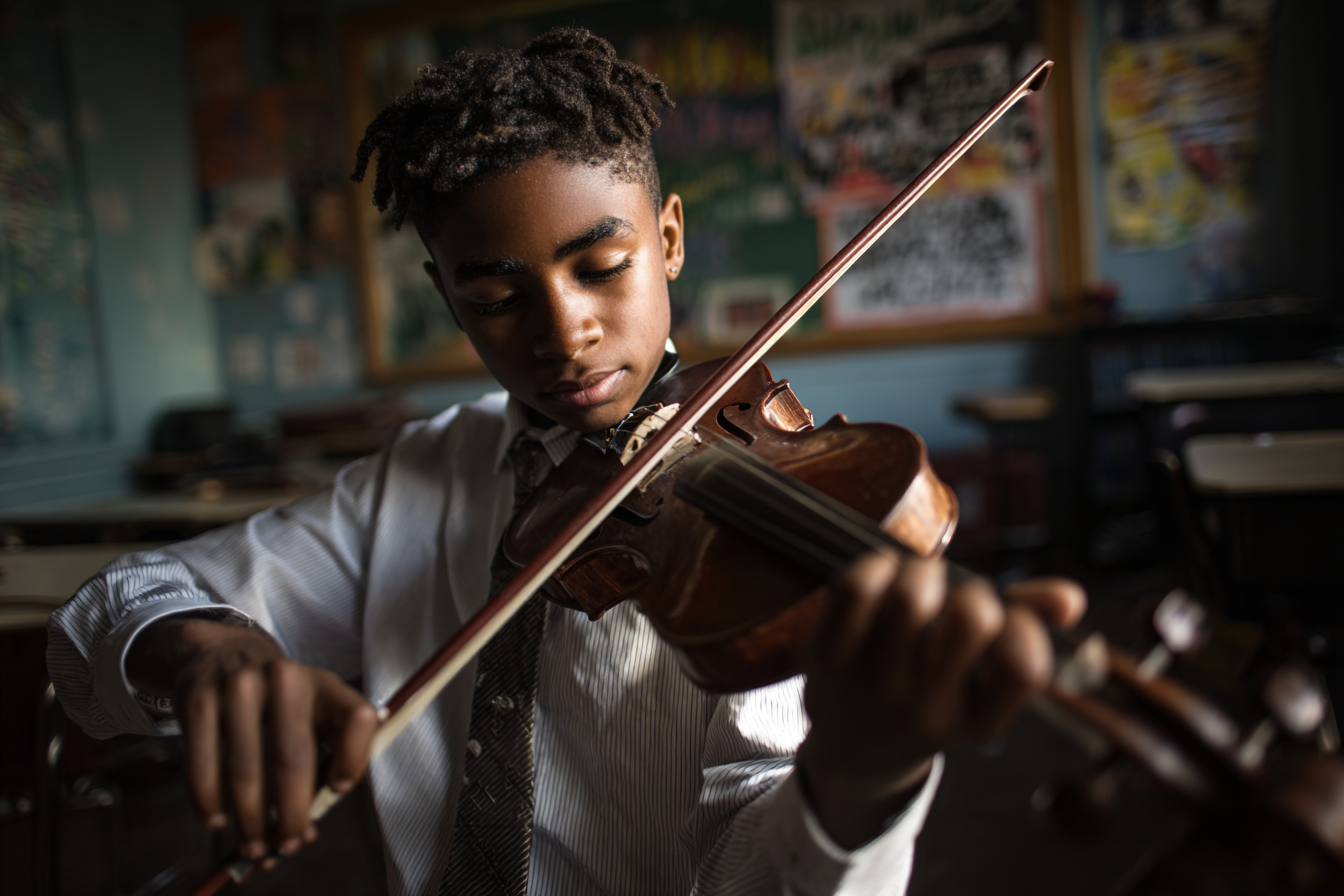
Focus: Perform ensemble repertoire with steady tempo, unified bowing, and characteristic tone, demonstrating developing ensemble etiquette and support for section/ensemble success.
Grade Level: 6
Subject Area: Orchestra (Performance • Ensemble Skills • Etiquette)
Total Unit Duration: 5 sessions (one week), 50–60 minutes per session
I. Introduction
In this unit, Grade 6 orchestra students prepare and present an ensemble performance of current repertoire. They focus on playing with accurate pitch, steady rhythm, characteristic tone, and unified bowing, while also developing strong rehearsal and performance etiquette. Through warm-ups, targeted section work, full-ensemble rehearsals, and a final in-class performance or recording, students learn how to follow the conductor, track rests, and support their section and ensemble.
Essential Questions
- How do steady tempo, unified bowing, and characteristic tone help an orchestra sound like one ensemble instead of many separate players?
- Why are rehearsal and performance etiquette (watching the conductor, tracking rests, staying focused) important for ensemble success?
- What does it mean to be a reliable ensemble member, and how do my personal choices affect the group’s sound and confidence?
- How can feedback, reflection, and goal-setting help an orchestra improve from one performance to the next?
II. Objectives and Standards
Learning Objectives — Students will be able to:
- Perform assigned ensemble repertoire with mostly accurate pitch and steady rhythm, using a characteristic string tone.
- Match bow direction, placement, and length with their section to support unified bowing and a blended sound.
- Demonstrate appropriate rehearsal and performance etiquette, including watching the conductor, tracking rests, and staying focused between pieces.
- Use a simple performance rubric and teacher/peer feedback to identify strengths and set at least one ensemble performance goal.
- Participate in a final in-class performance or recording and reflect on their role in the ensemble’s growth.
Standards Alignment — Grade 6 Orchestra (custom, NAfME-style)
- OR:Pr6.6a — Perform orchestra music with accurate pitch, steady rhythm, characteristic tone, unified bowing, and basic expression in an ensemble setting.
- Example: Students perform a two-part string arrangement with steady tempo and matching bow directions.
- OR:Pr6.6b — Demonstrate appropriate rehearsal and performance etiquette, including following the conductor, tracking rests, and supporting section/ensemble success.
- Example: Students watch for cues, count rests accurately, and adjust bowing to match the section.
Success Criteria — Student Language
- I can play our ensemble music with mostly correct notes and rhythms and a clear, characteristic tone.
- I can match bow directions and style with my section to help the orchestra sound unified.
- I can show good etiquette by watching the conductor, counting rests, and staying focused in rehearsal and performance.
- I can use a rubric or checklist to describe what our ensemble did well and what we need to improve.
- I can take part in a final performance or recording and explain how our ensemble has grown.