Unit Plan 26 (Grade 6 Orchestra): Musical Storytelling Composition
Create and perform a Grade 6 orchestra piece that tells a story using tempo, dynamics, bowing, and contour, with students explaining their expressive choices.

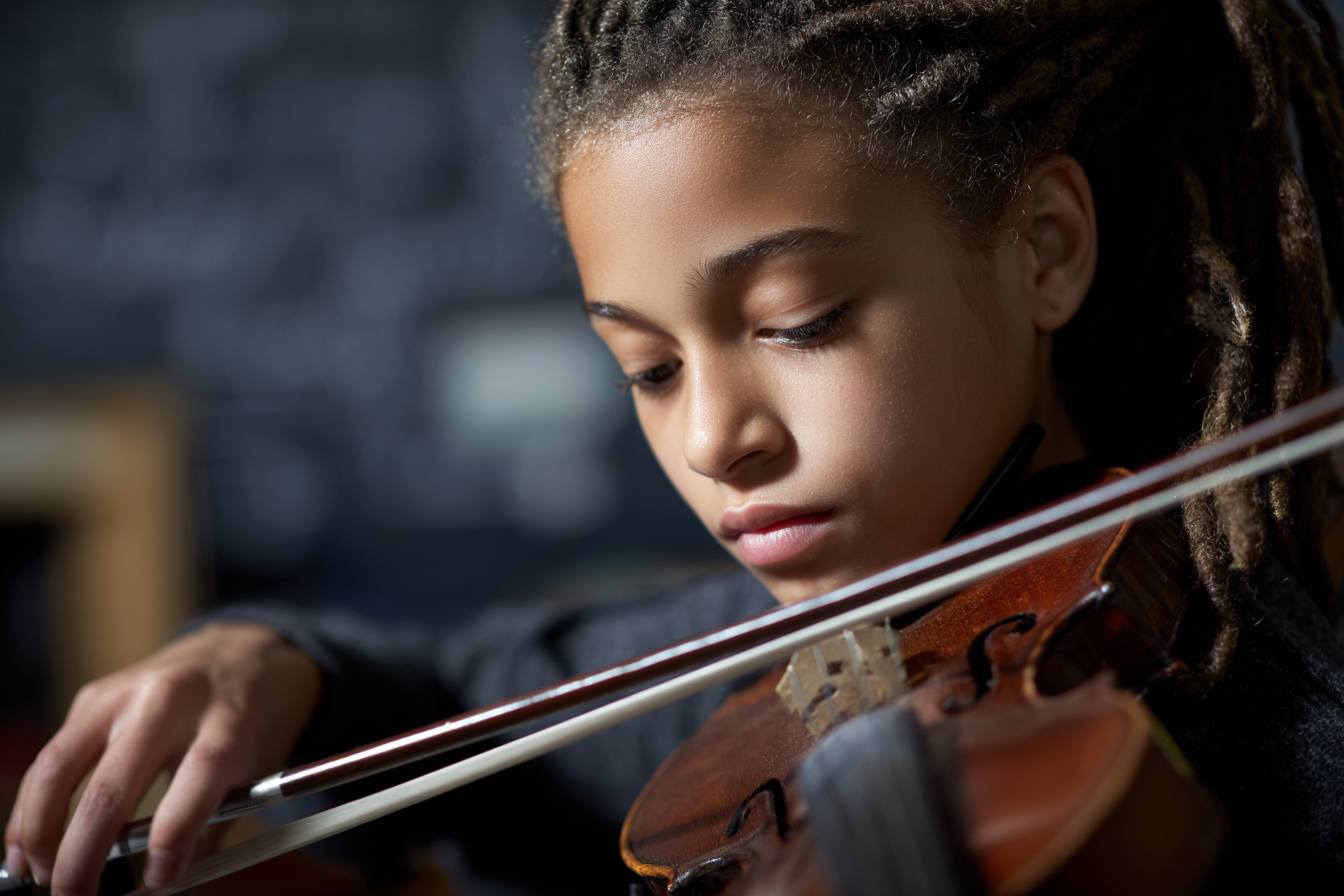
Focus: Create a short piece that represents a story, image, or scene using purposeful musical choices (tempo, dynamics, bowing, and contour).
Grade Level: 6
Subject Area: Orchestra (Composition • Expression • Identity)
Total Unit Duration: 5 sessions (one week), 50–60 minutes per session
I. Introduction
In this unit, Grade 6 orchestra students become musical storytellers. Drawing on their own interests, experiences, and goals, they design a short composition that represents a story, image, or scene—such as a storm, a journey, a celebration, or a favorite memory. They learn how choices like tempo, dynamics, bowing style, and melodic contour can show action, emotion, and character. By the end, each student (or small group) shares a short piece and explains how their musical decisions communicate their intended story to an audience.
Essential Questions
- How can music tell a story or paint a picture without any words?
- How do tempo, dynamics, bowing style, and melodic contour help show emotion, action, and character in a musical story?
- In what ways do my own interests, experiences, and goals shape the kind of story I want to tell with music?
- How can I explain my musical choices so that listeners understand what I wanted them to imagine or feel?
II. Objectives and Standards
Learning Objectives — Students will be able to:
- Brainstorm a story, image, or scene that connects to their own interests or experiences and describe it in simple terms.
- Plan and compose a short piece (8–16 measures) using tempo, dynamics, bowing style, and contour to represent parts of their story.
- Notate or clearly record their composition so that it can be rehearsed and performed by themselves (and/or a small group).
- Rehearse and perform their musical story with basic accuracy, steady rhythm, and clear expressive intent.
- Share their final creation and describe how their musical choices communicate the story, image, or scene to an audience.
Standards Alignment — Grade 6 Orchestra (custom, NAfME-style)
- OR:Cr3.6b — Share a final musical creation and describe how musical choices (tempo, dynamics, bowing style) communicate intent to an audience.
- Example: Students perform their piece and explain how legato bowing helped create a calm mood.
- OR:Cn10.6a — Describe how personal interests and goals influence musical choices and growth as a string player.
- Example: Students set a goal (stronger tone, cleaner bowing, better intonation) and explain why it matters.
Success Criteria — Student Language
- I can choose a story, image, or scene that is interesting to me and describe it in words.
- I can use tempo, dynamics, bowing style, and melodic contour to show what is happening in my musical story.
- I can write down or clearly record my piece so that I (and others) can play it again.
- I can perform my piece with mostly accurate notes and rhythm and show the character I imagined.
- I can explain how my musical decisions match my story and how they connect to who I am as a string player.