Unit Plan 18 (Grade 6 Orchestra): Sharing Created Music
Grade 6 orchestra students perform a final original piece, using tempo, dynamics, bowing, and phrasing to express intent, then reflect and explain choices.

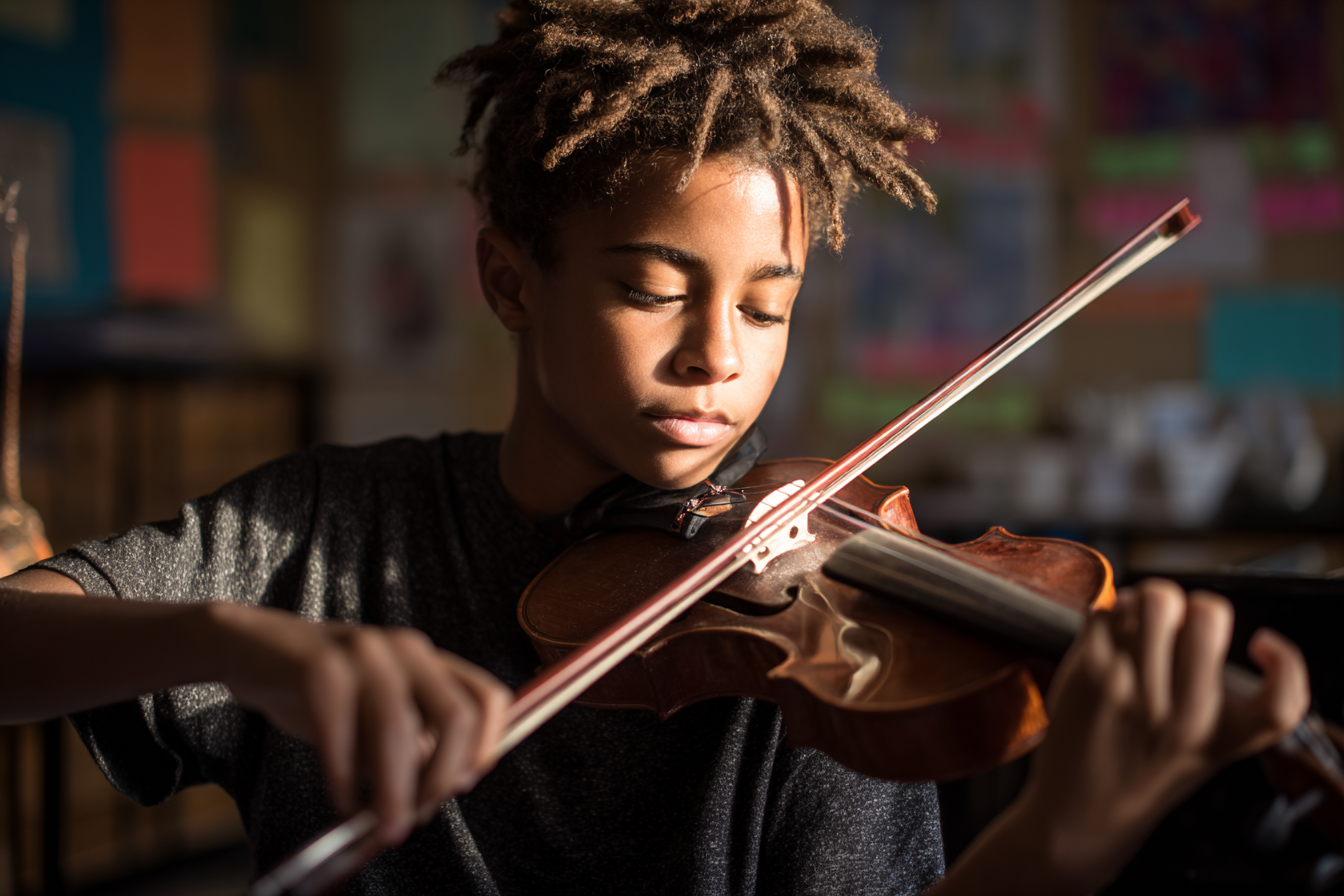
Focus: Perform a final student-created piece and explain how tempo, dynamics, bowing style, and phrasing communicate expressive intent to an audience.
Grade Level: 6
Subject Area: Orchestra (Composition • Performance • Reflection)
Total Unit Duration: 5 sessions (one week), 50–60 minutes per session
I. Introduction
In this unit, Grade 6 orchestra students bring their created music to life in performance. Drawing on melodies and pieces composed or revised in earlier units, students prepare a final solo or small-ensemble creation to perform for classmates or a small audience. They focus on accurate pitch and rhythm, unified bowing when in groups, and especially on expressive choices—such as tempo, dynamics, bowing style, and tone—that match their intended mood or story. After performing, students explain their choices, connecting their musical decisions to the feelings or images they wanted the audience to experience.
Essential Questions
- How can tempo, dynamics, bowing style, and phrasing change the way a piece of music feels to an audience?
- What does it mean to perform with both accuracy and expression in orchestra?
- How can we clearly explain our musical choices so others understand our intent?
- How does preparing and sharing our own music help us grow as string players and musicians?
II. Objectives and Standards
Learning Objectives — Students will be able to:
- Select or finalize a short student-created piece (solo or small ensemble) that is playable and appropriate for performance.
- Rehearse their piece to achieve accurate pitch, steady rhythm, characteristic tone, and unified bowing (for groups).
- Make intentional expressive choices (tempo, dynamics, bowing style, phrasing) that match a chosen mood or story.
- Perform their creation for an audience with basic performance etiquette (starts, cutoffs, posture, focus).
- Provide a brief spoken or written explanation of how their musical choices communicate intent to listeners.
Standards Alignment — Grade 6 Orchestra (custom, NAfME-style)
- OR:Cr3.6b — Share a final musical creation and describe how musical choices (tempo, dynamics, bowing style) communicate intent to an audience.
- Example: Students perform their piece and explain how legato bowing helped create a calm mood.
- OR:Pr6.6a — Perform orchestra music with accurate pitch, steady rhythm, characteristic tone, unified bowing, and basic expression in an ensemble setting.
- Example: Students perform a two-part string arrangement with steady tempo and matching bow directions.
Success Criteria — Student Language
- I can choose or finish a piece I created that I can play accurately and confidently.
- I can perform with accurate notes and rhythms, good tone, and matching bowings if I’m in a group.
- I can use tempo, dynamics, and bowing style on purpose to show a feeling, story, or idea.
- I can explain how my musical choices (like loud vs. soft, fast vs. slow, legato vs. staccato) match my intent.
- I can show good performance etiquette: ready posture, focus before starting, and a clear ending.