Unit Plan 29 (Grade 6 Orchestra): Sight-Reading Development
Grade 6 orchestra unit building confident sight-reading through rhythm accuracy, steady tempo, and finger pattern awareness using practical rehearsal strategies.

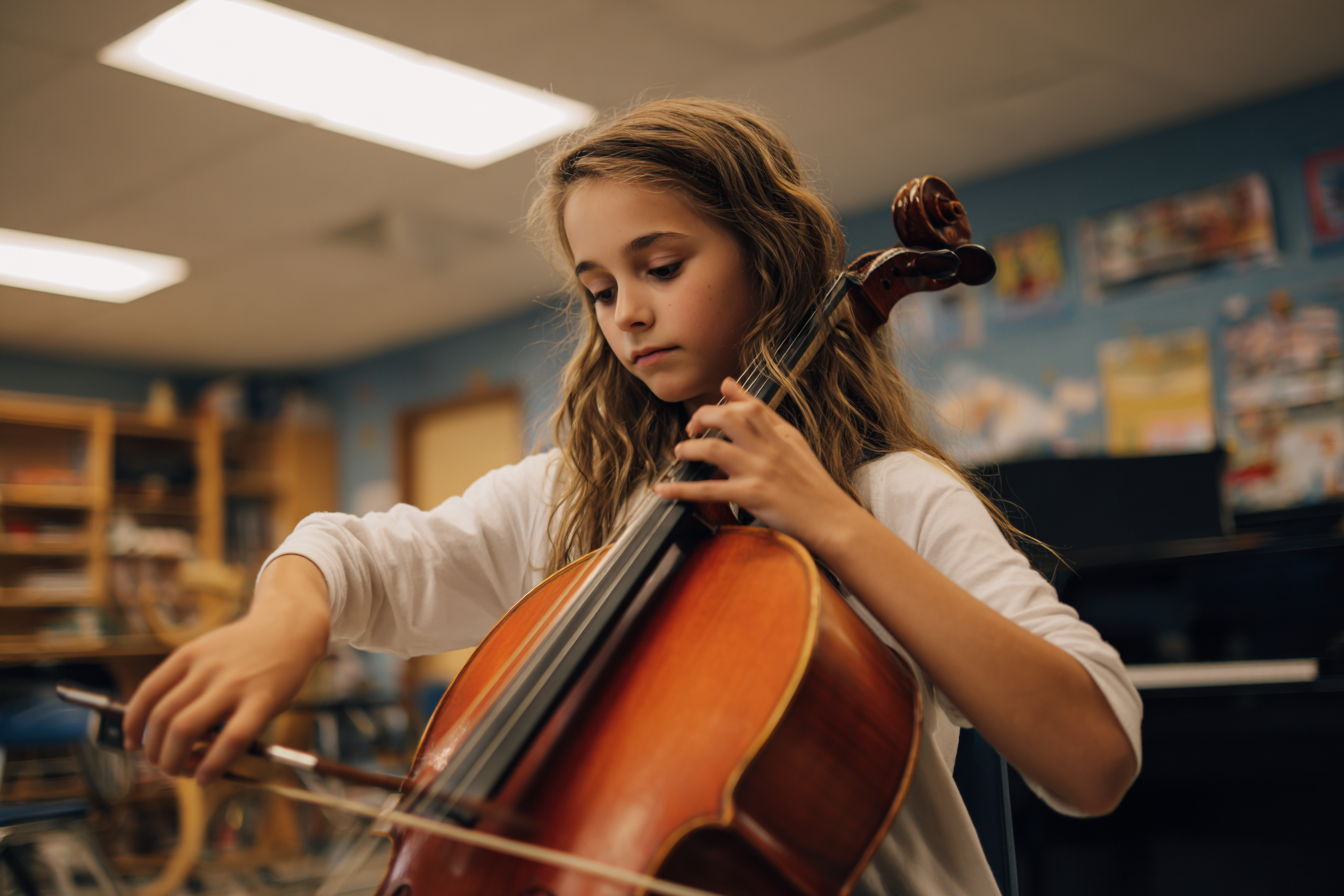
Focus: Build confidence sight-reading unfamiliar orchestra music with accurate rhythm, steady tempo, and growing finger pattern awareness.
Grade Level: 6
Subject Area: Orchestra (Reading • Rhythm • Ensemble Skills)
Total Unit Duration: 5 sessions (one week), 50–60 minutes per session
I. Introduction
In this unit, Grade 6 orchestra students develop sight-reading skills so they can confidently play unfamiliar music without stopping. They learn to scan music before playing (time signature, key signature, rhythms, finger patterns, repeats) and to prioritize steady tempo and clear rhythm even when pitches are not perfect. Students practice counting, clapping, silent fingering, and chunking/looping small sections to improve accuracy and ensemble unity. The goal is not perfection, but to become brave, musical readers who can keep going and recover from mistakes.
Essential Questions
- What does it mean to sight-read music, and how is it different from practicing a familiar piece?
- Why is steady tempo and rhythm accuracy so important when reading new music?
- How can pre-reading strategies (scanning key/time signatures, finger patterns, trouble spots) help me feel more confident?
- How do rehearsal strategies like counting, looping, and bowing isolation improve sight-reading in an ensemble?
II. Objectives and Standards
Learning Objectives — Students will be able to:
- Sight-read short, unfamiliar excerpts in common keys using expanded rhythms, key signatures, and simple slurs while maintaining a steady tempo.
- Use a pre-reading checklist (time signature, key signature, starting note, rhythms, repeats, dynamics) before playing a new piece.
- Apply rehearsal strategies (slow counting/clapping, looping, bowing isolation, section practice) to improve sight-reading accuracy and ensemble timing.
- Maintain internal pulse and keep going during sight-reading, recovering from mistakes without stopping the group.
- Reflect on which strategies helped them feel more confident and accurate when sight-reading.
Standards Alignment — Grade 6 Orchestra (custom, NAfME-style)
- OR:Pr4.6b — Read and perform orchestra music using standard notation, including expanded rhythms, key signatures, and finger patterns, maintaining steady tempo.
- Example: Students perform a piece with eighth-note patterns and simple slurs accurately.
- OR:Pr5.6a — Apply rehearsal strategies (slow practice, counting, looping, bowing isolation, section practice) to improve individual accuracy and ensemble timing.
- Example: Students isolate a bowing pattern, practice slowly, then rejoin the ensemble with correct timing.
Success Criteria — Student Language
- I can scan a new piece for time signature, key signature, and tricky rhythms before I play.
- I can sight-read with mostly accurate rhythm and a steady tempo, even if every pitch is not perfect.
- I can use strategies like counting, clapping, looping, and bowing isolation to fix difficult spots.
- I can keep going and stay with the ensemble, even when I make a mistake.
- I can explain which sight-reading strategies help me feel more confident with new music.