Unit Plan 13 (Grade 6 PE): Invasion Tactics without Equipment
Grade 6 no-equipment invasion unit builds movement reading, feints, angles, spacing, and containment to strengthen offensive and defensive tactics.

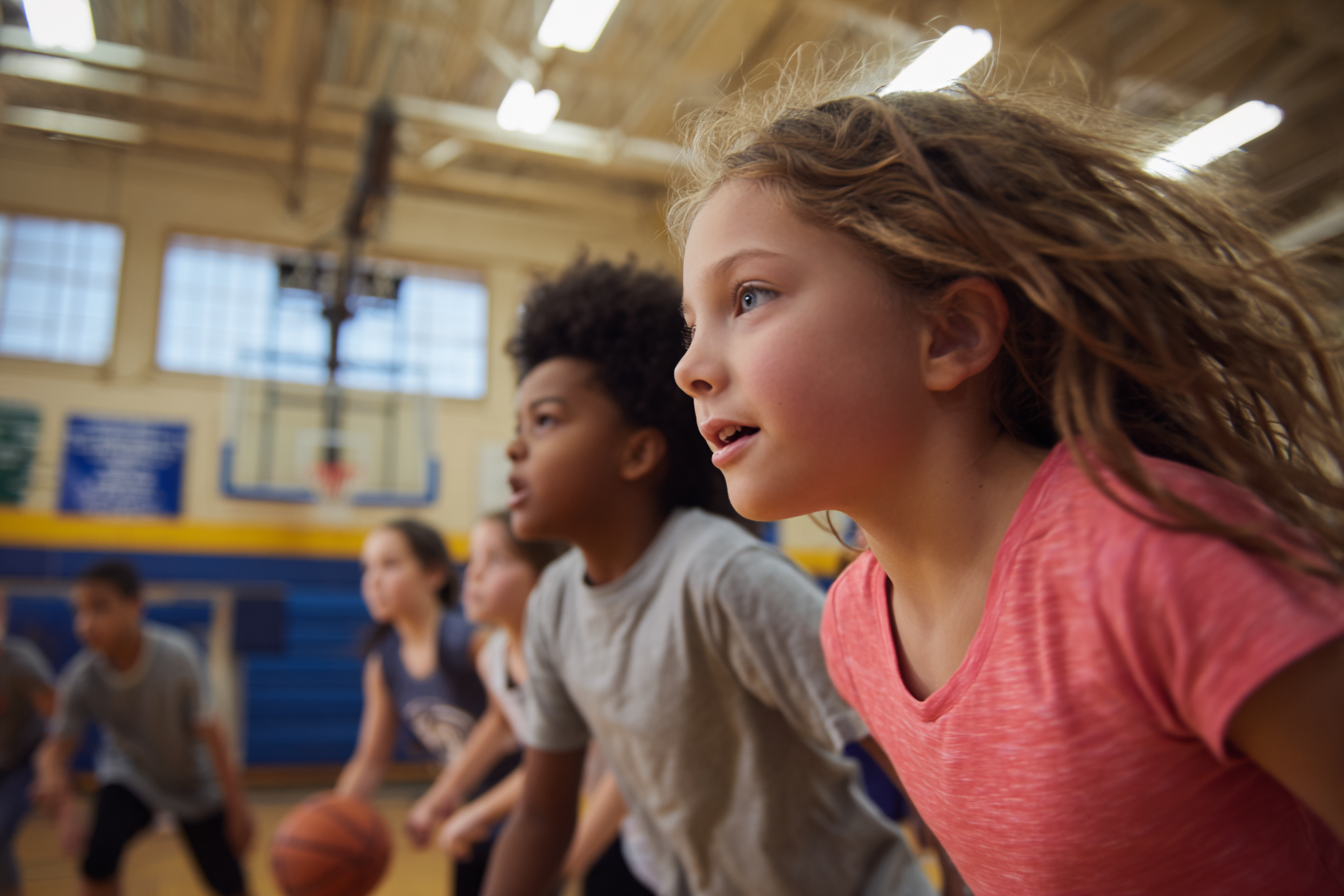
Focus: Improve students’ ability to read movement, use feints, choose smart angles, and understand offensive and defensive spacing without the added challenge of ball control.
Grade Level: 6
Subject Area: Physical Education
Total Unit Duration: 5 sessions (one week), 45–55 minutes per session
I. Introduction
In this Grade 6 Physical Education unit, students explore core invasion-game concepts without using any equipment. By removing the ball or object, students can focus more clearly on movement, timing, space, and decision-making. Through direction-change drills, defensive slide work, Endzone Games, Mirror Defense, and Cone Steal challenges, students learn how to create separation on offense and protect important space on defense. The unit emphasizes that successful invasion play depends on much more than handling an object; it depends on reading an opponent, changing pace, choosing the right pathway, and understanding when to attack, contain, or recover. By the end of the week, students should be able to explain how movement, balance, and tactical spacing help both offensive and defensive success in invasion games.
Essential Questions
- How can players create offensive advantages using pathways, angles, and feints?
- What helps defenders contain attackers without overcommitting?
- Why is spacing important even when no ball is involved?
- How does removing equipment help students understand invasion tactics more clearly?
II. Objectives and Standards
Learning Objectives — Students will be able to:
- Perform locomotor skills such as sprinting, shuffling, sliding, and stopping with improved control during invasion-style movement tasks.
- Maintain balance and coordination during quick changes of direction, level changes, and defensive recovery movements.
- Move into open space and adjust position based on teammates, opponents, and scoring areas.
- Use varied pathways, levels, and feints to create offensive advantage.
- Apply defensive strategies such as marking, containment, and help defense in no-equipment invasion challenges.
- Stay actively engaged in moderate-to-vigorous physical activity throughout movement games and tactical drills.
Standards Alignment — Grade 6 PE (SHAPE America-based custom)
- PE:S1.6a – Locomotor Skills with Speed, Transitions, and Control Perform locomotor skills (run, sprint, shuffle, skip, leap, slide) with control, quickly transitioning between movements and adjusting speed in response to game demands.
- Example: In invasion-style movement games, students sprint into space, decelerate under control, and change direction sharply to evade defenders or recover on defense.
- PE:S1.6b – Balance, Stability, and Coordination in Complex Movement Maintain static and dynamic balance while performing complex combinations (jumping, landing, rotating, changing levels and direction) in games and fitness tasks.
- Example: Students use quick cuts, stops, defensive slides, and directional changes without losing body control or balance.
- PE:S2.6a – Space Awareness & Positioning in Team and Individual Games Demonstrate consistent understanding of offensive and defensive space by moving to open areas, adjusting position relative to teammates, opponents, and scoring areas.
- Example: In endzone-style games, students spread out on offense and stay goal side or protect lanes on defense.
- PE:S2.6b – Using Pathways, Levels, and Feints to Create Advantage Use varied pathways (straight, curved, diagonal, zigzag), levels (high, medium, low), and feints/fakes to create offensive opportunities or deny space on defense.
- Example: A student uses a shoulder fake, quick low cut, or curved run to create separation from a defender in a no-equipment invasion game.
- PE:S2.6e – Defensive Strategies: Marking, Containment, and Help Defense Apply defensive principles such as marking a specific player, containing penetrations, maintaining good body position, and providing help defense when teammates are beaten.
- Example: Students stay between an attacker and the scoring area, angle their body to contain the drive, and shift to help a teammate when needed.
- PE:S3.6a – Regular Participation in Moderate-to-Vigorous Physical Activity Participate regularly in moderate-to-vigorous physical activity (MVPA) during class and demonstrate effort to remain active and engaged for most of the lesson.
- Example: During movement-based invasion games, students remain active, transition quickly, and fully participate in each round.
Success Criteria — Student Language
- I can change direction quickly while staying in control.
- I can use feints and different pathways to create space.
- I can move to better open space on offense.
- I can defend by containing, recovering, and helping teammates.
- I can stay balanced during fast offensive and defensive movement.
- I can stay active and engaged during no-equipment invasion games.