Unit Plan 2 (Grade 6 PE): Soccer — Possession & Finishing
Grade 6 soccer unit builds possession skills, off-ball movement, smart shot selection, and team shape in small-sided play.

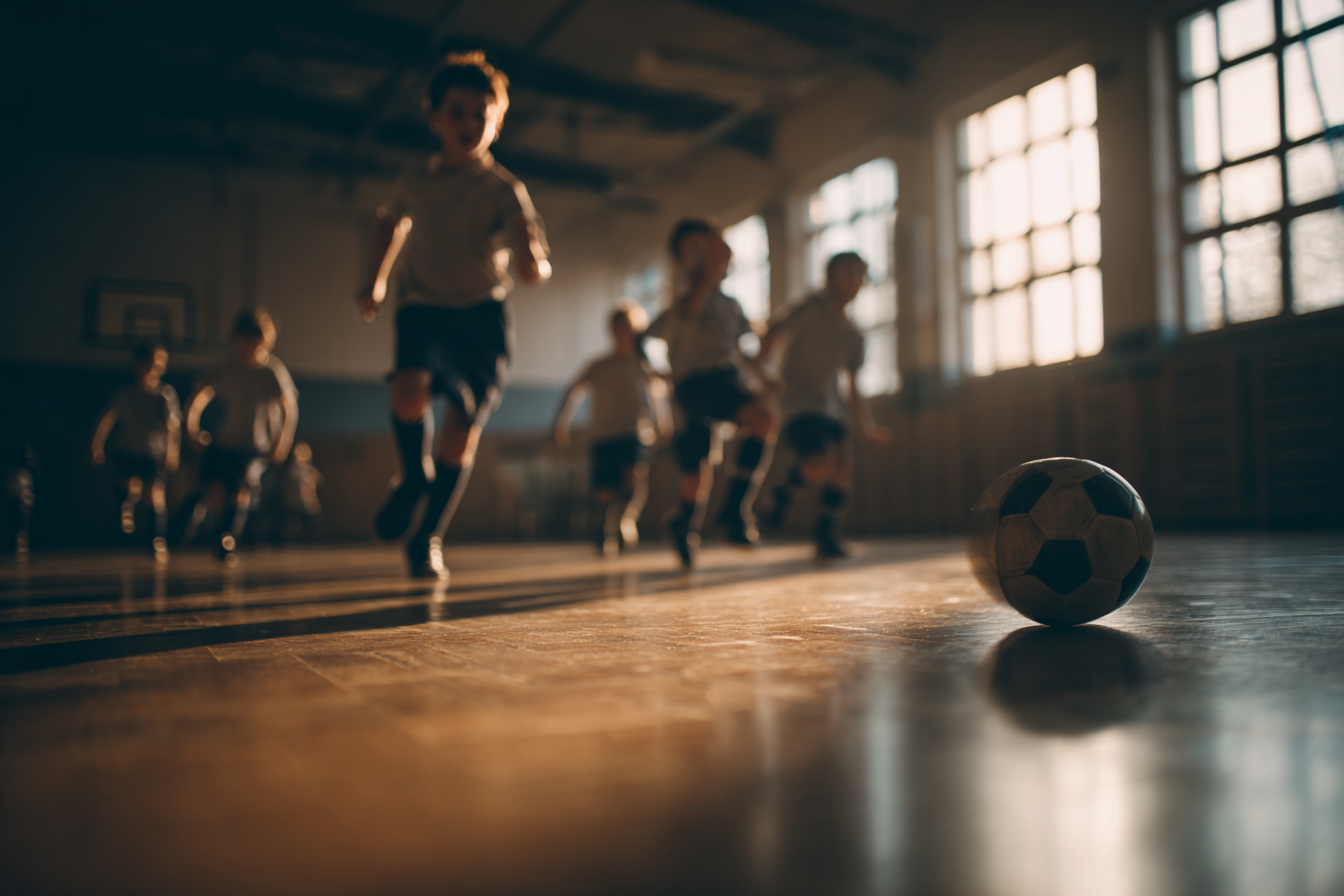
Focus: Build stronger possession skills, improve movement to open space, and help students recognize better shot opportunities while maintaining basic team shape in small-sided soccer.
Grade Level: 6
Subject Area: Physical Education
Total Unit Duration: 5 sessions (one week), 45–55 minutes per session
I. Introduction
In this Grade 6 Physical Education unit, students develop the foundational team concepts needed to play more thoughtful and effective soccer. Through dribbling, passing, movement, and finishing activities, students learn that success in soccer is not only about kicking the ball forward, but also about keeping possession, supporting teammates, and making smart decisions near goal. The unit emphasizes moving to open space, using fakes and quick changes of direction, and understanding when to pass, dribble, or shoot. Students also begin learning basic team shape by spreading out on offense and recovering into useful defensive positions when possession changes. By the end of the week, students should be able to explain how possession, spacing, and shot selection work together in successful small-sided soccer.
Essential Questions
- How can players help their team keep possession instead of giving the ball away quickly?
- What does it mean to move into open space in soccer?
- How can fakes, direction changes, and team support create better attacking chances?
- What makes a shot opportunity better or worse in a small-sided game?
II. Objectives and Standards
Learning Objectives — Students will be able to:
- Control, dribble, pass, and shoot with the feet using both dominant and non-dominant sides more effectively during small-sided play.
- Combine dribbling, passing, moving, receiving, and finishing in smoother game sequences.
- Move to open space and maintain better offensive and defensive positioning.
- Use varied pathways, fakes, and changes of direction to create attacking advantages.
- Apply simple offensive strategies such as give-and-go, width, and passing before shooting.
- Apply simple defensive strategies such as marking, containment, and help defense.
- Stay actively engaged in moderate-to-vigorous activity throughout drills and gameplay.
Standards Alignment — Grade 6 PE (SHAPE America-based custom)
- PE:S1.6d – Kicking, Dribbling & Ball Control with Feet in Game Play Control, dribble, pass, and shoot a ball with the feet using both dominant and non-dominant sides, adjusting force and angle to meet tactical needs.
- Example: During soccer games, students dribble past defenders, change direction as needed, and pass accurately to teammates or shoot at appropriate times.
- PE:S1.6f – Integrating Multiple Skills in Fluid Game Sequences Combine multiple skills—such as dribbling, passing, catching, striking, running, dodging, and shooting—smoothly and appropriately during extended game sequences.
- Example: A student dribbles into space, passes to a teammate, cuts toward goal, receives a return pass, and finishes with a controlled shot in a modified team game.
- PE:S2.6a – Space Awareness & Positioning in Team and Individual Games Demonstrate consistent understanding of offensive and defensive space by moving to open areas, adjusting position relative to teammates, opponents, and scoring areas.
- Example: In 4v4 or 5v5 games, students avoid clustering, spread the floor/field on offense, and collapse to protect the goal or key space on defense.
- PE:S2.6b – Using Pathways, Levels, and Feints to Create Advantage Use varied pathways (straight, curved, diagonal, zigzag), levels (high, medium, low), and feints/fakes to create offensive opportunities or deny space on defense.
- Example: A student uses a head fake and quick low-level cut to get separation from a defender, or uses an angled approach to cut off an opponent’s path to goal.
- PE:S2.6d – Offensive Strategies: Creating and Exploiting Advantages Apply offensive strategies such as creating space, using give-and-go, setting simple screens, recognizing mismatches, and choosing high-percentage plays.
- Example: In small-sided soccer, students use width, give-and-go passing, and extra support to create better shot chances.
- PE:S2.6e – Defensive Strategies: Marking, Containment, and Help Defense Apply defensive principles such as marking a specific player, containing penetrations, maintaining good body position, and providing help defense when teammates are beaten.
- Example: Students stay between their opponent and the goal, communicate switches, and help defend when a teammate is out of position, then recover to their assignment.
- PE:S3.6a – Regular Participation in Moderate-to-Vigorous Physical Activity Participate regularly in moderate-to-vigorous physical activity (MVPA) during class and demonstrate effort to remain active and engaged for most of the lesson.
- Example: During continuous small-sided games and circuits, students remain moving, limit idle time, and fully participate in drills and gameplay.
Success Criteria — Student Language
- I can dribble, pass, and shoot with better control.
- I can move to open space instead of crowding my teammates.
- I can use fakes and direction changes to keep or create possession.
- I can recognize when to pass and when to shoot.
- I can defend by marking, containing, and helping when needed.
- I can stay active and engaged during drills and games.