Unit Plan 19 (Grade 7 Art): Advanced Drawing Techniques
Grade 7 drawing unit developing shading, proportion, and spatial depth through guided practice, experimentation, and a final study showing improved realism and craftsmanship.

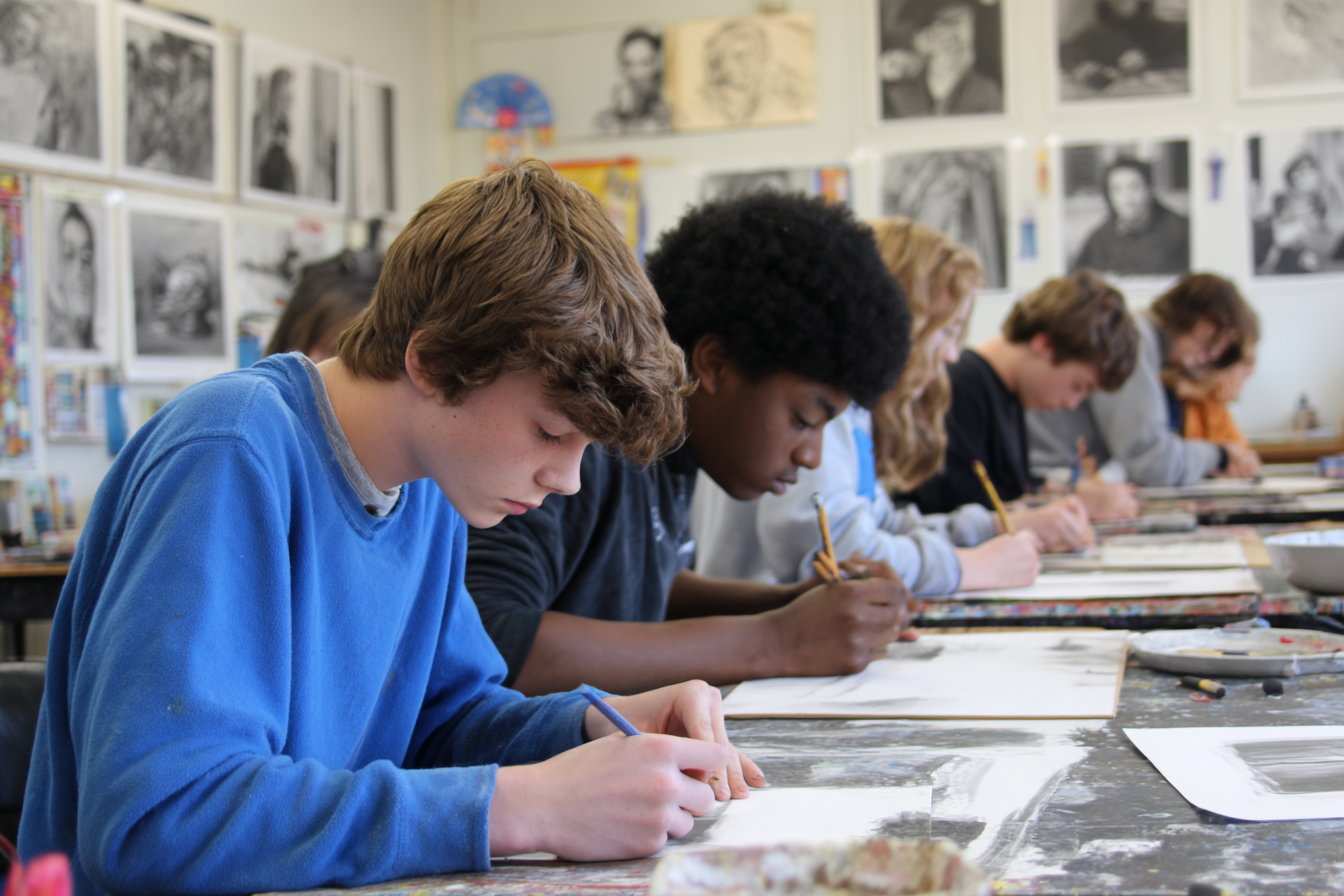
Focus: Develop shading, proportion, and spatial depth through guided practice and experimentation with drawing materials and techniques.
Grade Level: 7
Subject Area: Art (Visual Arts • Drawing & Observation • Technical Skills)
Total Unit Duration: 5 sessions (one week), 50–60 minutes per session
I. Introduction
In this unit, students build advanced drawing skills by focusing on shading, proportion, and spatial depth. Through targeted exercises and small “challenge studies,” they experiment with different drawing tools and processes—such as varying pencil pressure, blending methods, and perspective techniques—to enhance realism and craftsmanship. Students learn how value creates form, how accurate proportion improves believability, and how overlapping, size change, and perspective create a sense of depth. By the end, they complete a small final drawing that shows improved control and thoughtful use of these techniques.
Essential Questions
- How do shading and value make flat shapes look three-dimensional?
- Why is proportion important when drawing objects, faces, or spaces from observation or imagination?
- Which drawing techniques help create a strong sense of depth and space on a flat page?
- How can experimenting with different materials, tools, and processes improve my craftsmanship?
- How can I use advanced drawing skills to better support the meaning or mood of my artwork?
II. Objectives and Standards
Learning Objectives — Students will be able to:
- Experiment with different drawing tools and techniques (e.g., pencil grades, hatching, blending, eraser lifting) to improve value control and shading (VA:Cr2.7b).
- Use basic strategies and guidelines (measurement, comparison, light construction lines) to improve proportion when drawing simple objects or forms (VA:Cr2.7b).
- Apply techniques such as overlap, size change, placement, and simple linear perspective to create a sense of spatial depth (VA:Cr2.7b).
- Combine shading, proportion, and depth techniques in a small final drawing study, intentionally choosing processes that support realism and clarity (VA:Cr2.7b).
- Reflect on which materials, tools, and processes helped them achieve stronger craftsmanship and how they might use these approaches in future artworks (VA:Cr2.7b).
Standards Alignment — 7th Grade (NCAS-Aligned)
- VA:Cr2.7b — Experiment with materials, tools, and processes to discover techniques that enhance meaning and craftsmanship.
- Example: Students test blending techniques in colored pencil before finalizing artwork.
Success Criteria — Student Language
- I can use different drawing techniques (hatching, blending, erasing) to create smooth and believable shading.
- I can check and improve proportion by comparing sizes and using guidelines.
- I can use overlap, size, and placement (and simple perspective) to make my drawing look like it has depth.
- I can explain which tools and processes gave me better control and more polished results.
- I can create a drawing study that shows improved craftsmanship compared to my earlier work.