Unit Plan 33 (Grade 7 Art): Creative Constraint Challenge
Grade 7 art unit where students use creative constraints to generate multiple solutions, experiment with materials, and explain how limitations shape artistic choices.

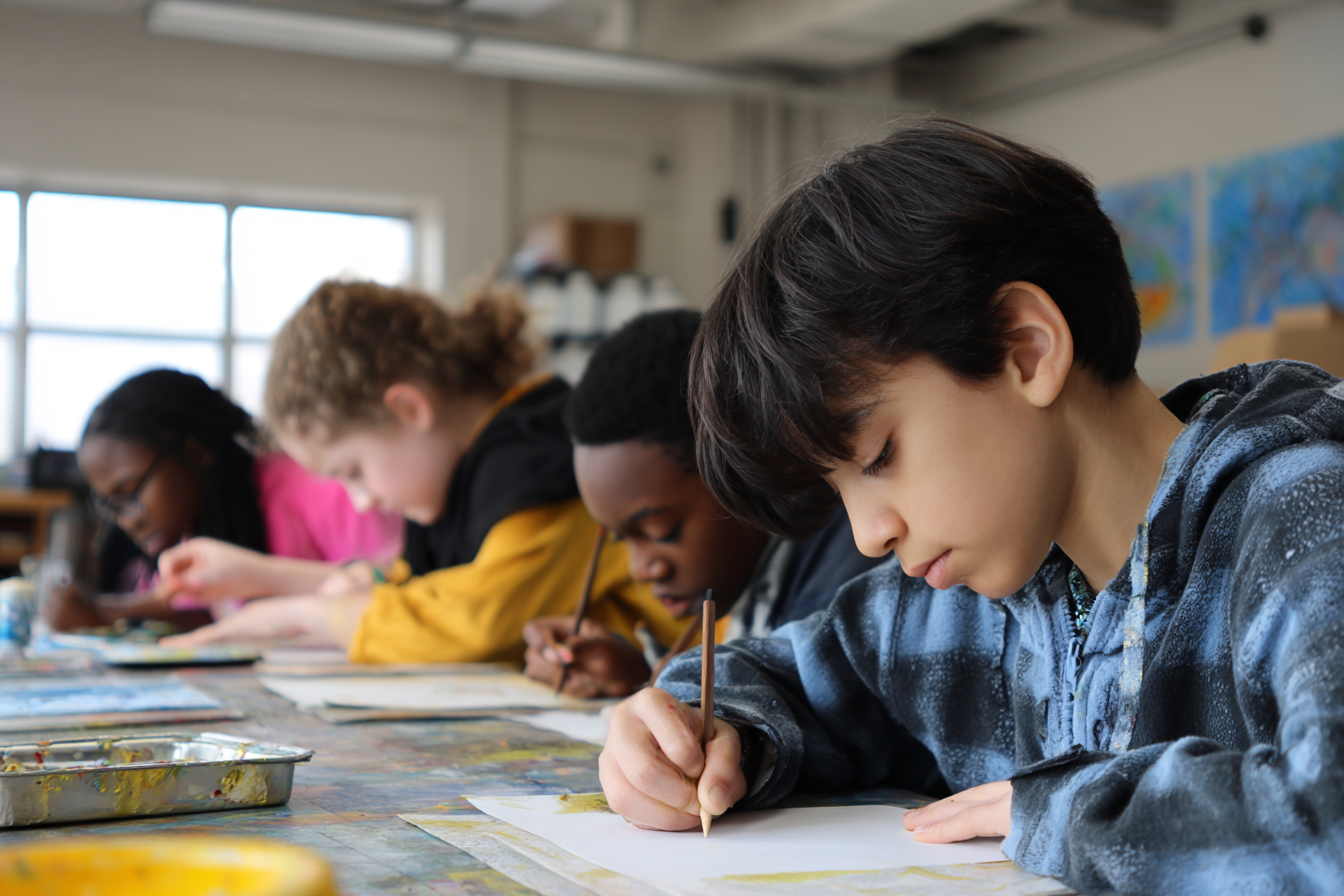
Focus: Generate solutions under limited materials or rules by using creative constraints to drive experimentation, problem-solving, and intentional artistic choices.
Grade Level: 7
Subject Area: Art (Visual Arts • Creativity • Process)
Total Unit Duration: 5 sessions (one week), 50–60 minutes per session
I. Introduction
In this unit, students explore how constraints—such as limited materials, color palettes, or rules—can actually increase creativity instead of limiting it. Through a series of short challenges, they must generate multiple visual solutions to a problem while working within specific boundaries (for example, only two materials, no outlines, or a time limit). As they experiment, students notice which materials, tools, and processes best support their ideas and reflect on how working under constraints changes their artistic decisions and problem-solving strategies.
Essential Questions
- How can limitations (materials, rules, time) actually help artists become more creative?
- What strategies help me generate multiple visual solutions to the same artistic problem?
- How do different materials, tools, and processes change the way my ideas look and feel?
- How can I explain the reasoning behind the choices I make when working under constraints?
- In what ways can experimenting with constraints improve my craftsmanship and artistic voice?
II. Objectives and Standards
Learning Objectives — Students will be able to:
- Describe what a creative constraint is and explain how it can influence artistic problem-solving (VA:Cr1.7b).
- Generate multiple visual approaches to a single prompt while following specific constraints, then explain which approach they prefer and why (VA:Cr1.7b).
- Experiment with at least two different materials, tools, or processes under constraint, observing how each affects meaning and craftsmanship (VA:Cr2.7b).
- Reflect on how constraints guided their design decisions, including composition, texture, and use of space (VA:Cr1.7b, VA:Cr2.7b).
- Create a small finished piece (or mini-series) that demonstrates both creative problem-solving under constraints and attention to technical quality (VA:Cr1.7b, VA:Cr2.7b).
Standards Alignment — 7th Grade (NCAS-Aligned)
- VA:Cr1.7b — Generate multiple visual approaches to solve an artistic problem and explain the reasoning behind selected choices.
- Example: Students design several layout options before choosing one for final composition.
- VA:Cr2.7b — Experiment with materials, tools, and processes to discover techniques that enhance meaning and craftsmanship.
- Example: Students test blending techniques in colored pencil before finalizing artwork.
Success Criteria — Student Language
- I can explain what a creative constraint is and give examples of how it affects my work.
- I can create more than one idea for the same prompt while following specific rules or limits.
- I can try different materials, tools, or techniques and notice how they change my artwork.
- I can explain why I chose a certain solution or material under the constraint and how it supports my idea.
- I can complete a piece that shows both creative risk-taking and attention to craftsmanship while working within limits.