Unit Plan 1 (Grade 7 Band): Band Culture & Expectations
Set a strong 7th grade band culture with clear rehearsal routines, collaboration norms, and goal-setting that connects students’ interests to ensemble responsibility and success.

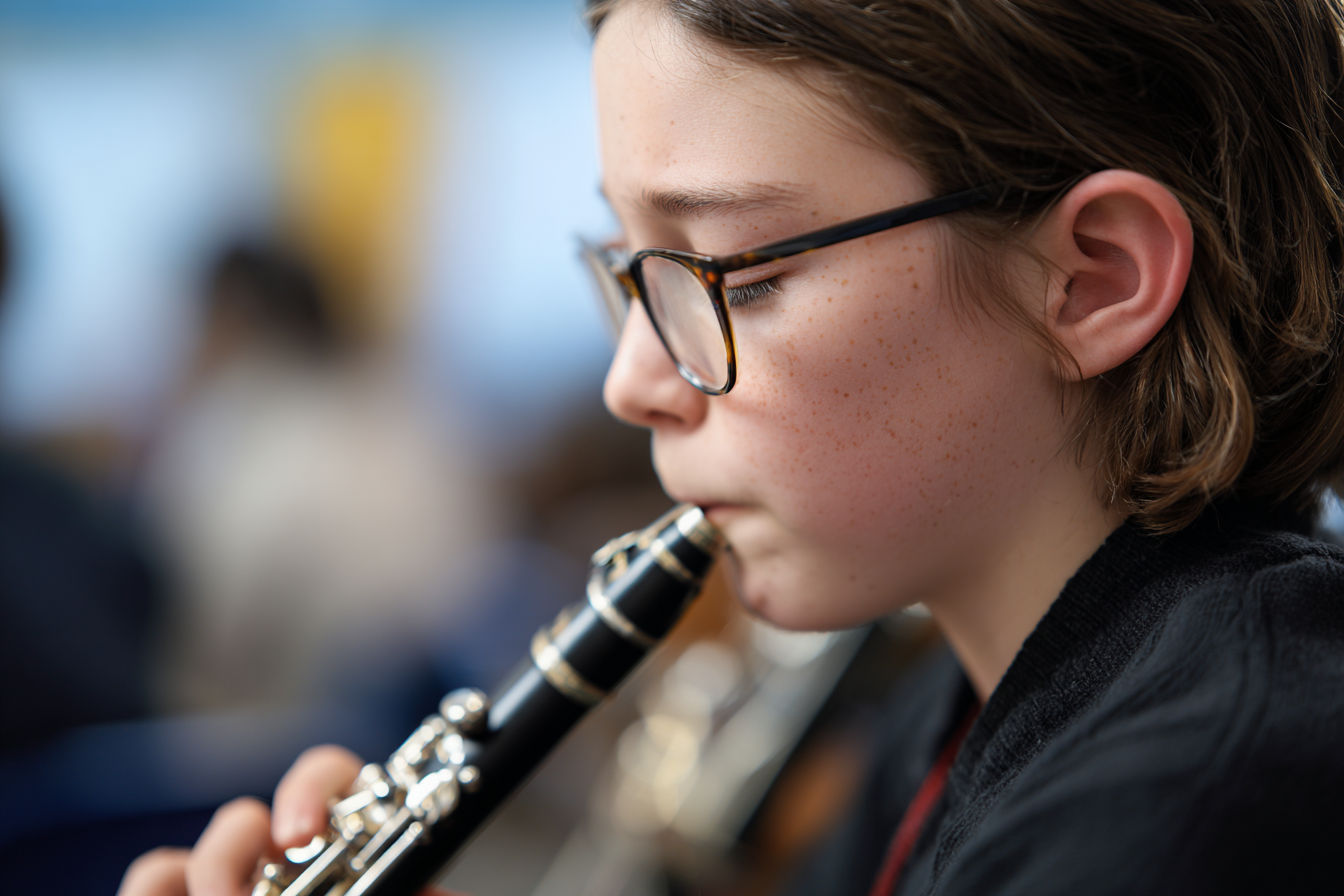
Focus: Establish rehearsal routines, collaboration norms, and ensemble responsibility while connecting band expectations to students’ interests, experiences, and goals.
Grade Level: 7
Subject Area: Band (Performing • Classroom Culture • Connecting & Reflection)
Total Unit Duration: 5 sessions (one week), 50–60 minutes per session
I. Introduction
In this opening unit, students shape the culture of the 7th grade band. They learn and practice clear rehearsal routines, etiquette, and responsibilities that help the ensemble function smoothly. Through discussion, quick activities, and music-making, they define what it means to be a focused, respectful, and supportive band member. Students also reflect on their own interests and goals—what they enjoy about band, what they want to improve, and how they can contribute to the group’s success. By the end of the week, the band has shared agreements about how they will work together, both musically and socially.
Essential Questions
- What does professional rehearsal and performance etiquette look and sound like in middle school band?
- How can our routines, norms, and behaviors help everyone learn and perform at a higher level?
- In what ways do my interests, past experiences, and goals shape how I participate in band?
- How can I show respectful collaboration and peer support in my section and the full ensemble?
- What responsibilities do I have to myself, my section, and the whole band each day?
II. Objectives and Standards
Learning Objectives — Students will be able to:
- Describe and demonstrate rehearsal expectations for entering, setting up, warming up, responding to cues, and putting materials away.
- Show appropriate rehearsal and performance etiquette, including focus on the conductor, quiet listening, and respectful communication.
- Explain how their personal interests, experiences, and goals influence what they want to work on in band (e.g., tone, confidence, rhythm, sight-reading).
- Set at least one personal musical goal and one ensemble behavior goal for the year.
- Contribute to a shared “Band Culture Agreement” outlining norms for collaboration, responsibility, and peer support.
Standards Alignment — 7th Grade Band (custom, NAfME-style)
- BD:Pr6.7b — Demonstrate appropriate rehearsal and performance etiquette, including focused collaboration and respectful peer support.
- Example: Students follow conductor cues, enter/exit professionally, and support section success.
- BD:Cn10.7a — Explain how interests, experiences, and goals influence musical choices and growth as a band musician.
- Example: Students set a personal goal (range, articulation, confidence) and explain why it matters.
Success Criteria — Student Language
- I can enter, set up, and warm up in a way that shows I’m ready to learn and respect others’ time.
- I can explain what good rehearsal etiquette looks like and show it in my behavior.
- I can name at least one musical goal and one behavior/participation goal for myself in band.
- I can describe how my past experiences and interests affect what I want to get better at in band.
- I can help create and follow our Band Culture Agreement for how we treat each other and practice together.
III. Materials and Resources
Tasks & Tools (teacher acquires/curates)
- Band handbook or classroom expectations document (if available).
- Visual anchors:
- “Rehearsal Routine” (enter, set up, warm up, rehearsal, pack up).
- “Band Etiquette” (listening, talking, responding to cues, electronics, respect).
- “Collaboration & Support” (how to encourage peers, handle mistakes, give/receive feedback).
- Goal-setting forms for students to record personal musical and behavior goals.
- “Band Culture Agreement” poster or large chart paper for class norms.
- Simple reflection sheets about students’ experiences with music/band so far and what they enjoy or find challenging.
- Whiteboard or projector for listing expectations and examples.
Preparation
- Draft a basic rehearsal routine and set of expectations to share and then refine with student input.
- Prepare a short icebreaker or quick-playing task (like a familiar scale or simple piece) so students can make music while practicing routines.
- Decide how seating, storage, and set-up will work and prepare clear visuals or diagrams.
- Prepare sentence starters for reflection and goal-setting (e.g., “One thing I already like about band is…”, “One thing I want to improve is…”).
Common Misconceptions to Surface
- “Etiquette only matters in concerts, not rehearsals.” → Rehearsal habits create performance outcomes.
- “If I’m not talking, I’m automatically focused.” → Focus includes listening actively, watching, and being ready to play.
- “My goals don’t affect the band.” → Individual growth adds up to ensemble success.
- “Only the teacher controls band culture.” → Students’ daily choices shape the classroom environment.
- “Helping others is the teacher’s job, not mine.” → Peer support and kindness are part of being a good band member.
Key Terms (highlight in lessons) rehearsal routine, etiquette, ensemble, responsibility, collaboration, peer support, focus, goal-setting, professionalism, band culture, respect
IV. Lesson Procedure
(Each day follows: Launch → Explore → Discuss → Reflect. Timing for a 50–60 minute block.)
Session 1 — What Kind of Band Do We Want to Be? (BD:Pr6.7b • BD:Cn10.7a)
- Launch (6–8 min)
- Prompt: “Think about the best class or team you’ve ever been in. What made it feel safe, productive, and fun?”
- Students share a few ideas; teacher records key words (respect, trust, effort, listening, fun).
- Explore (22–25 min)
- Introduce the basic Rehearsal Routine (enter, set up, warm up, rehearse, pack up).
- Walk students through each step with modeling:
- Where to get stands and music.
- How to set up chairs and instruments safely.
- How and when to start warming up.
- Practice a mini-routine: students enter, set up, play a familiar note/scale together, and pack up.
- Discuss (10–12 min)
- Ask: “Which parts of this routine will help us have more time to make music? Which parts show respect for each other?”
- Introduce BD:Pr6.7b in student language: “This standard is about how we act in rehearsals and performances.”
- Reflect (5 min)
- Exit slip: “One expectation I think is especially important for our band’s culture is __ because __.”
Session 2 — Rehearsal Etiquette & Peer Support (BD:Pr6.7b)
- Launch (5–7 min)
- Ask: “What does it look like when a band is really focused in rehearsal? What does it look like when they’re not?”
- Show or describe a short scenario of good vs. poor etiquette (talking, phones, not watching).
- Explore (25–30 min)
- Co-create a list of Band Etiquette expectations (listening while others play, no extra sounds, eyes on conductor, no side conversations, kindness when mistakes happen).
- Have students practice these expectations in a short playing activity:
- Teacher runs a simple warm-up or scale; students practice responding quickly to cut-offs, starts, and dynamic changes.
- Pause occasionally to “freeze frame” etiquette: posture, horn position, focus.
- Model and practice peer support phrases: “Nice job on that entrance,” “Let’s try that together slowly,” “It’s okay, we’ll fix it.”
- Discuss (10–12 min)
- Ask: “How does good etiquette help your neighbors and section, not just you?”
- Connect back to BD:Pr6.7b: focused collaboration and respectful peer support.
- Reflect (5 min)
- Quick write: “One way I can support my section in rehearsal is __.”
Session 3 — Interests, Experiences & Personal Goals (BD:Cn10.7a)
- Launch (5–7 min)
- Ask: “Why did you join band and keep playing? What do you enjoy and what feels challenging?”
- Brief pair-share: students talk about favorite band moments or reasons they’re still in band.
- Explore (25–30 min)
- Students complete a short reflection sheet about:
- What they like about band.
- What frustrates or worries them (e.g., high notes, sight-reading, solo fear).
- Where they want to be by the end of 7th grade band.
- Using this reflection, students fill out a Goal-Setting Form with:
- One musical goal (tone, rhythm, range, reading, confidence, etc.).
- One participation/behavior goal (focus, leadership, positive attitude, helping others).
- Teacher circulates, helping students make goals specific and realistic.
- Students complete a short reflection sheet about:
- Discuss (10–12 min)
- Ask: “How do your interests and experiences shape the goals you chose? How could reaching your goals help the whole band?”
- Introduce BD:Cn10.7a in student language: “This standard is about how who you are and what you’ve done influences how you grow as a musician.”
- Reflect (5 min)
- Exit slip: “My main goal in band this year is __, and it matters to me because __.”
Session 4 — Creating Our Band Culture Agreement (BD:Pr6.7b • BD:Cn10.7a)
- Launch (5–7 min)
- Ask: “If a new student joined next week and asked, ‘What is 7th grade band like?’ what would you want them to experience?”
- Collect a few ideas (welcoming, hard-working, fun but focused).
- Explore (25–30 min)
- In small groups, students brainstorm 3–5 norms they think should be part of a Band Culture Agreement (e.g., “We will be ready to play by the bell,” “We will support each other when someone struggles,” “We will keep phones put away during rehearsal”).
- Groups share and the class combines and refines ideas into 6–10 clear statements.
- As a class, write or type the final Band Culture Agreement on a poster or slide.
- Option: Have students sign the agreement as a commitment.
- Discuss (10–12 min)
- Ask: “Which part of this agreement will be easiest for us? Which might be hardest?”
- Connect norms back to students’ personal goals, showing how the agreement supports individual and ensemble growth.
- Reflect (5 min)
- Quick write: “The Band Culture Agreement will help me reach my goals because __.”
Session 5 — Practicing Our Culture in Music-Making (All Standards)
- Launch (5–7 min)
- Ask: “Now that we have routines, etiquette, and goals, what will it look like if we actually live them out while we play?”
- Briefly review the Rehearsal Routine and Band Culture Agreement.
- Explore (25–30 min)
- Run a normal rehearsal-style block using a simple piece, warm-up chorale, or scale exercise:
- Students enter, set up, and warm up following the routine with minimal reminders.
- Teacher conducts several passes through a chosen exercise or piece, pausing to notice examples of good etiquette and collaboration.
- Invite a student or section leader to lead a brief warm-up pattern, modeling BD:Pr6.7b in action.
- Emphasize self-monitoring: students check themselves against their personal goals (e.g., “Am I watching? Am I counting? Am I staying positive?”).
- Run a normal rehearsal-style block using a simple piece, warm-up chorale, or scale exercise:
- Discuss (10–12 min)
- Ask: “How did our behavior today match our Band Culture Agreement? What did we actually see and hear that showed our culture?”
- Invite students to share how they tried to work toward their personal goals in this rehearsal.
- Reflect (5 min)
- Final reflection for the week: “One habit I started this week that I want to keep all year is __.”
V. Differentiation and Accommodations
Advanced Learners
- Invite advanced students to:
- Help model ideal routines and etiquette (quiet set-up, quick response to cues).
- Take on informal leadership roles such as helping new players with set-up or quietly cueing entrances.
- Write an additional stretch goal related to leadership (e.g., mentoring a younger player, helping keep section focused).
Targeted Support
- Provide visual checklists for set-up, warm-up, and pack-up steps.
- Use clear, concise instructions one step at a time for students who are easily overwhelmed.
- Pair students with a peer buddy who can quietly remind them of routines and expectations.
- Offer simplified goal options with checkboxes for students who struggle to generate ideas independently.
Multilingual Learners
- Use visuals and icons on routine and etiquette charts (e.g., ear icon for listen, eye icon for watch, phone with X for no devices).
- Provide key expectation words with simple definitions and, if possible, translations or cognates.
- Allow students to discuss their interests and experiences in their home language first, then share key words or phrases in English.
- Offer sentence frames:
- “I like band because __.”
- “I want to get better at __ because __.”
IEP/504 & Accessibility
- Adjust expectations based on sensory or attention needs (e.g., seating location, short movement breaks).
- Provide written copies of routines and agreements to support memory and processing.
- Allow goal-setting through drawing, checklists, or short audio recordings if writing is a barrier.
- Check in individually with students who may need extra support understanding or following norms.
VI. Assessment and Evaluation
Formative Checks (daily)
- Session 1 — Teacher observes students practicing the rehearsal routine; most can enter, set up, and begin warming up with guidance.
- Session 2 — Students demonstrate appropriate rehearsal etiquette during short playing activities; side talk and off-task behavior decrease.
- Session 3 — Goal forms show each student has at least one clear musical goal and one behavior goal, with basic reasoning.
- Session 4 — Band Culture Agreement reflects student-generated norms; students can articulate what at least one norm means in practice.
- Session 5 — Rehearsal behaviors largely align with expectations; students can name one habit they practiced connected to their goals.
Summative — Band Culture Participation & Goal-Setting (0–2 per criterion, total 10)
- Rehearsal Etiquette & Focus (BD:Pr6.7b)
- 2: Consistently follows rehearsal expectations (set-up, listening, watching, no side talk) with minimal reminders.
- 1: Generally follows expectations but needs occasional reminders.
- 0: Frequently off-task; does not yet follow basic rehearsal norms.
- Collaboration & Peer Support (BD:Pr6.7b)
- 2: Regularly shows respectful peer support (encouraging others, helping quietly, handling mistakes kindly).
- 1: Shows some cooperation but rarely takes initiative to support peers.
- 0: Behaviors sometimes disrupt others or show limited respect for peers.
- Goal-Setting & Personal Reflection (BD:Cn10.7a)
- 2: Identifies meaningful musical and behavior goals and explains how interests/experiences influenced those goals.
- 1: Sets basic goals but explanation of interests/experiences is limited or unclear.
- 0: Goals are missing, extremely vague, or show little reflection.
- Engagement in Band Culture Agreement
- 2: Actively contributes ideas to the Band Culture Agreement and demonstrates commitment to it in behavior.
- 1: Participates in discussion but with limited contribution; follows agreement inconsistently.
- 0: Contributes little to agreement and/or regularly ignores it.
- Communication & Professionalism
- 2: Speaks and behaves in ways that show respect, uses appropriate volume and language, and responds to directions promptly.
- 1: Generally appropriate but with occasional lapses in tone or responsiveness.
- 0: Frequent issues with tone, language, or following directions.
Feedback Protocol (TAG)
- Tell one strength (e.g., “You always set up quickly and are ready to play—this helps the whole band.”).
- Ask one question (e.g., “What is one small change you could make to stay focused when others are talking?”).
- Give one suggestion (e.g., “Try sitting a bit more forward in your chair to show you’re ready and to support your tone.”).
VII. Reflection and Extension
Reflection Prompts
- What part of our Band Culture Agreement do you personally connect with the most, and why?
- How do your interests and experiences outside of band (sports, gaming, art, family) affect how you participate in rehearsal?
- What is one habit you want to be known for in 7th grade band (e.g., always prepared, positive, focused, helpful)?
Extensions
- Band Identity Poster: As a class, create a poster or slide deck that shows “Who We Are as 7th Grade Band,” including norms, values, and goals.
- Letter to Future Self: Students write a short note to their end-of-year self about what they hope to have achieved in band (musically and behaviorally).
- Mentor Connection (if applicable): Pair 7th graders with 6th or 8th grade band students for a brief “band buddy” conversation about expectations and goals.
- Goal Check-In Plan: Schedule monthly micro-reflections where students revisit their goals and adjust them based on progress.
Standards Trace — When Each Standard Is Addressed
- BD:Pr6.7b — Sessions 1–2, 4–5 (learning and practicing rehearsal routines and etiquette; co-creating Band Culture Agreement; demonstrating focused collaboration and peer support during rehearsals).
- BD:Cn10.7a — Sessions 3–5 (reflecting on interests and experiences; setting personal goals; connecting those goals and the Band Culture Agreement to ongoing musical growth as a band musician).