Unit Plan 6 (Grade 7 Band): Ensemble Blend & Balance
Grade 7 band unit on ensemble blend and balance using dynamics, tone matching, and rehearsal strategies to improve intonation and precision.

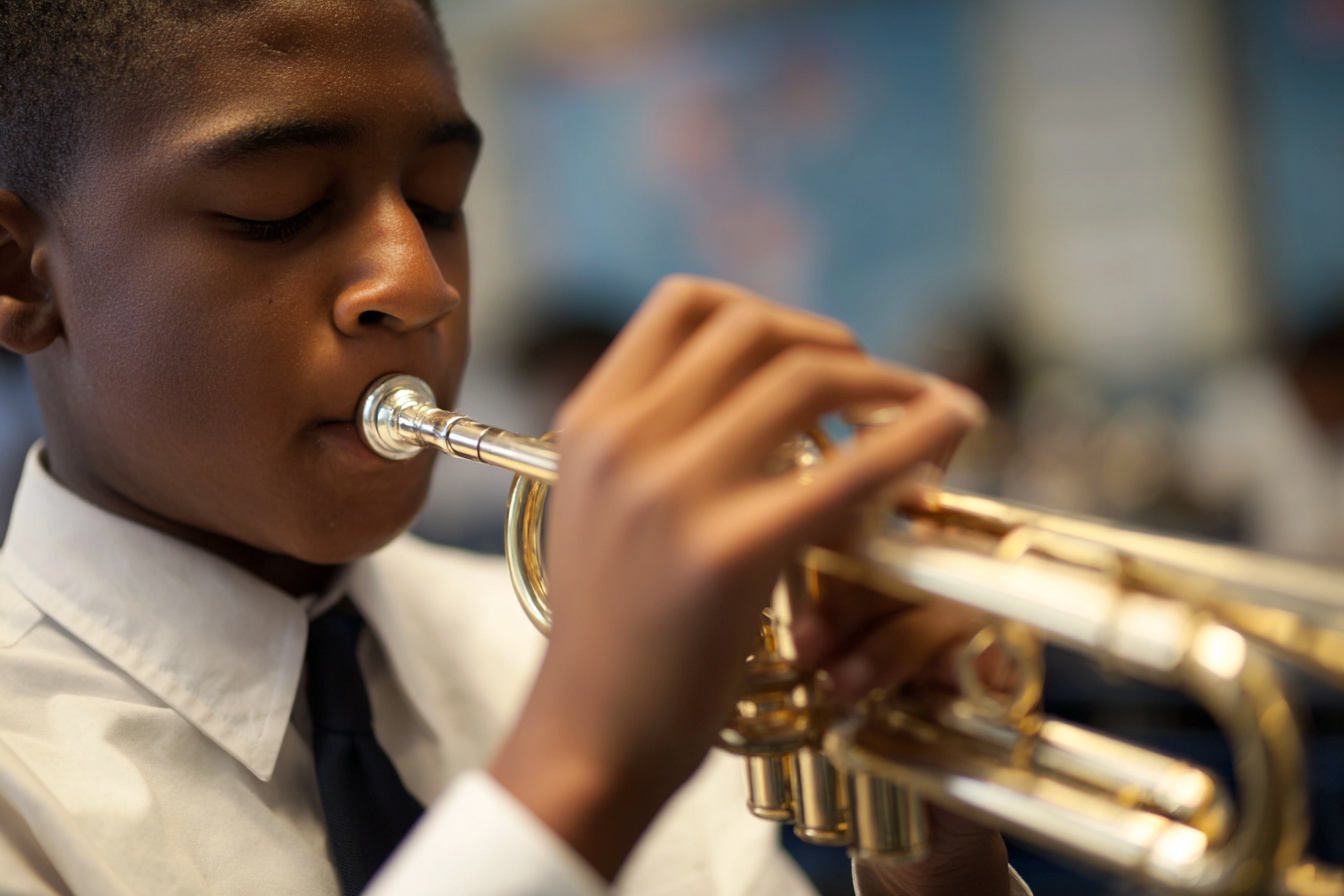
Focus: Adjust dynamics and tone to achieve a balanced ensemble sound, using effective rehearsal strategies to improve blend, balance, intonation, and rhythmic precision.
Grade Level: 7
Subject Area: Band (Performing • Ensemble Skills • Rehearsal Techniques)
Total Unit Duration: 5 sessions (one week), 50–60 minutes per session
I. Introduction
In this unit, students focus on how to make the band sound like one group, rather than many individuals. They learn what it means to create a balanced ensemble sound, where melody, harmony, and bass lines are heard in the right proportions, and how tone quality and dynamics contribute to a unified sound. Through chorales, “pyramid of sound” exercises, and targeted rehearsal strategies, students practice listening across the band, adjusting their volume, and changing their tone to blend. By the end of the week, they can both demonstrate better blend and balance and explain which rehearsal strategies help improve ensemble sound.
Essential Questions
- What does a balanced band sound like, and how can I tell if my part is too loud or too soft?
- How do dynamics, tone quality, and listening help create blend and balance in the ensemble?
- What rehearsal strategies can we use to fix balance, blend, intonation, and rhythmic precision problems?
- How does improving ensemble blend and balance make our music more expressive and professional?
II. Objectives and Standards
Learning Objectives — Students will be able to:
- Define ensemble blend and balance and describe the difference between them.
- Use dynamic control and tone adjustments to balance melody, harmony, and bass lines within the band.
- Apply specific rehearsal strategies (isolating sections, slowing down, staggered entries, “pyramid of sound”) to improve ensemble sound.
- Listen across the ensemble and self-adjust when their part is too loud, too soft, or not blending in tone.
- Reflect on how individual responsibility contributes to the overall band sound and identify at least one strategy they can continue using.
Standards Alignment — 7th Grade Band (custom, NAfME-style)
- BD:Pr5.7a — Apply rehearsal strategies to improve individual accuracy and ensemble blend, balance, intonation, and rhythmic precision.
- Example: Students isolate difficult measures, slow practice, and then rejoin the ensemble.
Success Criteria — Student Language
- I can explain what blend and balance mean in a band setting.
- I can adjust my volume and tone so the melody can be heard and the harmonies support it.
- I can use rehearsal strategies like slowing down, isolating sections, and “pyramid of sound” to fix ensemble issues.
- I can listen across the band and self-correct if I’m sticking out or disappearing.
- I can describe one specific way I helped improve the ensemble sound this week.