Unit Plan 20 (Grade 7 Band): Instrumentation & Tone Color
Grade 7 band unit analyzing instrument families and tone color to explain how timbre, articulation, and style shape musical character and meaning.

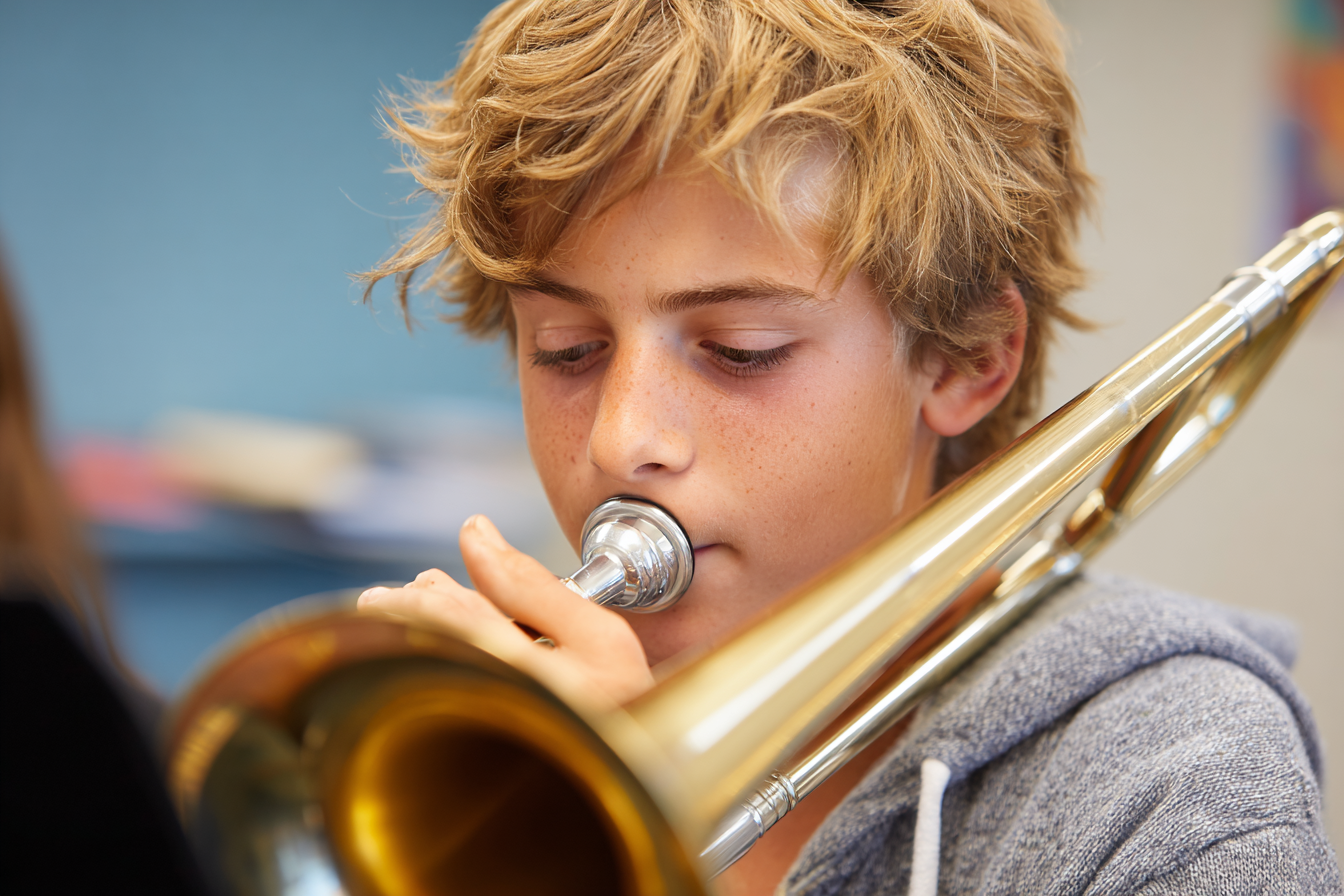
Focus: Examine how instrument families (woodwinds, brass, percussion, low winds, auxiliary instruments) and tone color contribute to musical character and meaning in band music.
Grade Level: 7
Subject Area: Band (Responding • Listening/Analysis • Performing)
Total Unit Duration: 5 sessions (one week), 50–60 minutes per session
I. Introduction
In this unit, students explore how different instrument families and tone colors shape the overall sound and character of band music. Through focused listening, score study, and performance, they compare how melodies and accompaniments sound when played by woodwinds vs. brass vs. percussion, and how articulation and style further change the musical effect. Students learn to describe how composers use instrumentation and tone color to create contrast, unity, tension, calm, brightness, or darkness in a piece. By the end of the week, students will analyze a band excerpt, explain how instrumentation and tone color support its meaning, and apply that understanding to their own performance choices.
Essential Questions
- What is tone color (timbre) and how do different instrument families contribute to the character of band music?
- How do composers and arrangers use instrumentation and articulation/style to create contrast and support musical meaning?
- How can understanding who plays what (and how) help us interpret and perform band pieces more expressively?
- In what ways does changing instrumentation or tone color change what the audience feels or imagines when listening?
II. Objectives and Standards
Learning Objectives — Students will be able to:
- Identify instrument families (woodwinds, brass, percussion, low winds/others) and describe their typical tone colors (e.g., bright, dark, mellow, piercing).
- Analyze short band excerpts to explain how instrumentation and tone color contribute to musical character and meaning.
- Describe how articulation (legato, staccato, marcato, accent patterns) and style interact with instrumentation to shape the sound.
- Create a short Instrumentation & Tone Color Analysis for a band piece or excerpt, citing specific measures and instrument groups.
- Apply understanding of instrumentation and tone color to current repertoire, suggesting and using performance choices that highlight character.
Standards Alignment — 7th Grade Band (custom, NAfME-style)
- BD:Re7.7b — Explain how instrumentation, tone color, articulation, and style contribute to meaning in band music.
- Example: Students explain how brass and woodwind timbres create contrasting character in a piece.
Success Criteria — Student Language
- I can name different instrument families and describe how they generally sound (tone color).
- I can explain how a composer’s choice of who plays the melody or accompaniment affects the mood or character.
- I can describe how articulation and style (e.g., smooth, detached, accented) change the feel of a passage.
- I can point to specific measures and instruments in a piece and explain how their sound supports the music’s meaning.
- I can use what I know about instrumentation and tone color to make better performance decisions in our band music.