Unit Plan 26 (Grade 7 Band): Musical Storytelling
Grade 7 band unit where students compose musical stories, using tempo, dynamics, and melody to express narratives and connect music to personal interests and goals.

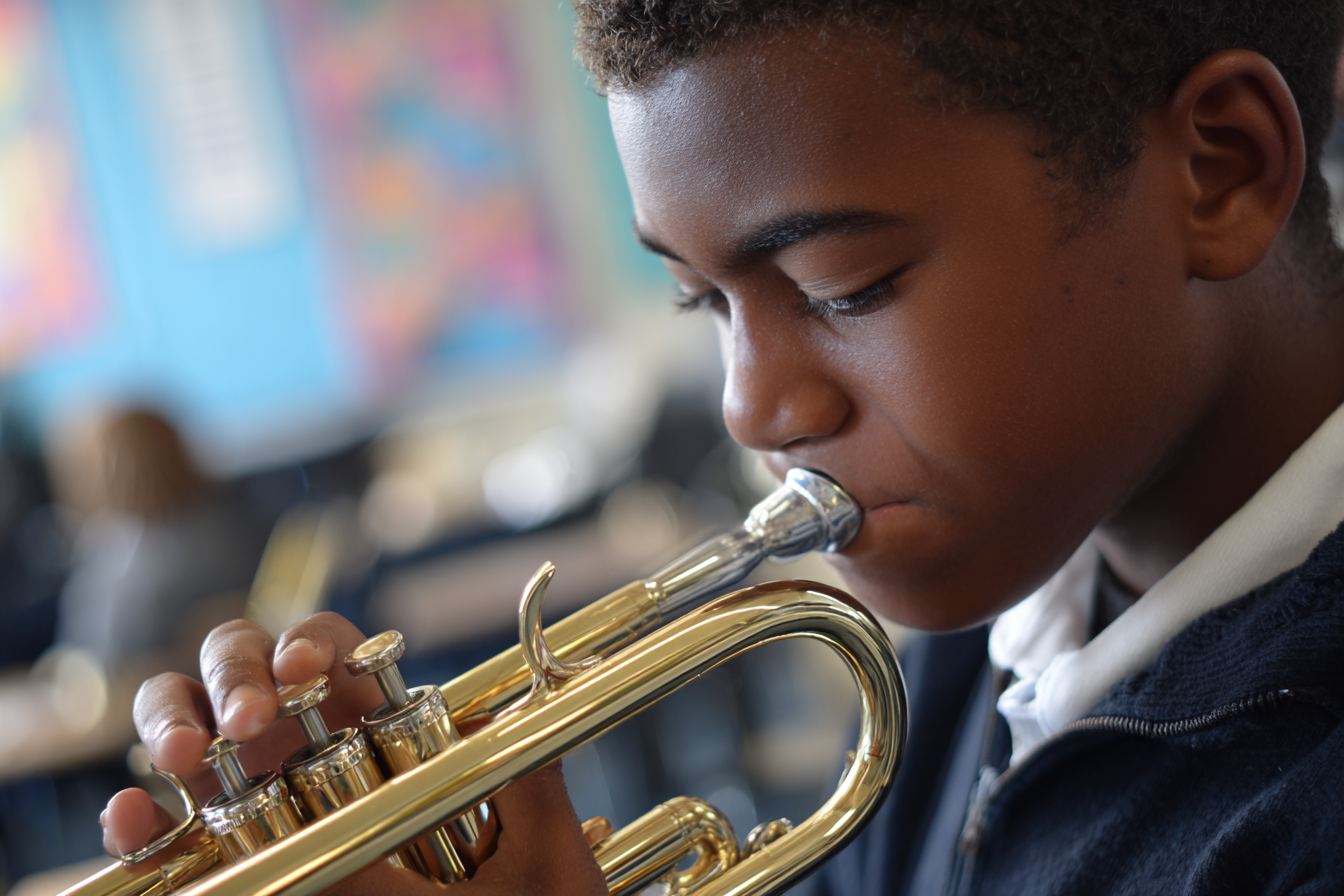
Focus: Create instrumental music that represents narratives, scenes, or characters, and explain how musical choices reflect personal interests and expressive goals.
Grade Level: 7
Subject Area: Band (Creating • Connecting • Performing)
Total Unit Duration: 5 sessions (one week), 50–60 minutes per session
I. Introduction
In this unit, students explore how music can tell stories without words. They listen to short excerpts that suggest scenes, characters, or moods (storms, celebrations, quiet reflection) and identify the musical tools that make those images come alive: melody, rhythm, tempo, dynamics, articulation, and instrumentation. Then, they design their own musical stories based on a personal interest, memory, or imagined scene and create short compositions to share with the class. By the end of the week, students present their pieces and explain how their musical decisions communicate expressive intent and connect to who they are as musicians.
Essential Questions
- How can instrumental music tell a story or paint a scene without any lyrics?
- Which musical elements (melody, rhythm, tempo, dynamics, articulation, instrumentation) are most powerful for storytelling?
- How do my interests, experiences, and goals shape the stories I choose to tell through music?
- What does it mean to communicate expressive intent clearly to an audience through my playing and composing?
II. Objectives and Standards
Learning Objectives — Students will be able to:
- Identify how composers use melody, rhythm, tempo, dynamics, articulation, and instrumentation to suggest narratives, scenes, or characters.
- Brainstorm and outline a short story, memory, or imagined scene based on their own interests or experiences.
- Create a short instrumental composition (solo or small ensemble/section) that represents their chosen narrative or scene using purposeful musical choices.
- Rehearse, refine, and prepare their composition for sharing, using peer/teacher feedback to better match their expressive intent.
- Present their Musical Story and explain how their musical decisions reflect both the intended narrative and their personal growth or goals as band musicians.
Standards Alignment — 7th Grade Band (custom, NAfME-style)
- BD:Cr3.7b — Present a final instrumental creation and explain how musical choices communicate expressive intent to an audience.
- Example: Students perform their composition and explain how articulation and dynamics match the intended mood.
- BD:Cn10.7a — Explain how interests, experiences, and goals influence musical choices and growth as a band musician.
- Example: Students set a personal goal (range, articulation, confidence) and explain why it matters.
Success Criteria — Student Language
- I can describe a story, scene, or character that I want my music to represent.
- I can choose specific musical elements (tempo, dynamics, articulation, instruments, rhythms) that fit my story.
- I can create a short piece of music that my classmates can recognize as a mood or scene, even if they don’t know the exact story.
- I can explain how my musical choices (loud/soft, fast/slow, smooth/short, high/low) match my expressive intent.
- I can connect my musical story to something about my interests, experiences, or goals as a musician.