Unit Plan 29 (Grade 7 Band): Sight-Reading Development
Grade 7 band sight-reading unit teaching pre-reading routines, steady counting, rehearsal strategies, and confident performance of new music.

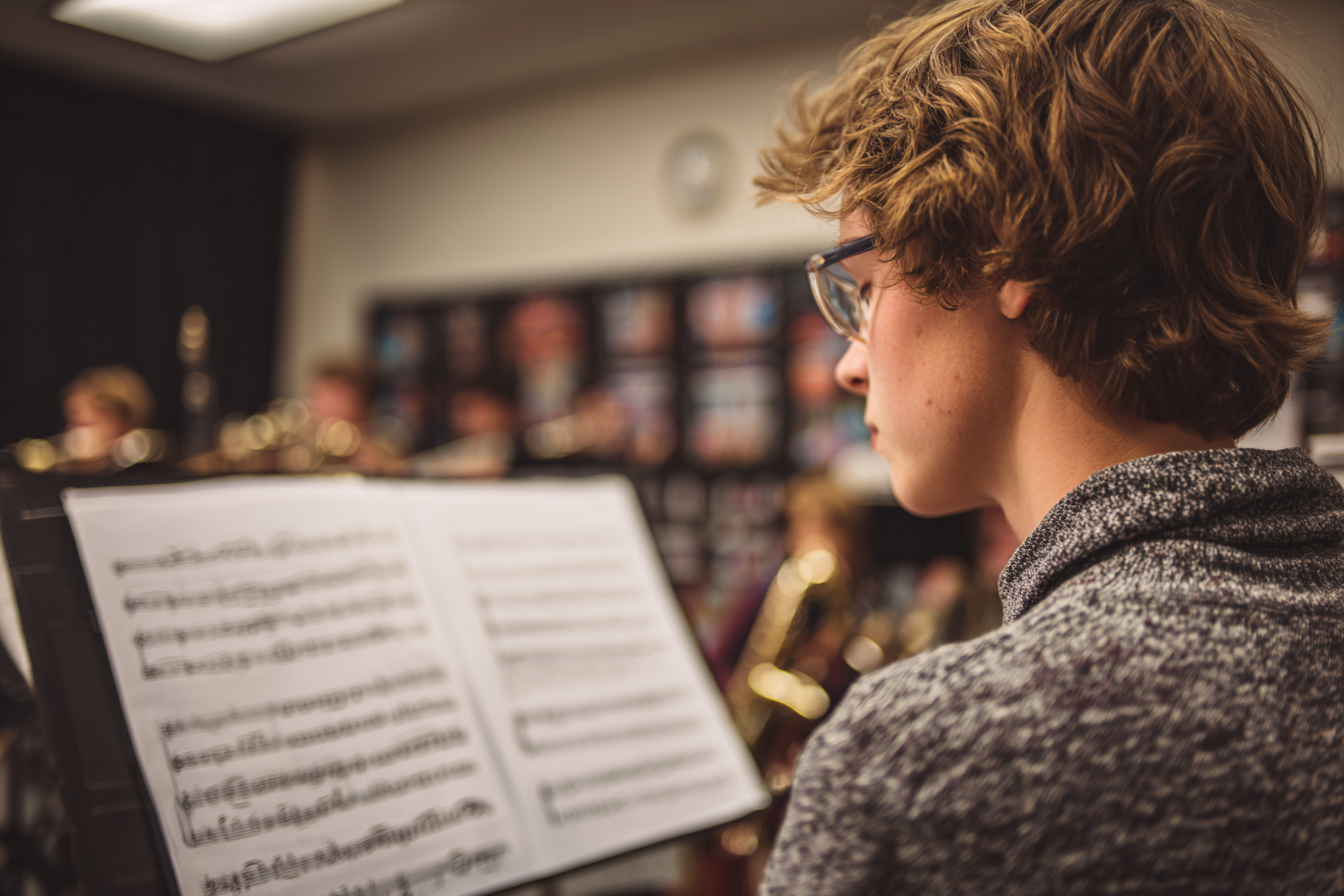
Focus: Strengthen accuracy and confidence in sight-reading unfamiliar music, using clear pre-reading strategies, steady counting, and effective rehearsal techniques.
Grade Level: 7
Subject Area: Band (Performing • Rehearsing • Literacy)
Total Unit Duration: 5 sessions (one week), 50–60 minutes per session
I. Introduction
In this unit, students build the skills and confidence needed to sight-read new band music successfully. They learn a consistent sight-reading routine: scan the key signature and time signature, look for rhythmic patterns, identify repeats and roadmap markings, silently count, and then perform with a steady tempo instead of stopping for mistakes. Through a mix of individual, section, and full-ensemble sight-reading, students practice applying rehearsal strategies—slow practice, counting/clapping, isolating tricky measures—to quickly improve accuracy. By the end of the week, students will demonstrate sight-reading in a short assessment and articulate which strategies help them most.
Essential Questions
- What does it mean to sight-read music, and why is it an important skill for band musicians?
- How do key signatures, time signatures, rhythms, and patterns help us read new music more accurately?
- Why is it better to keep a steady tempo and use rehearsal strategies than to stop and restart when sight-reading?
- Which personal strategies help me feel more confident and accurate when reading unfamiliar music?
II. Objectives and Standards
Learning Objectives — Students will be able to:
- Use a pre-reading routine to scan key signature, time signature, tempo, and rhythmic patterns before sight-reading.
- Read and perform short sight-reading excerpts with mostly accurate pitches, rhythms, and steady tempo.
- Apply rehearsal strategies (counting/clapping, slow practice, isolating measures) to improve accuracy on challenging excerpts.
- Work within sections and full ensemble to maintain blend, balance, and rhythmic precision while sight-reading.
- Reflect on their sight-reading strengths and needs, identifying at least one strategy that helps them improve.
Standards Alignment — 7th Grade Band (custom, NAfME-style)
- BD:Pr4.7b — Read and perform band music using standard notation, including varied rhythms, key signatures, and expressive markings, maintaining steady tempo.
- Example: Students perform music with dotted rhythms and accidentals accurately.
- BD:Pr5.7a — Apply rehearsal strategies to improve individual accuracy and ensemble blend, balance, intonation, and rhythmic precision.
- Example: Students isolate difficult measures, slow practice, and then rejoin the ensemble.
Success Criteria — Student Language
- I can follow a sight-reading checklist before I play (key, time, tempo, patterns, road map).
- I can keep going in sight-reading excerpts, even if I make mistakes, and maintain a steady pulse.
- I can use counting/clapping, slow practice, and measure-by-measure work to fix tricky spots.
- I can sight-read while listening to my section and ensemble to stay in balance and together.
- I can name at least one strategy that makes me a stronger, more confident sight-reader.