Unit Plan 27 (Grade 7 Orchestra): Ensemble Performance
Refine Grade 7 orchestra performance skills with a 5-day unit focused on accurate pitch/rhythm, characteristic tone, unified bowing, expressive intent, and strong rehearsal etiquette and section leadership.

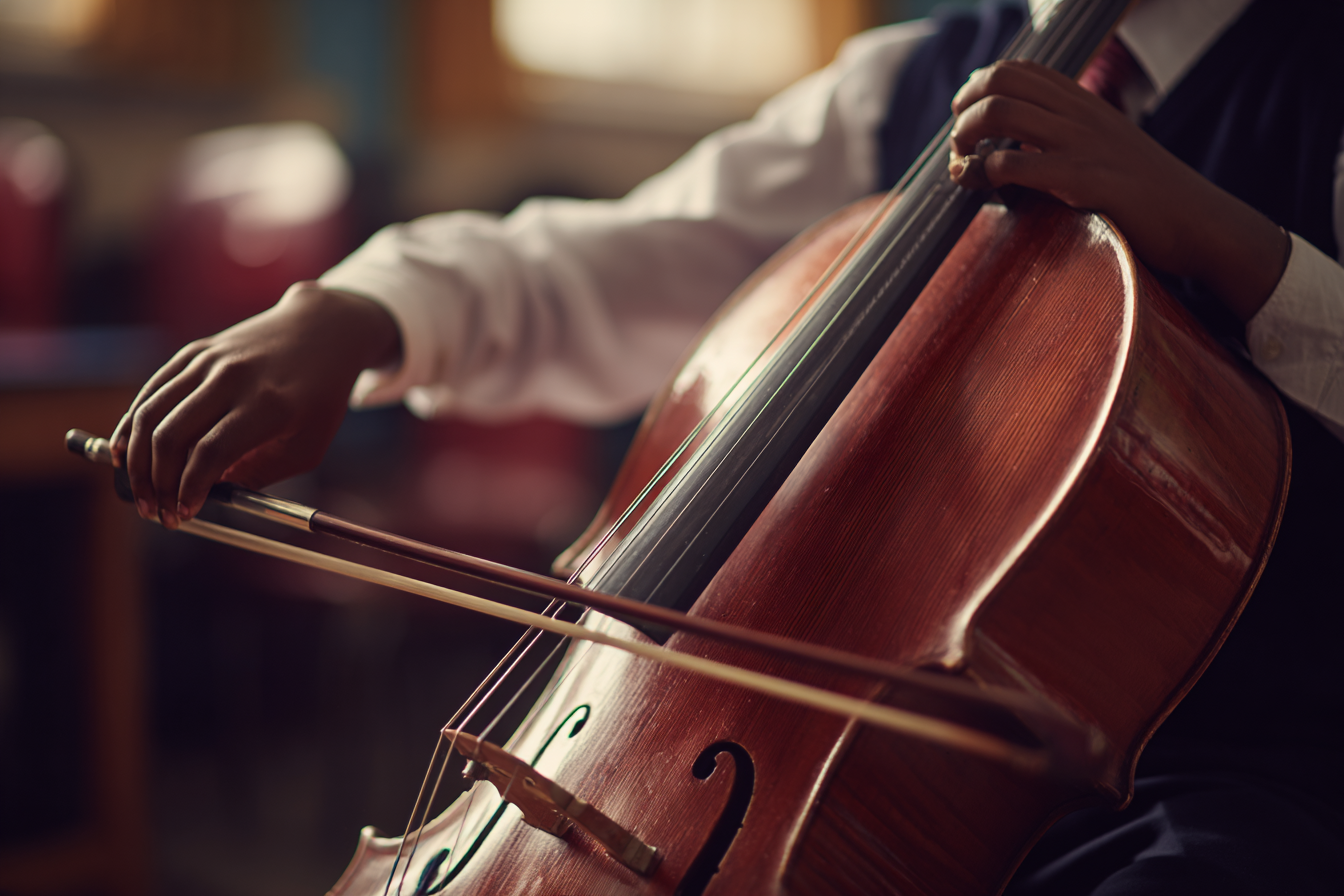
Focus: Perform ensemble repertoire with independence, accuracy, characteristic tone, unified bowing, and expressive intent, while demonstrating strong rehearsal and performance etiquette and section leadership.
Grade Level: 7
Subject Area: Orchestra (Ensemble Performance • Tone & Intonation • Rehearsal Etiquette & Leadership)
Total Unit Duration: 5 sessions (one week), 50–60 minutes per session
I. Introduction
In this unit, Grade 7 orchestra students focus on bringing repertoire to performance level with attention to pitch accuracy, rhythm precision, characteristic tone, unified bowing, and expressive intent. They practice performing with greater independence, tracking their own entrances, rests, and dynamic changes while still responding to the conductor and supporting the ensemble. Alongside technical and musical goals, students refine rehearsal and performance etiquette, including section leadership, active listening, and professional stage presence. The unit culminates in a polished in-class or informal performance with reflection on ensemble strengths and next steps.
Essential Questions
- What does it mean to perform orchestra music with accuracy, characteristic tone, and expressive intent?
- How do individual independence and ensemble unity work together in a strong performance?
- What roles do rehearsal etiquette, following the conductor, and section leadership play in ensemble success?
- How can we evaluate and refine our performance to better communicate musical ideas to an audience?
II. Objectives and Standards
Learning Objectives — Students will be able to:
- Perform assigned ensemble repertoire with generally accurate pitch, rhythm, and characteristic tone.
- Demonstrate unified bowings, dynamics, and articulations within their section and across the ensemble.
- Show appropriate rehearsal and performance etiquette, including following conductor cues, tracking rests and entrances, and staying engaged.
- Take on basic section leadership tasks (leading warm-ups, helping align bowings, offering constructive feedback) to support ensemble success.
- Use recordings and simple rubrics to evaluate ensemble performance and set targeted improvement goals.
Standards Alignment — Grade 7 Orchestra (custom, NAfME-style)
- OR:Pr6.7a — Perform orchestra music with accurate pitch, rhythm, characteristic tone, unified bowing, and expressive intent, showing developing stylistic understanding.
- Example: Students perform a two- or three-part arrangement with steady tempo and dynamic contrast.
- OR:Pr6.7b — Demonstrate appropriate rehearsal and performance etiquette, including leadership within sections, following conductor cues, tracking rests, and supporting ensemble success.
- Example: Students lead section warm-ups and ensure bowings match across the section.
Success Criteria — Student Language
- I can perform our repertoire with mostly accurate notes, rhythms, and steady tempo.
- I can match my section’s bowings, dynamics, articulations, and tone to help the ensemble sound unified.
- I can follow conductor cues, track rests and entrances, and show professional behavior in rehearsal and performance.
- I can take small leadership roles (leading a warm-up, helping clarify bowings) that support my section.
- I can use a rubric or recording to name at least one strength and one area to improve in our ensemble performance.