Unit Plan 24 (Grade 7 Orchestra): Music in Cultural & Historical Context
Discover how culture, history, and social purpose shape string music, then use that context to guide tempo, bowing, articulation, phrasing, and tone color for more authentic, expressive Grade 7 orchestra performances.

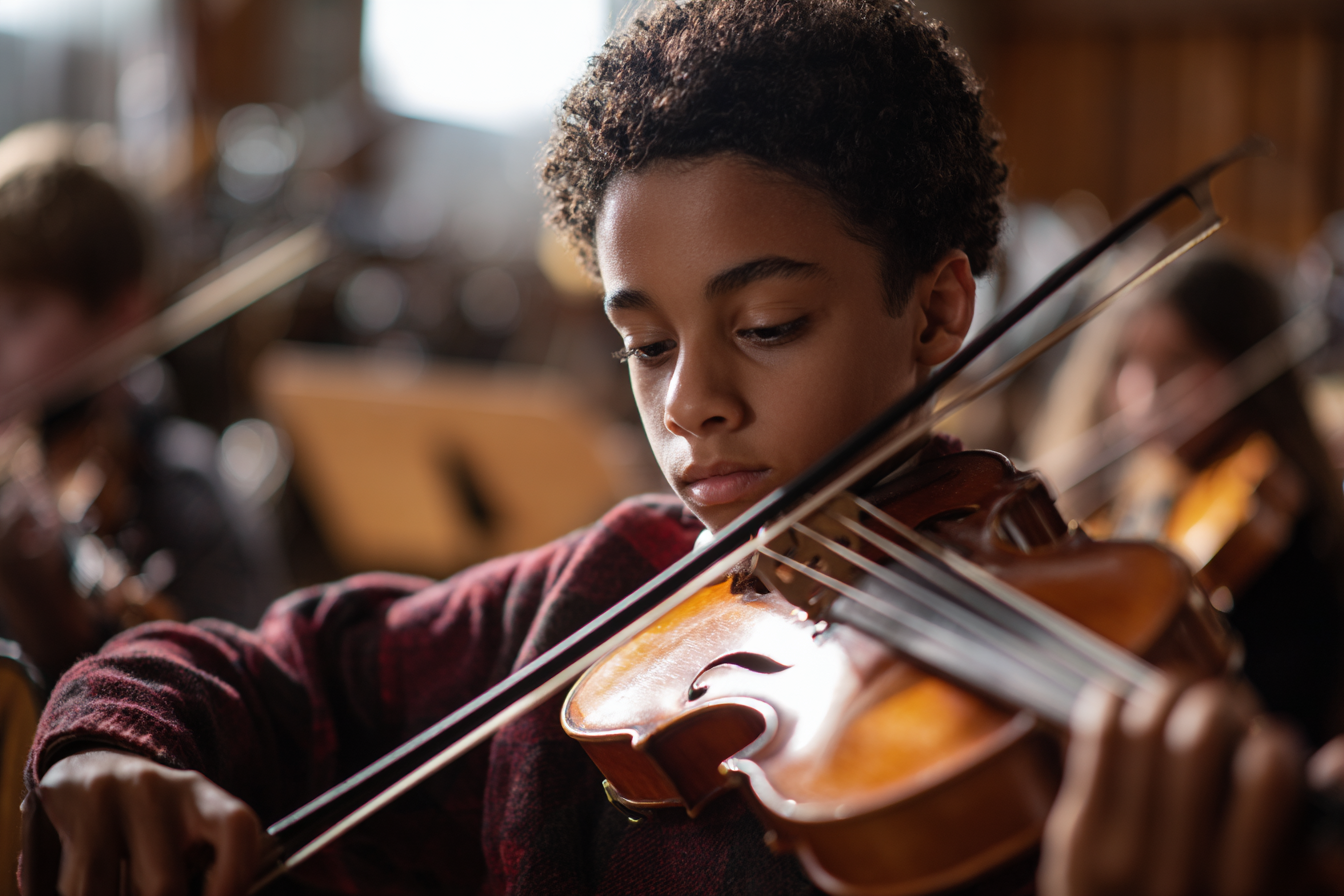
Focus: Explore how cultural, historical, and social contexts shape string music and how understanding context informs performance practice (tempo, bowing, articulation, phrasing, tone color).
Grade Level: 7
Subject Area: Orchestra (Context & Culture • Performance Practice • Interpretation)
Total Unit Duration: 5 sessions (one week), 50–60 minutes per session
I. Introduction
In this unit, Grade 7 orchestra students discover how music is connected to the time and place it comes from. Through listening, short readings, and score/part study, they explore how folk traditions, historical eras, and social settings influence string music. Students compare pieces from different cultures and periods (e.g., folk dance, Baroque, Classical, film/folk-inspired styles) and notice how context changes tempo, articulation, bow style, tone color, and stage presence. The unit culminates in students making context-informed performance decisions for a class piece and explaining how context shapes those choices.
Essential Questions
- How does culture, history, and society influence the way string music is written, performed, and experienced?
- What does it mean to let context guide decisions like tempo, bowing, articulation, tone color, and stage presence?
- How can knowing the background story of a piece help us perform it more accurately and expressively?
- In what ways do similarities and differences in musical context help us better appreciate music from other cultures and time periods?
II. Objectives and Standards
Learning Objectives — Students will be able to:
- Describe the cultural, historical, or social context of at least two string works (e.g., folk dance, historical era piece, contemporary style).
- Identify how context influences performance practice (e.g., tempo, articulation, bow placement, tone color, dynamics, posture/stage presence).
- Compare two performances or pieces, explaining how context helps explain differences in style and interpretation.
- Make and justify context-informed performance decisions (tempo, bowings, articulation, tone color) for a class piece.
- Create a short Context & Performance Note (spoken or written) that explains how cultural/historical context shapes how their orchestra chooses to play the piece.
Standards Alignment — Grade 7 Orchestra (custom, NAfME-style)
- OR:Cn11.7a — Explain how string music reflects cultural, historical, and social contexts and how context informs performance practice.
- Example: Students research a folk dance or classical era piece and explain how context shapes tempo and style.
Success Criteria — Student Language
- I can tell what culture or time period a piece comes from and describe something important about that context.
- I can point out how tempo, articulation, bowing, and tone color change based on the style and context of the music.
- I can compare two pieces or performances and explain how context helps me understand their differences.
- I can help choose performance decisions (like bowings or tempo) that match the style and background of the piece.
- I can write or say a short explanation to an audience about how context affects how we play a piece.