Unit Plan 29 (Grade 7 Orchestra): Sight-Reading Growth
Grade 7 orchestra sight-reading unit builds steady tempo, preview routines, and rehearsal strategies to boost accuracy and confidence.

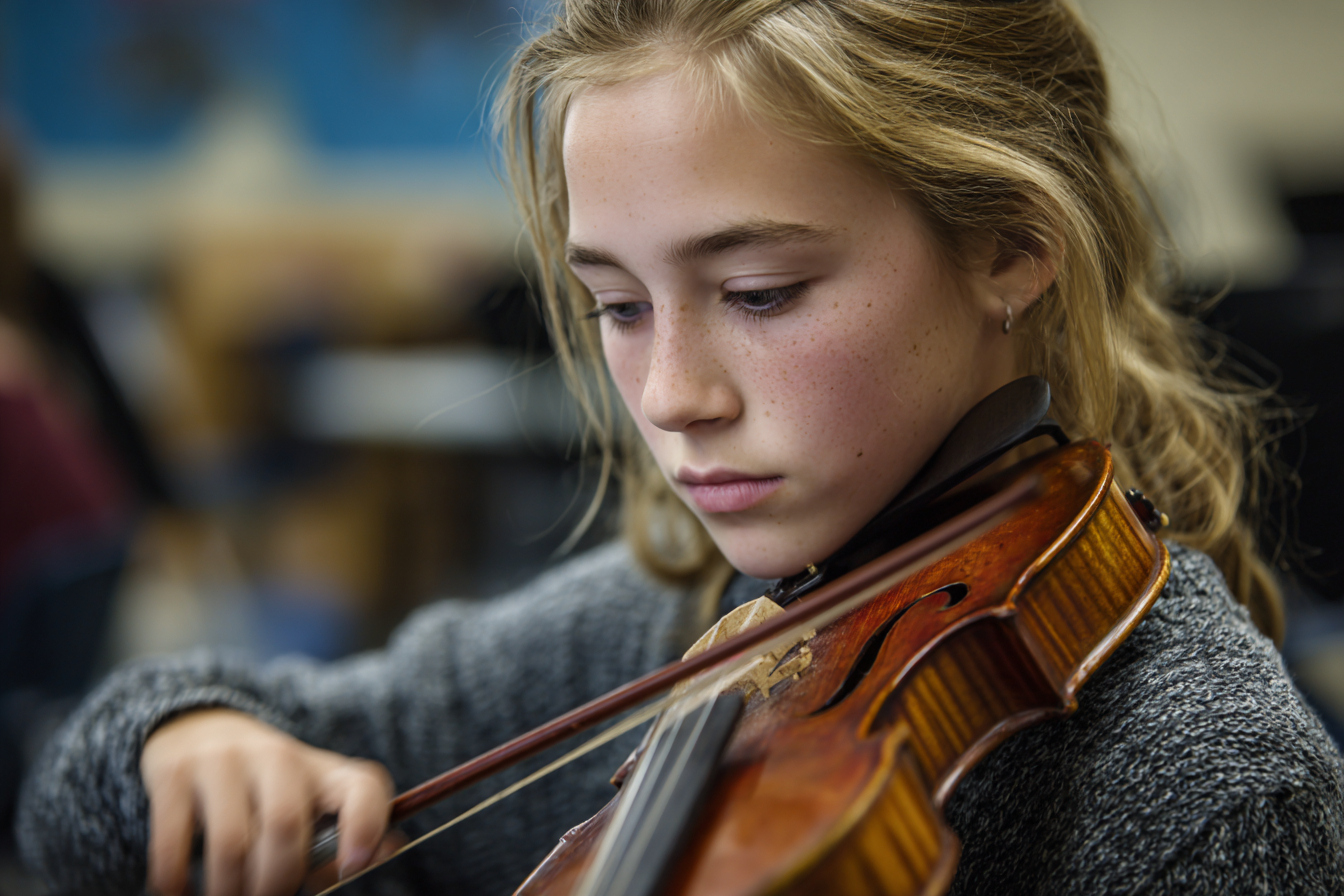
Focus: Build accuracy and confidence reading unfamiliar repertoire with steady tempo, using clear preview routines and rehearsal strategies to support independence.
Grade Level: 7
Subject Area: Orchestra (Sight-Reading • Notation & Technique • Rehearsal Strategies)
Total Unit Duration: 5 sessions (one week), 50–60 minutes per session
I. Introduction
In this unit, Grade 7 orchestra students focus on becoming more confident and consistent sight-readers, able to perform unfamiliar music while maintaining steady tempo and reasonable accuracy. They learn a simple preview routine (check key signature, time signature, finger patterns, road map) and apply rehearsal strategies—such as slow practice, looping, bowing isolation, and metronome work—to quickly improve excerpts after the first read. Students practice both individual and ensemble sight-reading, emphasizing don’t stop, keep the beat, and recover from mistakes. The unit culminates in a short sight-reading challenge with reflection on growth in skill and confidence.
Essential Questions
- What makes a strong sight-reader in orchestra, and why is steady tempo so important?
- How can we quickly preview unfamiliar music (key, meter, finger patterns, road map) before playing it?
- Which rehearsal strategies help us improve a passage right after the first read-through?
- How does better sight-reading make us more independent, efficient, and confident ensemble musicians?
II. Objectives and Standards
Learning Objectives — Students will be able to:
- Read and perform short, unfamiliar excerpts using standard notation with mostly accurate rhythms, pitches, and bowings while maintaining steady tempo.
- Use a sight-reading preview routine (scan key/time signatures, finger patterns, tricky rhythms, road map) before playing.
- Apply rehearsal strategies (slow practice, looping, bowing isolation, section rehearsal, metronome work) to quickly improve rhythm and pitch accuracy after the first read.
- Demonstrate appropriate bowing, dynamics, and articulations indicated in the part, as much as possible, even on first read.
- Use simple checklists or rubrics to evaluate sight-reading attempts and set personal improvement goals.
Standards Alignment — Grade 7 Orchestra (custom, NAfME-style)
- OR:Pr4.7b — Read and perform orchestra music using standard notation, including expanded rhythms, key signatures, finger patterns, and simple shifting readiness, maintaining steady tempo.
- Example: Students perform music with syncopation, slurs, and changing dynamics accurately.
- OR:Pr5.7a — Apply rehearsal strategies (slow practice, looping, bowing isolation, section rehearsal, metronome work) to improve accuracy and ensemble unity.
- Example: Students isolate a tricky bowing and practice it with a metronome before full ensemble rehearsal.
Success Criteria — Student Language
- I can preview an unfamiliar piece by checking key, meter, finger patterns, and tricky spots before I play.
- I can keep a steady tempo and keep going when I sight-read, even if I make a mistake.
- I can use slow practice, looping, and metronome work to fix a hard rhythm or passage after the first read.
- I can read and follow slurs, accents, and dynamics as much as possible while sight-reading.
- I can use a checklist or rubric to describe how my sight-reading is improving and what I still need to work on.