Unit Plan 26 (Grade 7 Orchestra): Storytelling Through Strings
Compose and perform original Grade 7 string music that tells a personal story using dynamics, articulation, phrasing, and contour to express narrative meaning.

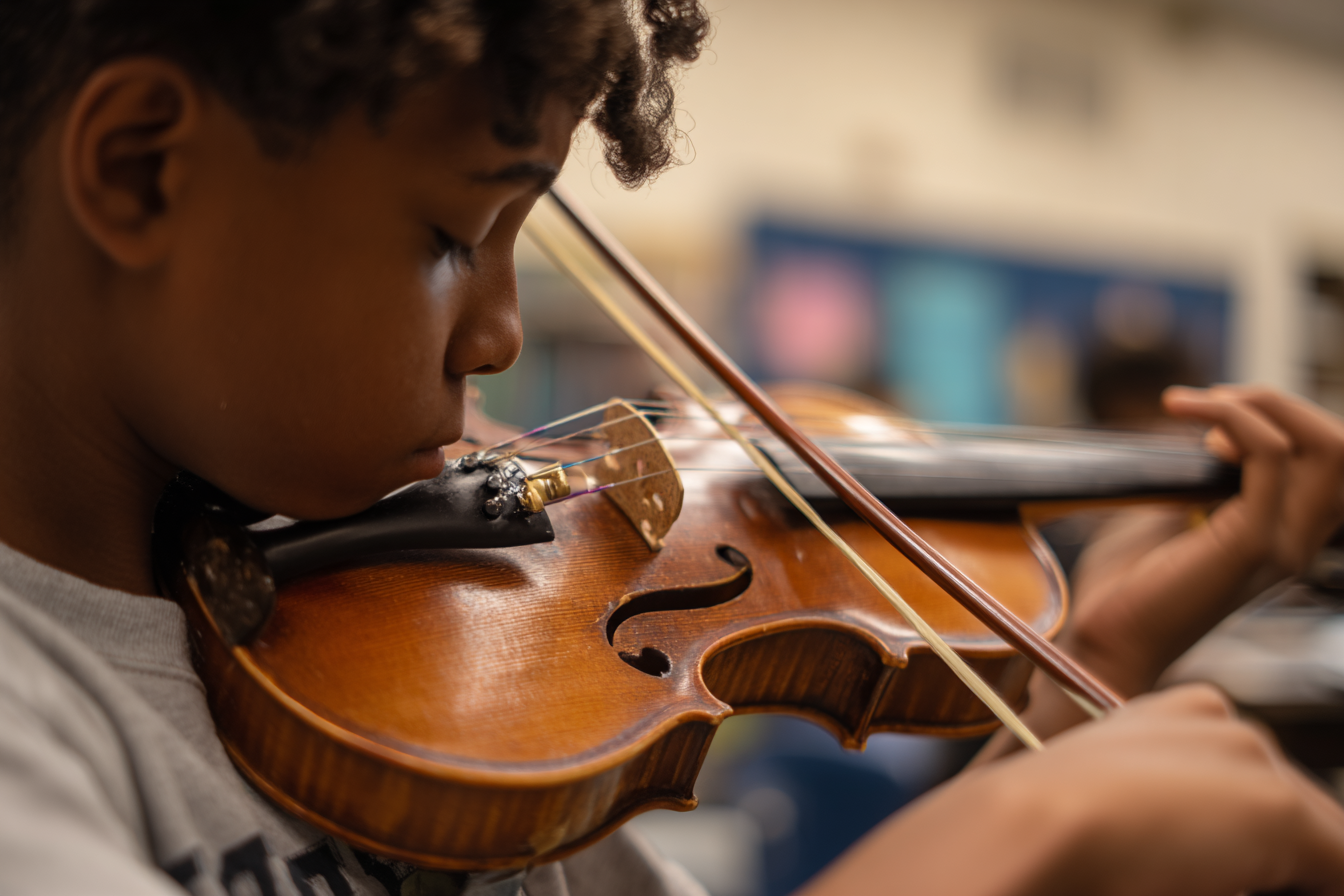
Focus: Create original string music that represents a narrative (character, scene, or moment) using dynamics, articulation, phrasing, and melodic contour, grounded in students’ personal interests and experiences.
Grade Level: 7
Subject Area: Orchestra (Creative Composition • Narrative Expression • Musical Identity)
Total Unit Duration: 5 sessions (one week), 50–60 minutes per session
I. Introduction
In this unit, Grade 7 orchestra students explore how strings can tell stories without words. Through listening examples, guided prompts, and structured composition time, they design a short narrative piece or theme that reflects a character, memory, place, or mood that matters to them. Students learn how dynamics, articulation, bowing, phrasing, and melodic contour can suggest rising action, conflict, resolution, or emotional shifts. The unit culminates in a brief performance and explanation where students present their piece and describe how their musical choices communicate their story and connect to their own interests and goals as string musicians.
Essential Questions
- How can music (without lyrics) tell a story or represent a character, place, or feeling?
- In what ways do dynamics, articulation, bowing, phrasing, and melodic contour show action, tension, and resolution in a musical narrative?
- How can our personal interests, experiences, and goals shape the stories we choose to tell through music?
- What do we need to consider so that an audience can follow and understand the story in our music?
II. Objectives and Standards
Learning Objectives — Students will be able to:
- Identify and describe how storytelling elements (characters, settings, moods, events) appear in existing string music through dynamics, articulation, and contour.
- Select a personal narrative idea (memory, character, place, or feeling) and sketch a musical plan that includes overall contour, sections, and expressive goals.
- Compose a short string piece or theme that uses tempo, dynamics, articulation, phrasing, and contour to communicate a clear narrative or emotional journey.
- Rehearse and refine their piece for playability, intonation, and expressive clarity, making revisions based on feedback.
- Present their final musical creation and explain how their choices connect to their story and personal identity as a string musician.
Standards Alignment — Grade 7 Orchestra (custom, NAfME-style)
- OR:Cr3.7b — Present a final musical creation and explain how musical choices (tempo, dynamics, bowing, phrasing) communicate expressive intent to an audience.
- Example: Students perform their composition and explain how accents and crescendos created excitement.
- OR:Cn10.7a — Explain how personal interests, experiences, and goals influence musical choices, growth, and leadership as a string musician.
- Example: Students set a goal (stronger shifts, better vibrato readiness, section leadership) and explain why it matters.
Success Criteria — Student Language
- I can hear and describe how existing string pieces tell a story using dynamics, articulation, and contour.
- I can choose a story or idea from my own life or interests and plan how to show it through music.
- I can compose and notate (or clearly diagram) a short piece that uses tempo, dynamics, articulation, and phrasing to show my narrative.
- I can rehearse my piece so that it is playable, in tune, and expressive on my instrument or by a small group.
- I can perform my piece and explain how my musical choices connect to my story and goals as a string player.