Unit Plan 4 (Grade 7 PE): Flag Football — Playbooks & Coverage
Build Grade 7 flag football skills with route running, smart play selection, accurate passing, help defense, pursuit angles, teamwork, and sportsmanship in 5v5 play.

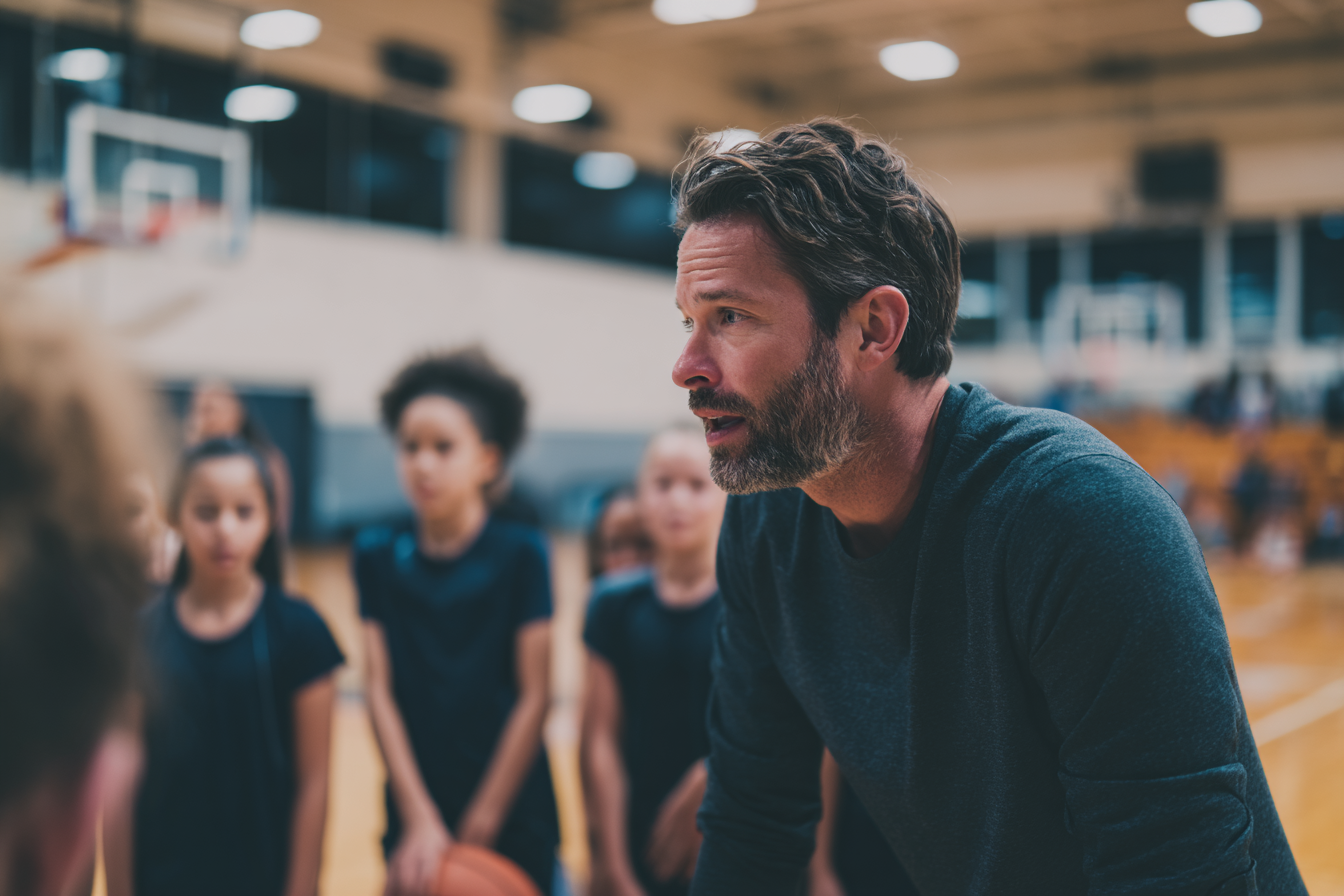
Focus: Build crisp route running, smarter play selection, and stronger team defense through a simple 5v5 flag football playbook, with emphasis on reading defensive alignment, throwing/catching under pressure, and using help defense and pursuit angles.
Grade Level: 7
Subject Area: Physical Education
Total Unit Duration: 5 sessions (one week), 45–55 minutes per session
I. Introduction
In this Grade 7 Physical Education unit, students learn how team strategy can make flag football more successful, organized, and fun. Rather than simply running around and throwing deep every play, students explore how a simple playbook can help a team attack space, move the defense, and create better chances to advance the ball. On offense, students practice running clear routes such as slants, posts, curls, outs, and fly routes, then apply these patterns in 5v5 play using quick passing and simple run options. On defense, students learn how to respond to offensive shape with a zone/man hybrid, using communication, help defense, and smart pursuit angles to stop plays before they become big gains. By the end of the week, students should be able to explain why route precision, decision-making, and team shape matter on both sides of the ball.
Essential Questions
- How does running a crisp route help the quarterback and the offense work more effectively?
- How can a team choose the best play based on defensive alignment and available space?
- What does strong help defense and good pursuit angle look like in 5v5 flag football?
- How do teamwork, communication, and sportsmanship improve competitive game play?
II. Objectives and Standards
Learning Objectives — Students will be able to:
- Perform locomotor skills such as sprinting, cutting, stopping, and re-accelerating with control during route running and defense.
- Throw and catch with appropriate accuracy, force, and timing while moving or under defensive pressure.
- Combine route running, catching, throwing, faking, flag pulling, and recovery movements smoothly during extended game play.
- Use spatial awareness to spread the field, read defensive shape, and move into effective offensive and defensive positions.
- Apply a simple offensive playbook including quick slant, deep route, and run play concepts based on defensive looks.
- Use defensive ideas such as marking, help defense, staying between the ball and goal line, and pursuit angles to slow or stop the offense.
- Show cooperative teamwork, rotating leadership, and positive sportsmanship during competitive 5v5 play.
Standards Alignment — Grade 7 PE (SHAPE America-based custom)
- PE:S1.7a – Locomotor Skills with Advanced Speed & Change of Direction Perform locomotor skills (e.g., sprinting, shuffling, skipping, bounding) with control while making rapid changes in direction, speed, and level in game situations.
- Example: In invasion games, a student sprints to space, plants and cuts sharply to lose a defender, then accelerates again to receive a pass.
- PE:S1.7c – Throwing & Catching with Accuracy in Competitive Play Throw and catch various objects with accuracy, appropriate force, and timing in competitive settings, including while defended, moving quickly, or under time constraints.
- Example: In flag football, a student throws a leading pass to a teammate on a slant and secures catches while being closely covered.
- PE:S1.7f – Integrating Multiple Skills Fluidly During Extended Play Combine locomotor, manipulative, and stability skills in extended game play, maintaining control and appropriate technique even when fatigued or under pressure.
- Example: In a game, a student runs a route, catches on the move, turns upfield, avoids a defender, and protects balance while advancing the ball.
- PE:S2.7a – Spatial Awareness & Tactical Positioning in Team Play Demonstrate consistent understanding of space and positioning by adjusting to teammates, opponents, and scoring areas in both offense and defense.
- Example: In 5v5 games, students recognize when to spread the floor/field, when to cut toward the ball, and when to drop back on defense to protect critical areas.
- PE:S2.7c – Adjusting Effort, Force, Angle & Timing to Game Conditions Adapt effort level, force, angle, and timing of passes, shots, serves, and runs in response to defensive pressure, distance, and scoring/placement goals.
- Example: In flag football, a student throws a softer short pass versus tight pressure or a stronger pass into deeper space depending on route and coverage.
- PE:S2.7d – Offensive Strategies: Creating & Exploiting Opportunities Select and apply offensive strategies such as using screens, give-and-go, overlaps, switching fields, and recognizing mismatches to create scoring chances.
- Example: In flag football, students use quick routes, spacing, and simple play calls to isolate a defender or create an open passing window.
- PE:S2.7e – Defensive Strategies: Marking, Help Defense & Transition Implement defensive principles including marking, staying between opponent and goal, providing help defense, recovering in transition, and adjusting to changes in possession.
- Example: When the ball is thrown short, nearby defenders close quickly, help defenders angle toward the flag pull, and deeper defenders stay behind the play.
- PE:S4.7b – Cooperative Teamwork, Leadership & Inclusion Work effectively with diverse peers, taking on and rotating leadership roles (captain, coach, referee, equipment manager) while ensuring all teammates are included and valued.
- Example: A student leading a huddle helps organize fair substitutions, encourages quieter teammates, and ensures all players know the next play or assignment.
- PE:S4.7c – Self-Control, Sportsmanship & Emotional Regulation in Competition Demonstrate self-control and positive sportsmanship in both winning and losing situations, managing frustration, and responding to mistakes constructively.
- Example: After a controversial call or a dropped pass, a student stays composed, resets, and focuses on the next play.
Success Criteria — Student Language
- I can run routes with speed, control, and clear cuts.
- I can throw and catch with the right timing and force for the play.
- I can help my team choose or run a simple play based on the defense we see.
- I can play defense by marking, helping teammates, and taking smart angles to the ball.
- I can communicate, include teammates, and stay composed in competitive situations.